


Opening your dishwasher to find a pool of murky, leftover water is a frustrating discovery. But before you start searching for a new appliance, take a breath. This common problem often points to a simple, fixable issue that you can solve yourself.
If you're looking for a dishwasher not draining repair in Edmonton, the solution usually involves checking a few key spots—like a clogged filter or a kinked drain hose—before you need to worry about a major mechanical failure. This guide will walk you through the troubleshooting steps and help you decide when it's time to call a local expert.
Why Is My Dishwasher Full of Water?
A dishwasher full of dirty, stagnant water is a clear sign that its drainage system is blocked. While it looks bad, the cause is usually a straightforward clog preventing water from leaving the machine. This is a common issue in Alberta, where our hard water can cause mineral and gunk buildup to happen much faster.
In fact, drainage problems are one of the most frequent reasons people call for appliance repair in our city.
Local data from our work at Repair My Appliance shows that issues with a dishwasher not draining account for roughly 35% of all dishwasher service requests in Edmonton in 2024. Edmonton's hard water, averaging 180-220 mg/L of calcium carbonate, contributes to about 25% more pump failures compared to regions with softer water.
So, what’s actually causing the blockage? Let's break it down.
Common Causes of Dishwasher Drainage Problems
Before you can fix the problem, you need to know where to look. A few key components are responsible for nearly every drainage failure.
Here are the top three culprits:
- Clogged Filter: This is the most common cause. Tiny food particles, grease, and other debris build up in the filter at the bottom of your dishwasher. Over time, this creates a barrier that stops water from draining. Luckily, it's also the easiest issue to fix yourself.
- Kinked or Blocked Drain Hose: The flexible hose running from your dishwasher to the sink drain or garbage disposal can get twisted or pinched. It can also get clogged with old food debris, trapping water inside the appliance.
- Garbage Disposal Blockage: If your dishwasher drains into your garbage disposal, a clog there will back everything up. The water has nowhere to go. This is a classic case of the problem being in the plumbing, not the dishwasher itself.
Sometimes, the issue is part of a bigger picture. Understanding the common causes of recurring drain clogs can help you identify if the problem extends beyond your dishwasher.
Learning how to fix a clogged dishwasher almost always starts with these simple checks. By ruling them out, you can often solve the problem in minutes without a service call.
To help you narrow it down, here is a quick diagnostic table based on the symptoms we see most often.
Quick Diagnosis: Common Dishwasher Drainage Problems
Use this table to quickly identify the potential cause of your dishwasher's drainage issue based on common symptoms.
| Symptom | Likely Cause | DIY Difficulty |
|---|---|---|
| Standing water, bad odour | Clogged Filter | Easy |
| Water drains partially, then stops | Kinked/Blocked Drain Hose | Moderate |
| Dishwasher and sink both drain slowly | Garbage Disposal Blockage | Moderate |
| Loud humming or grinding noise | Faulty Drain Pump | Hard (Pro Recommended) |
This checklist provides a solid starting point. If you check the filter, hose, and disposal and still have a puddle in your machine, it may be time to look at more complex parts like the drain pump.
Simple DIY Fixes You Can Try Right Now
Before you worry about a large repair bill, take a deep breath. Many dishwasher drainage issues are quick fixes you can handle in minutes with no special tools. It's always best to start with the easiest solutions first.
Safety First: Before you begin, always disconnect the power to your dishwasher. Unplug it from the outlet under the sink or flip the dedicated breaker in your electrical panel.
This flowchart breaks down the most common spots where clogs hide.
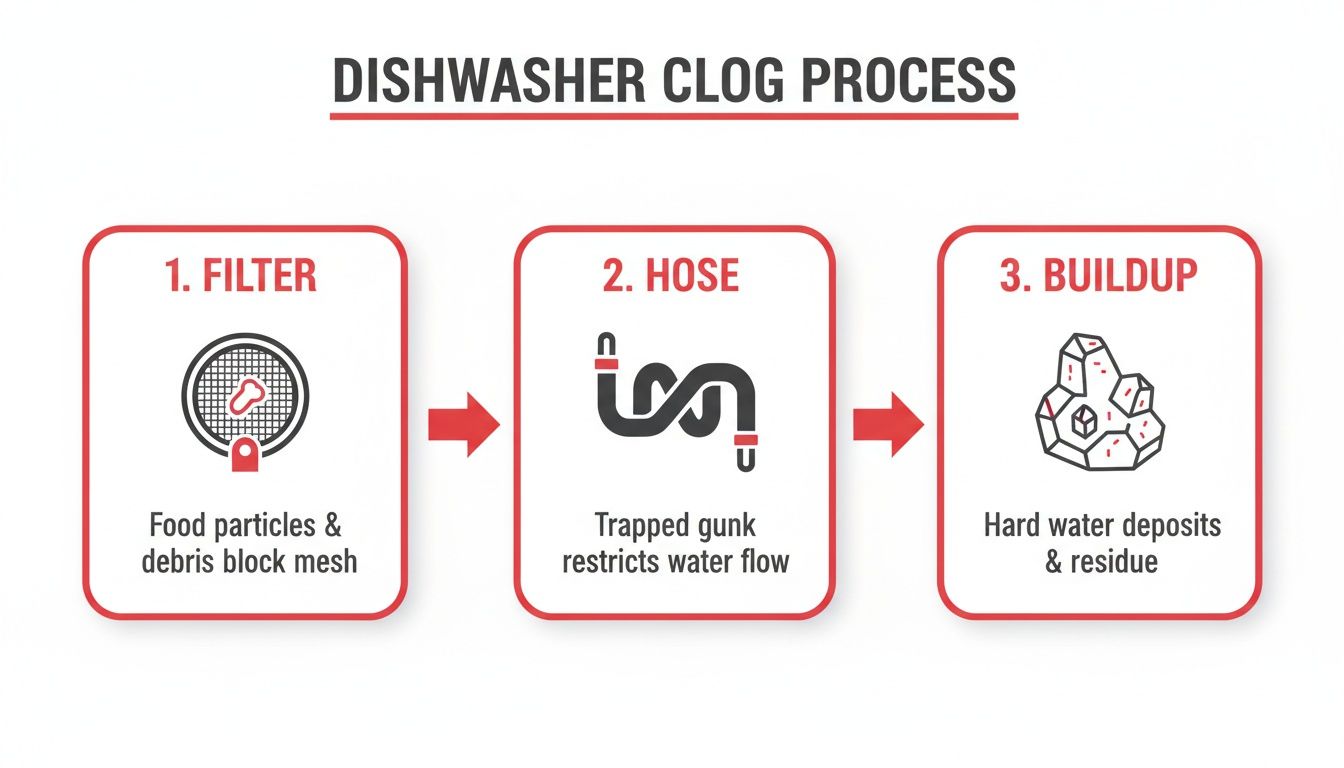
As you can see, the problem is almost always in the filter, the drain hose, or general gunk buildup. That’s exactly where we’ll start looking.
Check the Dishwasher Filter
The filter is your dishwasher's first line of defense against food scraps. Once it gets clogged, that standing water has nowhere to go. Most modern dishwashers have a filter assembly at the bottom of the tub that is easy to remove.
- Locate and Remove: Look for a cylindrical piece, usually right under the bottom spray arm. A simple counter-clockwise twist should unlock it so you can lift it out. Some models also have a flat mesh screen underneath.
- Clean it Thoroughly: Rinse both parts under warm running water. A soft brush is perfect for gently scrubbing away any stubborn gunk. Avoid abrasive scouring pads, as they can tear the fine mesh.
- Reinstall it Correctly: Once clean, place the filter back into its housing and twist it clockwise until it locks firmly. If it isn't seated properly, it can’t protect the drain pump.
Cleaning this filter once a month can prevent over 90% of drainage problems. It's the single best maintenance task you can perform.
Inspect the Garbage Disposal Connection
Does your dishwasher drain into the kitchen sink’s garbage disposal? This is a common spot for blockages, especially if the disposal was recently installed.
Many new garbage disposals are shipped with a plastic knockout plug still in place where the dishwasher hose connects. If the installer forgot to remove it, your dishwasher is physically blocked from draining.
To check, disconnect the dishwasher drain hose from the disposal's inlet port. Carefully feel inside the port. If you feel a solid plastic barrier, that’s your problem. You can usually knock it out with a screwdriver and a gentle tap from a hammer. Be sure to retrieve the plastic piece from the disposal before reconnecting everything. Understanding common appliance-related drain issues like those involving your garbage disposal can help you solve similar kitchen problems.
Examine the Drain Hose
The drain hose is the long, corrugated tube that carries dirty water from your dishwasher to your sink's plumbing. Sometimes, the fix is as simple as straightening a kink.
Gently slide the dishwasher out from under the counter a few inches. Look at the entire length of the hose, checking for any sharp bends or pinches that could be stopping the water flow. It needs a clear, smooth path to drain properly.
For a closer look at these steps, the homeowner's definitive guide to common dishwasher repairs offers more detailed instructions.
So, you’ve cleaned the filter and checked the garbage disposal, but you're still looking at a puddle of water. It's time to dig deeper. The next likely culprits are the drain hose and the drain pump—the heart of your dishwasher's drainage system.
Tackling these components is for the more confident DIYer, but checking them can help you pinpoint the issue with your dishwasher not draining repair in Edmonton.
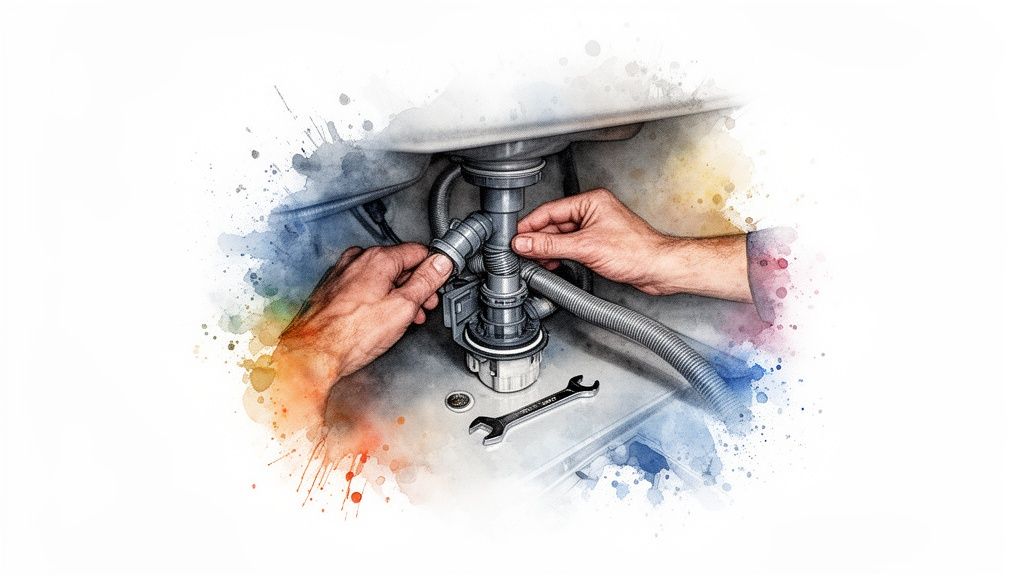
Fair warning: this usually means pulling the dishwasher out from under the counter. Have some old towels ready to soak up any spills.
Inspecting the Drain Hose for Deep Clogs
A hose that looks fine on the outside can hide a clog. Years of grease, old detergent, and food scraps can build into a thick sludge inside the hose's walls, creating a blockage.
To find out, disconnect the hose completely. Start where it connects to your sink drain or garbage disposal, then slide the dishwasher out to access the other end connected to the pump.
Once the hose is free, you can try to clear it:
- Visual Check: Hold the hose up to a light. You can often see a major blockage just by looking through it.
- Flush it Out: Take the hose outside and use a garden hose on a high-pressure setting to flush out the debris.
- Use a Snake: For stubborn clogs, you can carefully work a flexible drain snake through the hose to break up the blockage.
When reattaching the hose, ensure the connections are tight and there are no new kinks. A proper dishwasher installation in Edmonton will always have the drain hose looped high under the sink to prevent dirty sink water from flowing back into your dishwasher.
Diagnosing a Faulty Drain Pump
The drain pump is a small motor that forces water out of your dishwasher. If it fails, the water isn't going anywhere. A failing pump usually provides clues before it quits.
Start a drain or cancel cycle and listen closely. A low humming or buzzing sound with no water movement is a classic sign. It means the pump is getting power, but the motor has seized or the impeller is jammed.
In Edmonton, hard water is a drain pump’s worst enemy. Mineral deposits can build up on the pump’s impeller, causing it to seize. This calcite buildup acts like concrete, preventing the small plastic fins from spinning.
If you hear nothing at all, it's likely an electrical problem. The motor could be dead, or the control board isn't sending power.
While some homeowners can replace a pump themselves, it's a tricky job involving wiring and plumbing. If you suspect the pump is the problem, this is usually the best time to call a professional. A technician can test the motor and confirm it's the issue before you spend money on a part you might not need.
What to Expect for Dishwasher Repair Costs in Edmonton
When your dishwasher won't drain, one of your first questions is whether it’s worth fixing. Understanding the potential costs for a dishwasher not draining repair in Edmonton helps you make an informed decision.
The final bill depends on the root cause. A straightforward clog removal will be much more affordable than replacing a major part like the drain pump.
A Breakdown of the Costs
Based on recent job data from across the Edmonton area, costs for common drainage issues in 2025 typically fall between $150 and $450. Looking at over 1,500 jobs in Alberta, a drain pump replacement for a popular brand like Bosch or Whirlpool averages around $300.
Simpler jobs are less. A professional clog removal usually costs around $125, while replacing a cracked drain hose is about $175. For a more detailed breakdown, this appliance repair cost guide from an Alberta service leader provides excellent insights.
Estimated Dishwasher Repair Costs in Edmonton
This table outlines what you can generally expect for different drainage-related repairs, helping you compare the cost of a professional fix versus buying a new machine.
| Repair Service | Average Cost Range | Repair Time | New Appliance Cost |
|---|---|---|---|
| Professional Clog Removal | $120 – $180 | 30-60 Minutes | $600 – $1,200+ |
| Drain Hose Replacement | $160 – $225 | 45-75 Minutes | $600 – $1,200+ |
| Drain Pump Replacement | $250 – $450 | 60-90 Minutes | $600 – $1,200+ |
| Control Board Repair | $300 – $550+ | 60-90 Minutes | $600 – $1,200+ |
As you can see, most repairs are significantly more affordable than buying a new dishwasher, making a professional repair the smart financial choice in many cases.
Our Transparent Pricing
We believe in upfront and honest pricing. When you book with Repair My Appliance, we charge a flat diagnostic fee. This covers sending a licensed technician to your home to identify the exact problem. They will provide you with a clear, all-inclusive quote for the repair.
Our Promise: If you decide to proceed with the repair, we waive the entire service call fee. You only pay for the parts and labour needed to get your dishwasher running again. No surprises, no hidden charges.
This way, you know the exact cost before we begin any work. To learn more about our services, visit our page on professional dishwasher repair in Edmonton.
When to Call an Edmonton Repair Expert
Fixing a clogged filter or a kinked hose can be a satisfying DIY win. However, some dishwasher problems are a clear sign to put down the tools and call a professional. Knowing when to call in an expert can save you from turning a small issue into a major, expensive mess.
If you’ve tried the simple fixes and your dishwasher is still full of water, a more complex part has likely failed.

Some issues require specialized diagnostic tools and a deep understanding of appliance mechanics. Attempting these repairs without proper training can lead to water damage, electrical shorts, or personal injury.
Signs It's Time for a Professional Repair
If you encounter any of these problems, it’s time to call for a dishwasher not draining repair in Edmonton:
- Electrical Issues: You start a drain cycle and hear complete silence—no humming or buzzing. This often points to a dead motor or a faulty control board. Due to the risk of electric shock, this is not a DIY job.
- Persistent Humming Noise: If the dishwasher hums but no water drains, the drain pump motor is likely seized. It’s receiving power but is mechanically stuck, often due to mineral buildup from our hard water in Alberta.
- Internal Leaks: Finding a puddle under your dishwasher is a serious sign. It could mean a cracked pump housing or a busted seal. These require precise part replacements to protect your floors and cabinets.
- Error Codes on the Display: Modern dishwashers often display error codes that indicate a specific component has failed. This is a direct signal that you need a professional diagnosis.
The Benefits of Professional Service in Edmonton
Calling a licensed technician provides more than just a repair; it provides peace of mind. A technician from Repair My Appliance brings years of hands-on experience to solve complex problems quickly and safely.
Our service vehicles are stocked with the most common replacement parts for all major brands. This allows us to complete over 90% of repairs on the first visit, getting your routine back on track with minimal disruption.
We understand a broken appliance is a major inconvenience, which is why we offer same-day or next-day service throughout the Edmonton area. Plus, every repair is backed by a full warranty on both parts and labour.
For more information on the communities we serve, you can find details about local appliance repair near me on our website. Trusting an expert is the surest way to get your appliance fixed correctly.
Get Your Dishwasher Draining Again Today
A puddle of water in your dishwasher is more than just an inconvenience; it can lead to bigger problems if ignored. When you need a reliable dishwasher not draining repair in Edmonton, Repair My Appliance is ready to get your kitchen back to normal with fast, professional service.
Our licensed technicians come prepared with fully stocked service vehicles to handle repairs for all major brands, often on the first visit. We are committed to getting your home running smoothly again with same-day or next-day appointments and a comprehensive warranty on all our work.
Need appliance repair? Visit RepairMyAppliance.ca or call 587-416-5888 for fast, professional service.
Your Top Questions About Dishwasher Drainage, Answered
When our technicians are out on a call for a dishwasher that won't drain in Edmonton, we tend to hear the same great questions. Understanding the "why" behind the problem is the best way to prevent it from happening again.
Can I Just Pour Drain Cleaner Down There?
Please don't. This is a very common question, and our answer is always a firm no. Chemical drain cleaners are incredibly corrosive and not designed for the delicate parts inside your appliance.
They are known to damage:
- The plastic and rubber seals that prevent leaks.
- The thin metal components of the drain pump and its impeller.
- The flexible drain hose itself, causing it to crack and split.
Stick with manual cleaning methods. A bottle of drain cleaner might seem like a quick fix, but it can easily cause hundreds of dollars in damage.
Why Does It Drain Sometimes But Not Others?
Intermittent problems are the most frustrating. When a dishwasher drains inconsistently, it usually points to a partial clog or a failing drain pump.
A piece of food might be floating in the filter or hose, blocking the drain one cycle but moving out of the way the next. Alternatively, the pump motor could be starting to fail, working sporadically before it gives out completely.
A Pro Tip: An intermittent drainage problem is a major warning sign. It’s always better to address it before a small issue becomes a full blockage or a failed pump, leaving you with a dishwasher full of stagnant water.
How Can I Stop This From Happening Again?
A little prevention goes a long way. The single best thing you can do is scrape your plates well before loading them to keep large food particles out of the system.
If you have a garbage disposal, run it with hot water right before starting a dishwasher cycle to ensure the shared drain line is clear. Finally, make a habit of cleaning your dishwasher's filter at least once a month. It only takes a couple of minutes and is the most effective way to prevent clogs.
Need a hand with your appliances? Visit RepairMyAppliance.ca or call 587-416-5888 for fast, professional service you can trust.