
When your dryer spins but leaves your clothes damp and cold, it’s a frustrating laundry day snag. The good news is that the fix is often simpler than you think. Before you assume a costly breakdown, a few quick checks can often solve the problem right away, saving you time and the expense of a service call.
This guide will walk you through the simple checks you can do yourself, explain the common parts that fail, and help you know when it’s time to call a professional for a dryer not heating repair in Edmonton.
Dryer Tumbles But No Heat? Check These First
A dryer that runs without heat is a common headache, but don’t jump to conclusions. More often than not, the culprit is something surprisingly simple that requires no special tools to fix. Let's walk through the initial steps every homeowner should check to rule out the most obvious issues.
1. Verify Your Power Source
Even if the drum is spinning and the lights are on, your dryer might not be getting the full power it needs to heat up. Electric dryers are unique—they require a 240-volt connection to run the heating element, which is powered by two separate circuit breakers working together.
- Check the Circuit Breaker: Go to your home's main electrical panel and find the dryer's breaker. It's typically a double breaker. If one of the two switches has tripped, the drum will still turn, but the heating element won't get power. To fix this, push the breaker firmly to the "off" position, then switch it back on.
- Inspect the Power Cord: Look behind the dryer and ensure the heavy-duty cord is pushed snugly into the wall outlet. If it's even slightly loose, it can disrupt the power needed for the heating components.
If you reset the breaker and it immediately trips again, that’s a sign of a more serious electrical problem that needs a professional. It’s also important not to confuse this with a situation where your clothes dryer won’t turn on at all, as that points to a different set of potential issues.
Initial Diagnostic Checklist For A Cold Dryer
| Area To Inspect | What To Look For | Simple Solution |
|---|---|---|
| Electrical Panel | A double breaker for the dryer with one or both switches tripped. | Firmly switch the breaker completely OFF, then back ON to reset it. |
| Power Cord | The cord is not fully plugged into the 240-volt wall outlet. | Unplug the cord and securely plug it back in. |
| Dryer Settings | The selected cycle is "Air Fluff," "No Heat," or an "Eco" setting. | Turn the dial to a heated cycle like "Timed Dry" or "Cottons." |
| Temperature Setting | The temperature is set to low or no heat. | Ensure the temperature is set to "Medium" or "High" for a standard load. |
These initial checks cover the most common oversights and can often get your dryer heating again in minutes.
2. Review Dryer Settings and Cycles
Sometimes the "problem" isn't a mechanical failure—it's just the wrong setting. Modern dryers come with a variety of cycles, and a few are designed to run without heat.
One of the most common mistakes we see is the "Air Fluff" or "Eco Dry" cycle being selected by accident. These settings are designed to tumble clothes with room-temperature air, so they will never get hot.
Before starting a load, glance at the control panel. Make sure you’ve selected a cycle that is meant to use heat, like "Normal," "Heavy Duty," or "Cottons," and confirm the temperature is set to medium or high. It’s a small step that solves more issues than you’d believe.
Diagnosing Common Parts That Fail
If the simple checks didn’t bring back the heat, it’s time to look at the internal components. Several key parts inside your dryer work together to generate warmth, and when one fails, the whole system stops working. With a few basic tools and a strong emphasis on safety, you can often identify the culprit.
Safety First: Always unplug your dryer from the wall outlet or shut off the double breaker at your electrical panel before opening any panels. This is non-negotiable and prevents serious electrical shock.
This flowchart walks you through the initial steps we just covered, making sure you’ve ruled out the easy stuff like power and settings first.
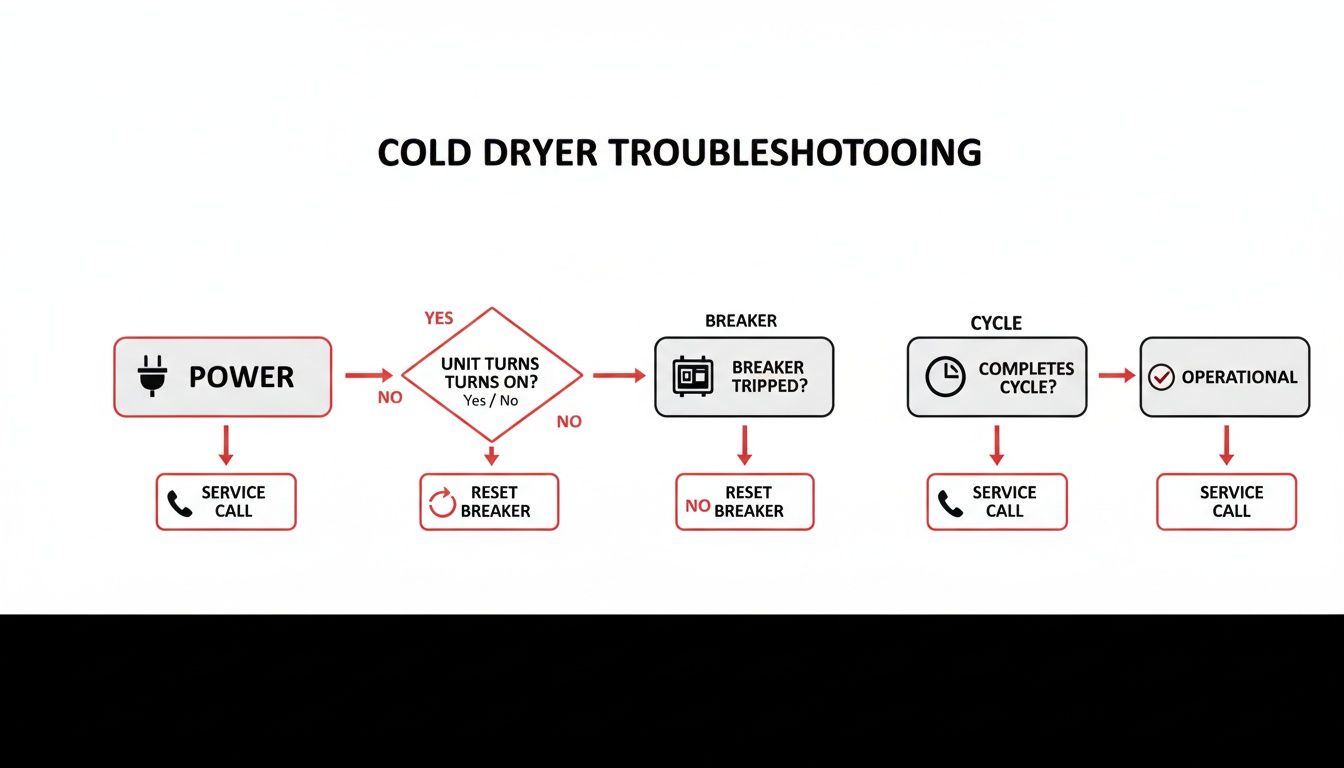
As the chart shows, many heating problems are simple external issues. If you’ve gone through these checks and still have cold, damp clothes, the problem is almost certainly an internal part.
The Thermal Fuse: The Small But Mighty Protector
Tucked away inside your dryer is a tiny, inexpensive part called the thermal fuse. It’s a safety device designed to protect your dryer from overheating, which is often caused by a clogged vent. If it senses dangerously high temperatures, it blows and cuts power to the heating element.
The classic symptom? Your dryer will tumble just fine, but with zero heat.
You can test the thermal fuse with a multimeter set to check for continuity.
- Locate the fuse—it's usually on the exhaust duct or near the blower housing.
- Disconnect the two wires from its terminals.
- Touch one probe from your multimeter to each terminal on the fuse.
If your multimeter beeps or shows a reading close to zero, the fuse is good. If it stays silent or reads "OL" (open loop), it has blown and needs to be replaced. Remember, a blown fuse is often a symptom of a bigger problem, like poor airflow.
The Heating Element: The Heart of the Heat
This is the component that actually generates the heat, looking like a large coil of wires inside a metal housing. Over time, these coils can break or burn out, which is one of the most common reasons we get calls for dryer repair in Edmonton. When it fails, the dryer runs but only blows cold air.
From my experience, you can often spot a bad heating element just by looking at it. If you see a visible break in the coil or a dark, burnt-looking spot, you've found your culprit. A quick continuity test with a multimeter will confirm it.
A faulty heating element is just one of several issues your dryer might face. For a wider look at what can go wrong, check out our guide on solving five major dryer problems, which touches on other common malfunctions.
Thermostats and Thermistors: The Temperature Regulators
Your dryer uses thermostats and a thermistor to regulate temperature, ensuring clothes dry properly without getting scorched. If any of these fail, they can prevent the heating element from ever turning on.
- High-Limit Thermostat: This is another safety part. It shuts off the heating element if the temperature gets dangerously high.
- Cycling Thermostat: This component cycles the heater on and off to maintain the correct temperature for the setting you’ve chosen.
Like the thermal fuse, you can test both of these with a multimeter for continuity. A failed thermostat won't show continuity and will need to be replaced.
Looking at appliance repair trends here in Edmonton, there's a direct link to the city's growth and aging homes. For instance, we’ve seen a 25% rise in gas dryer heating failures since 2015. About half of those calls turned out to be a faulty igniter in one of the popular brands. It just goes to show how certain parts tend to be the usual suspects in our region.
The Overlooked Culprit: A Clogged Dryer Vent
When a dryer stops heating, it's easy to assume an expensive part has failed. But before you start pricing out new components, let's look at the most common—and most overlooked—reason for a no-heat problem: a clogged dryer vent.
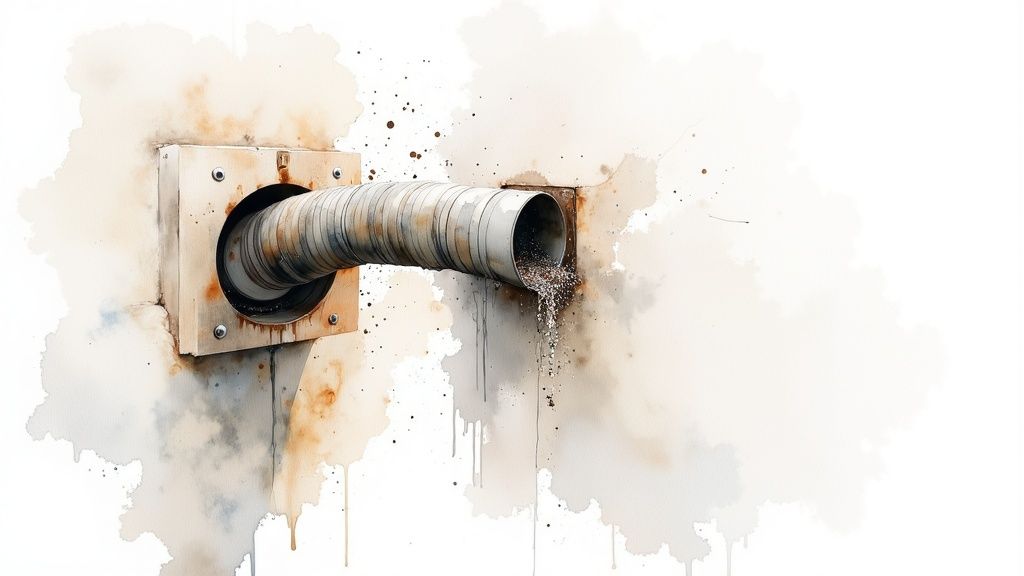
Your dryer needs to breathe. When the vent is packed with lint, hot, moist air has nowhere to go. This trapped heat builds up, causing the dryer to overheat. As a safety measure, the thermal fuse will blow, cutting power to the heating system to prevent a fire. Your dryer isn't broken; it's protecting itself from a dangerous situation.
Telltale Signs of a Blocked Vent
You don’t need special tools to spot a congested vent. Your dryer will give you clear warning signs that it's struggling to breathe.
- Longer Drying Times: Are clothes, especially heavy items like towels, still damp after a full cycle? This is a classic sign of poor airflow.
- The Dryer is Hot to the Touch: The top and sides of the machine feel unusually hot during or right after a cycle.
- A Faint Burning Smell: You might notice a hot, dusty, or burnt lint smell in your laundry room.
- Lint Outside: You see lint and debris building up around the vent flap on the exterior of your home.
A clogged dryer vent is more than an inconvenience; it's a serious fire hazard. That built-up lint is extremely flammable, and when combined with high temperatures, it creates a recipe for disaster.
Vent blockages are behind a huge number of service calls in Edmonton. Our dry climate can increase static electricity, making lint stick and accumulate even faster. A simple cleaning can often solve what seems like a major mechanical failure.
How to Thoroughly Clean Your Venting System
Cleaning your vent is a critical maintenance task every homeowner should tackle at least once a year. This involves more than just emptying the lint screen inside the door—you need to clear the entire exhaust path.
- Unplug the dryer and carefully slide it away from the wall.
- Disconnect the flexible hose from the back of the dryer and the wall.
- Use a vacuum with a long hose attachment or a specialized dryer vent brush to clear lint from inside the hose and the pipe in the wall. You'll be shocked at how much comes out.
- Head outside and check the exterior vent cover. Make sure the flap opens freely and isn't blocked by lint, leaves, or snow.
A clean vent won't just get your dryer heating again—it will make it run more efficiently, saving you money on energy bills. For more tips on keeping your machine in top shape, see our guide on tips to keep your clothes drying smoothly and efficiently.
Knowing When to Call an Edmonton Repair Pro
While there's satisfaction in a successful DIY fix, it's just as important to know your limits. Some dryer issues require a professional to ensure the repair is done safely and correctly, preventing a small problem from becoming a major expense.
If you’ve worked through all the basic steps—checked the power, cleaned the entire vent system, and maybe even tested a component—and you still have no heat, that’s your cue to pause. Continuing to swap parts without a proper diagnosis can become a costly guessing game.
Clear Signs You Need a Technician
Some symptoms are non-negotiable and require an expert for your safety. If you notice any of these, call a professional right away.
- You Smell Gas: For gas dryers, this is an emergency. If you detect a gas smell, turn off the gas supply valve to the dryer, open windows to air out the room, and call a qualified technician immediately.
- Persistent Electrical Issues: If the circuit breaker trips repeatedly after being reset, it indicates a serious electrical short or wiring problem inside the dryer.
- Visible Damage to Wires: Any wiring that looks burnt, melted, or frayed is a massive fire hazard. Do not attempt to repair this yourself.
Understanding when to hand it over is critical, especially when you consider the potential pitfalls of DIY projects that can easily make things worse.
Understanding Professional Repair Costs in Edmonton
Calling a pro doesn't have to be a blind expense. Knowing typical costs can help you make a smart decision. While Canada-wide appliance repair averages are around $220, a specific dryer not heating repair in Edmonton usually lands closer to $190.
This price often includes both labour and parts, like a new thermostat that might cost about $80 on its own. With a new dryer easily costing $800 or more, a professional repair is often the most economical choice.
An experienced technician doesn’t just replace parts; they diagnose the root cause. If a blown thermal fuse is the issue, they'll investigate why it blew—usually a hidden vent blockage—preventing a repeat failure.
When you need a reliable fix fast, a professional service is invaluable. For urgent situations, our team provides same-day appliance repair service to get your household back on track. Choosing an expert ensures the job is done correctly, safely, and is backed by a warranty.
Get Your Dryer Fixed Fast and Reliably
When you’ve hit the end of your DIY rope and the damp laundry is piling up, it’s time to bring in an expert. Choosing a professional for your dryer not heating repair in Edmonton isn’t just about speed; it’s about getting a lasting solution.
A certified technician arrives with the right diagnostic tools and years of experience, going far beyond what a simple multimeter can tell you.
They don’t just treat the symptom—they find the root cause. For instance, a technician will figure out why a thermal fuse blew instead of just swapping it. That's the difference between a temporary fix and a reliable repair that prevents another breakdown.
The Value of Professional Service
Hiring a professional offers key advantages that a DIY approach can’t match.
- Accurate Diagnosis: Technicians use specialized equipment to quickly and accurately pinpoint the failed component, eliminating guesswork.
- Warranty on Work: Our professional repairs come with a warranty covering both parts and labour for your peace of mind.
- Safety and Efficiency: We handle complex electrical or gas components safely, ensuring your dryer operates efficiently and correctly after the repair.
When DIY solutions aren't enough, understanding the professional appliance repair industry helps homeowners find expert assistance and appreciate the standards of service they should expect.
Choosing a pro means investing in a fix that's safe, reliable, and guaranteed. If you're ready to get your appliance back in action, check out our professional dryer repair services for a fast and effective solution.
Common Questions About Dryer Heating Issues
When your dryer stops heating, it’s normal to have questions about the cost, cause, and whether it’s worth fixing. We get these questions all the time from Edmonton homeowners, so we've put together some straight answers to help you decide on your next move.
How much does it cost to replace a dryer heating element in Edmonton?
A burnt-out heating element is a common culprit, so this is a frequent question. In Edmonton, the professional replacement of a dryer heating element typically costs between $175 and $275.
This price generally includes:
- The service call fee to diagnose the problem.
- The cost of the new heating element part.
- The labour for the technician to install it and test the dryer.
Hiring a pro ensures you get the correct part for your model and, more importantly, that the technician identifies and addresses the root cause (like a clogged vent) to prevent the new element from burning out prematurely.
Why is my dryer getting warm but not hot?
This frustrating problem almost always points to one thing: poor airflow. When your dryer vent is partially clogged with lint, some hot air can still escape, but not enough to maintain the high temperatures needed to dry clothes effectively. Your dryer is essentially suffocating.
A dryer that's only getting warm is a massive red flag for a clogged vent. Before you even think about broken parts, give your entire venting system a thorough clean—from the lint trap right out to the exterior exhaust. This simple step fixes the problem more than 80% of the time.
On rare occasions, a failing cycling thermostat could be to blame, as it might be shutting the heat off too early.
Is it worth fixing an old dryer?
The big question: repair or replace? A great guideline is the 50% rule. If the repair costs less than half the price of a similar new dryer, fixing it is usually the smarter financial choice.
Consider these factors:
- Age of the Dryer: Dryers typically last 10 to 13 years. If your machine is less than eight years old, a repair is almost always a good investment.
- Cost of Repair: For common "no heat" issues, the repair bill is often a fraction of a new machine's cost.
- Overall Condition: If your dryer has been reliable and is otherwise in good shape, fixing the heat issue will likely give you several more years of service.
For most "no heat" problems we see in Edmonton, the repair cost lands well below that 50% threshold, making a professional fix the most sensible solution.
Need appliance repair? Visit RepairMyAppliance.ca or call 587-416-5888 for fast, professional service.