
Have you ever wondered how a convection oven delivers a perfectly golden-brown roast chicken or bakes a tray of cookies so evenly every time? It's not magic; it's a smart air circulation system designed to give you better, faster results.
Think about the difference between a still, hot summer day and a breezy one. The moving air makes the heat feel more intense. A convection oven works on that same principle, using a fan to circulate hot air. This simple but powerful feature cooks food up to 25% faster and more evenly than a conventional oven, solving the common problem of hot spots and unevenly baked dishes.
The Secret To Faster, Crispier Baking Revealed
In this guide, we'll explain the technology inside your oven, share practical tips for Alberta home cooks, and show you how to spot potential problems before they ruin your dinner plans.
At its core, how convection bake works is brilliantly simple. A conventional oven relies on stationary, radiant heat rising from a bottom element, often leading to uneven cooking. A convection oven adds a fan to the back, actively circulating hot air throughout the oven cavity.
This constant air movement creates a uniform temperature from top to bottom and front to back. No more hot spots or cold spots. That means you can finally stop rotating your baking sheets halfway through.
Why Circulating Air Matters
That moving air does more than just even out the temperature—it speeds up the cooking process. It works by stripping away the layer of cooler air that naturally surrounds your food, allowing heat to penetrate more quickly and efficiently. This gives you several key advantages in the kitchen.
- Better Browning and Crisping: The constant airflow promotes the Maillard reaction, the chemical process that creates the delicious, golden-brown crust on everything from roasted meats to baked goods.
- Consistent Results: Every cookie on the tray will bake at the same rate. A large roast will cook evenly from the outside to the center.
- Time and Energy Savings: Because food cooks faster, your oven is on for less time. That saves you time and reduces your energy bill.
From bustling kitchens in Edmonton to family homes in Calgary, convection baking has become a game-changer. By circulating hot air, it provides the even heat distribution that cuts cooking time—a huge plus for busy Alberta families. For more on local food trends, check out these insights on Alberta baking trends.
How The Fan And Heating Element Create Even Heat
To understand what’s happening inside your oven when you press the convection bake button, let's look at the key components. A typical oven has two heating elements: one on top for broiling and another at the bottom for baking. A modern convection oven introduces a third major player.
This third element, usually circular, is located at the back of the oven, right behind a powerful fan. When you select a convection setting, this dedicated element heats up, and the fan starts spinning.
The Science Of Air Circulation
The fan's job is to pull air from the oven cavity, push it over the super-hot rear element, and then circulate it throughout the entire space. This creates a consistent, moving blanket of heat, eliminating the hot and cold spots that plague older, conventional ovens.
Think of it like using a hairdryer on your food. Moving air is far more efficient at transferring heat than the stagnant, radiant heat in a traditional bake setting. This is why every part of your roast chicken gets crispy, and every cookie on the baking sheet bakes perfectly.
This flowchart breaks down the simple but brilliant process: the fan circulates air, which leads to faster and more even cooking.
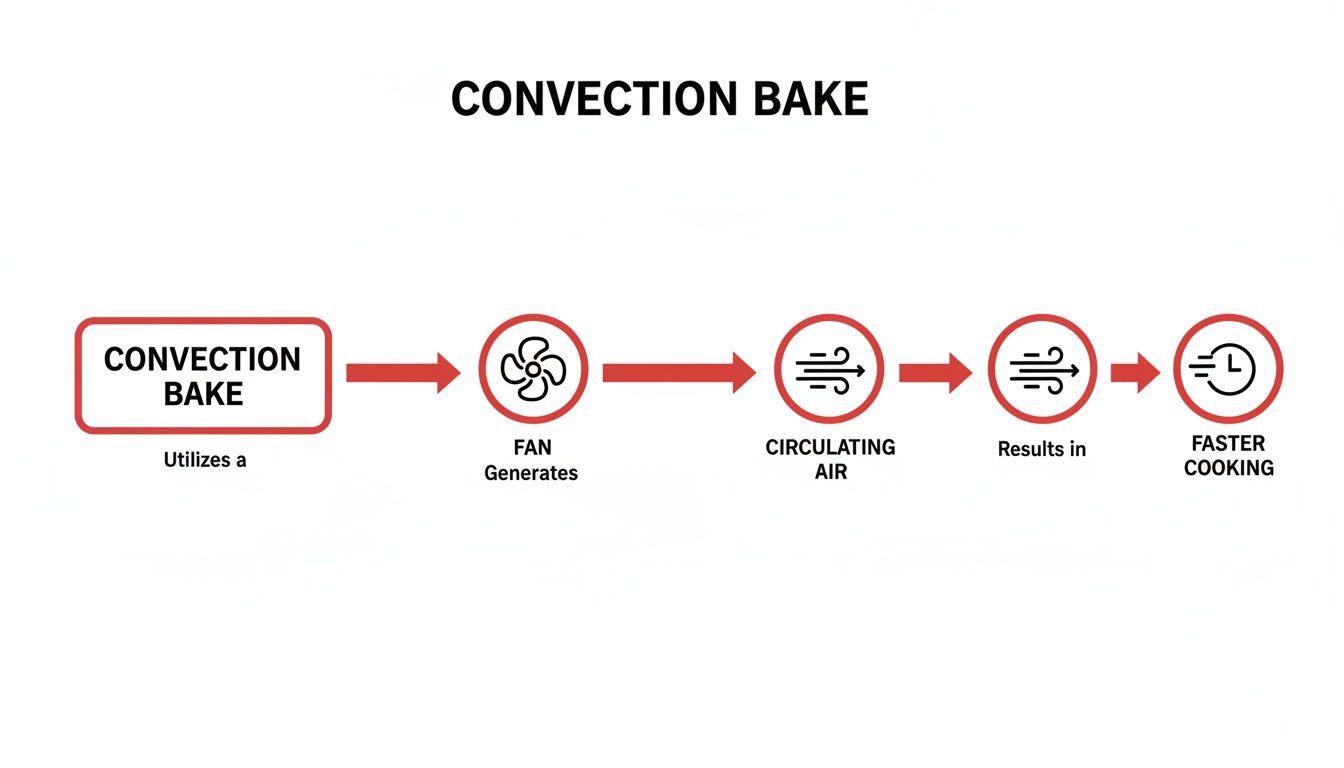
The key takeaway is that active heat transfer is worlds more effective than passive heat. It’s the secret behind faster cooking times and the beautiful, even browning we all want.
This is the same principle behind compact air fryers, where you can see how a tight vortex of hot air creates even heat for incredibly crispy results. A convection oven applies this concept on a larger scale.
The real magic of convection is its ability to strip away the cool, insulating layer of air that naturally surrounds food in a conventional oven. By constantly hitting the food’s surface with fresh, hot air, it dramatically speeds up the cooking process and creates superior texture and flavour.
This dynamic system is what allows you to bake multiple racks of food at once without shuffling them halfway through. The circulating air ensures the top, middle, and bottom racks all receive the same consistent heat.
Of course, this all depends on both the fan and the heating element working correctly. If you ever notice your food is cooking unevenly or the oven isn't getting hot enough on the convection setting, that third element might be the problem. You can learn more in our guide on how to replace an oven heating element.
Comparing Convection And Conventional Baking
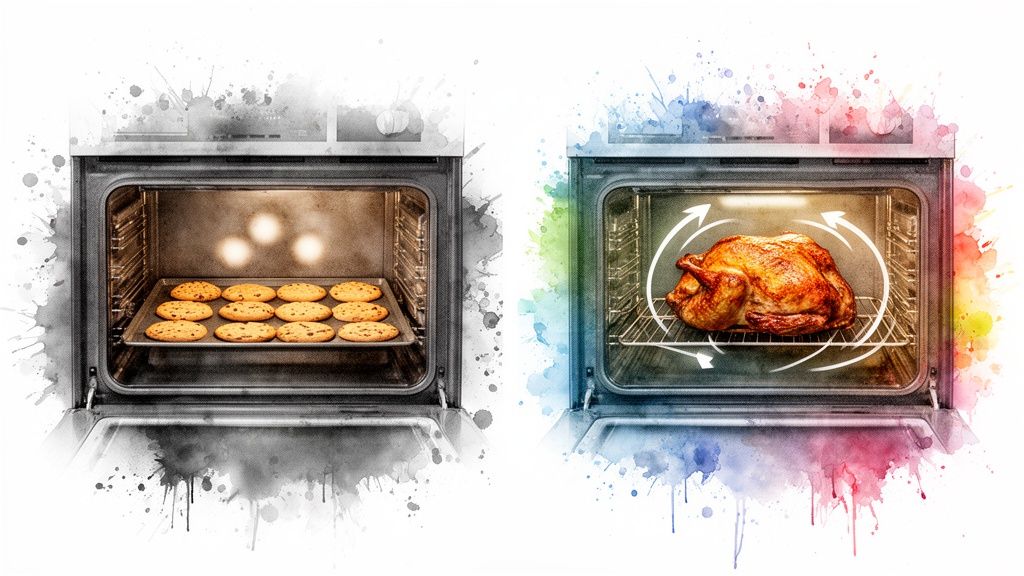
To get the most out of your oven, you need to understand the fundamental difference between its baking modes. Think of a conventional oven as a campfire—it uses static, radiant heat, usually from an element at the bottom. This is why you sometimes end up with cookies that are burnt on the bottom but still doughy on top.
Convection baking changes the game by adding a fan to circulate that hot air. This moving air eliminates cool spots, wrapping your food in a consistent, even heat. The result? Faster cooking, better browning, and crispier textures. It’s a game-changer for weeknight dinners.
This constant airflow also means you can finally use multiple racks at once without juggling pans. Every tray gets hit with the same amount of heat, so batches come out perfectly uniform, whether they're on the top rack or the bottom.
Convection Bake vs. Conventional Bake at a Glance
Sometimes, seeing the differences side-by-side makes it all click. Each mode has its strengths, and knowing when to use which is the secret to getting consistently great results in the kitchen.
Here’s a quick breakdown to help you choose the right setting for your next meal.
| Feature | Conventional Bake | Convection Bake |
|---|---|---|
| Heat Source | Static heat from bottom/top elements. | Circulated hot air from a fan and element. |
| Cooking Time | Standard recipe time. | Up to 25% faster than conventional. |
| Temperature | Follows recipe exactly. | Typically requires a 15°C (25°F) reduction. |
| Best For | Delicate items like cakes, custards, soufflés. | Roasting, toasting, multi-rack baking. |
| Energy Use | Higher due to longer cooking times. | More efficient due to shorter cooking times. |
As you can see, convection bake is designed to save you time and deliver a better finish on many dishes. If you want to dive even deeper into the mechanics, check out this detailed comparison of convection and regular ovens for more insights.
The Impact On Temperature And Timing
Why is convection so much more efficient? It comes down to maintaining a stable cooking environment. A conventional oven’s temperature can swing as the heating elements cycle on and off. Those fluctuations are the real culprits behind unevenly cooked food.
A convection fan smooths out those temperature swings, keeping the heat remarkably consistent. This process relies on the oven sensor, which acts as the oven’s brain. A faulty sensor can throw everything off, which is why understanding how an oven sensor works is helpful if you suspect a problem.
The real magic of convection is its ability to eliminate the "thermal boundary layer"—a tiny pocket of cooler, insulating air that naturally forms around your food. By constantly blowing this layer away, the fan lets heat penetrate your food faster and more evenly.
This incredible efficiency is why you need to adjust your recipes. Dropping the temperature by about 15°C prevents the outside of your food from burning before the inside is cooked through. You'll also want to start checking for doneness a bit earlier than the recipe suggests to avoid overbaking. It's a small tweak that makes a huge difference.
Practical Tips For Perfect Convection Cooking
Let's translate theory into delicious, real-world results. Moving from a standard oven to convection is easier than it sounds, and it starts with a couple of simple adjustments. Once you get the hang of it, you’ll be reaching for that convection button for everything from weeknight dinners to holiday roasts.
The most important guideline to remember is the "minus 15 and 25" rule. For most recipes written for a conventional oven, you’ll want to drop the temperature by about 15°C (25°F). Because the circulating air cooks things faster, you should also start checking for doneness roughly 25% sooner than the recipe says.
Adjusting Your Techniques
The magic of convection is its ability to create beautifully browned, crispy surfaces. To get the most out of it, give the hot air some room to work.
- Use Low-Sided Pans: Cookie sheets, jelly roll pans, and low-sided roasting pans are your best friends. They don't block the airflow, allowing it to hit your food from all sides for even browning.
- Don't Crowd the Oven: It’s tempting to squeeze one more tray in, but resist! Leave at least an inch of space around each pan. Overcrowding traps steam and negates the convection effect.
- Roast Directly on the Rack: For the crispiest chicken skin, try placing the bird right on the oven rack with a drip pan on the shelf below. This method gives the hot air total access, ensuring a perfect, crackling finish.
The secret to convection's success is how it wicks moisture away from the surface of your food. This process kicks the Maillard reaction into high gear, giving you deeper browning and richer, more complex flavours than you could ever get from static heat alone.
When Not To Use Convection
As great as it is, convection isn’t the right tool for every job. The fan-forced air can be too aggressive for delicate baked goods that need a gentle, slow rise.
You’ll want to stick with the conventional bake setting for things like:
- Delicate Cakes and Soufflés: The moving air can cause them to bake unevenly, develop a lopsided top, or collapse.
- Custards and Flans: These need humid, gentle heat to set properly. Convection can dry them out and make them rubbery.
- Quick Breads and Muffins: The fan often creates a dry crust on the outside before the inside has a chance to bake through.
For these recipes, the calm, radiant heat of a standard bake setting provides the tender, moist crumb you’re after. If you find your oven is still giving you trouble—on either setting—our guide on how to fix an oven can help you troubleshoot.
Troubleshooting Common Convection Oven Problems
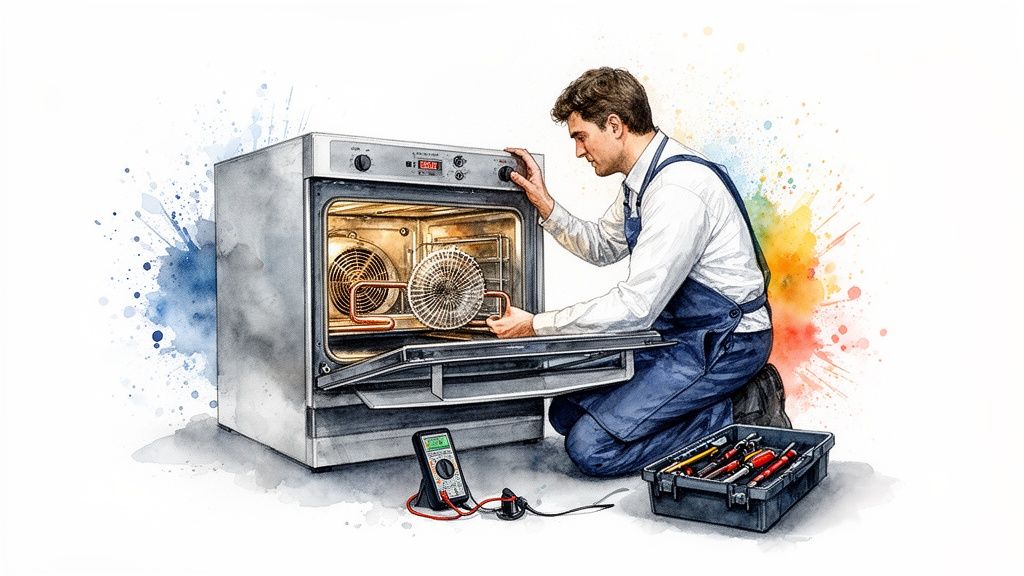
When your convection oven acts up, it can throw your whole kitchen routine into chaos. Knowing what to look for helps you spot trouble early, turning a potential appliance meltdown into a manageable fix.
Most convection problems boil down to one of three culprits: the fan motor, the dedicated third heating element, or the control board. If any of these parts fail, the even heat circulation you rely on is gone.
So, how do you know something’s wrong? You’ll see it in your food. Cookies might come out burnt on one side and doughy on the other, or a roast chicken is taking forever to cook. These are classic signs the convection system isn't working.
Common Symptoms Of A Failing Convection System
Loud or strange noises are another dead giveaway. If you switch on the convection setting and hear a grinding, rattling, or high-pitched whine, that’s often the fan motor crying for help. A healthy convection fan makes a steady, low hum. If that sound changes, it’s time to investigate.
Here are the most common signs that your convection system needs a look:
- Uneven Cooking: The top of your casserole is perfectly browned, but the bottom is lukewarm. This is a tell-tale sign of poor air circulation.
- Fan Not Spinning: Peek inside. If the fan at the back isn't moving during a convection cycle, the motor has likely failed.
- Loud Noises: Grinding sounds usually mean the fan blade is hitting something, while a scraping noise can point to worn-out motor bearings.
- No Heat in Convection Mode: If your oven heats up fine on regular bake but stays cold on convection, the third heating element has probably burned out.
A broken convection system does more than mess up dinner; it wastes the time and money you invested in your meal. At Repair My Appliance, we've seen how frustrating this can be for our customers. Heating element failures in convection modes account for a significant portion of our oven service calls in Alberta, often due to the strain of constant use.
When To Call A Professional Technician
While a DIY fix might seem tempting, poking around inside a convection oven can be tricky and dangerous. You're dealing with live electrical components, and safety should always come first.
Accessing the fan motor or the rear heating element requires shutting off the power and removing the back panel of the oven. This is a job for a trained technician who has the right tools and knows how to perform the repair safely. For more on appliance safety, particularly with gas models, read our guide on gas oven safety and what to do if you smell gas.
Trying to diagnose a faulty control board without professional equipment is even more complicated. A wrong guess could lead you to replace a perfectly good part, wasting time and money. Our technicians in Edmonton and the surrounding areas can find the real problem fast and get it fixed right the first time.
Your Expert Convection Oven Repair Solution
Don't let a faulty convection oven stand between you and a perfectly cooked meal. When you notice inconsistent heating, a noisy fan, or a setting that won’t work, it’s time to call the professionals. An oven that can’t circulate air properly defeats the purpose of convection, leaving you with frustrating, uneven results.
Repair My Appliance offers prompt, same-day service across Edmonton, Calgary, Red Deer, and the surrounding areas. Our licensed and insured technicians arrive in fully stocked vehicles, ready to diagnose and fix the problem on the first visit. Whether it’s a worn-out fan motor or a failed heating element, we have the expertise to handle it. For homeowners searching for a trusted local company, our oven repair services in Edmonton are designed to get your kitchen back up and running fast.
We believe in clear, upfront pricing, and your service call fee is always waived once you approve the repair. Instead of struggling with an underperforming oven, let our team restore its efficiency and precision.
Still Have Questions About Convection?
Even after you get the hang of how convection works, a few questions often pop up. We've put together the most common ones our technicians hear from homeowners all over Alberta, with straightforward answers to help you get the most out of your oven.
Do I Really Need to Adjust the Temperature for Convection Baking?
Yes, this is the most important step! Because the fan moves hot air so efficiently, you need to reduce the recipe's temperature by about 15°C (25°F). This simple change stops the outside of your food from burning before the inside has a chance to cook through.
It’s also a smart idea to start checking for doneness about 10-15 minutes earlier than you normally would. Convection can speed things up by as much as 25%. Keep in mind, some newer ovens have an "auto-conversion" feature that does this for you automatically.
Can I Use Any Pan or Dish in a Convection Oven?
For the best results, use bakeware with low sides. Cookie sheets, jelly roll pans, and shallow roasting pans are perfect because they don’t block the moving air. This is what gives you that perfectly even browning and crisping.
While any oven-safe pan will work, high-sided dishes like deep casserole pans can act as a wall. They block the airflow, which cancels out the benefits of the convection setting.
What are the Signs My Convection Fan is Broken?
The biggest clues will show up in your cooking. If your food is suddenly cooking unevenly or taking way longer than it should on the convection setting, that’s a major red flag.
You might also hear strange noises from the back of the oven. Listen for:
- Grinding or rattling sounds, which often mean the fan blade is loose or hitting something.
- A loud, non-stop humming noise, which can point to a fan motor that’s failing.
- If you peek inside while the oven is preheating and the fan isn't spinning at all, it's a clear sign you need a professional repair.
Is It Normal for the Convection Fan to Turn On and Off?
Yes, that’s completely normal! In most modern ovens, the fan and its heating element are designed to cycle on and off together. It’s a smart system that allows the oven to maintain a very precise and stable temperature.
This cycling action prevents the constant blast of hot air from drying out or overcooking your food. Think of it as part of the oven's temperature control technology, designed to deliver consistent, perfect results every time.
Need appliance repair? Visit RepairMyAppliance.ca or call 587-416-5888 for fast, professional service.