

Installing a new dishwasher can refresh your kitchen, but a successful project is decided before you even touch a tool. The key is a solid plan that covers measurements, materials, and safety checks from the start. This guide will help you avoid common headaches and set you up for a smooth, leak-free installation, whether you're in Calgary, Edmonton, or anywhere in between.
Your Pre-Installation Game Plan and Checklist
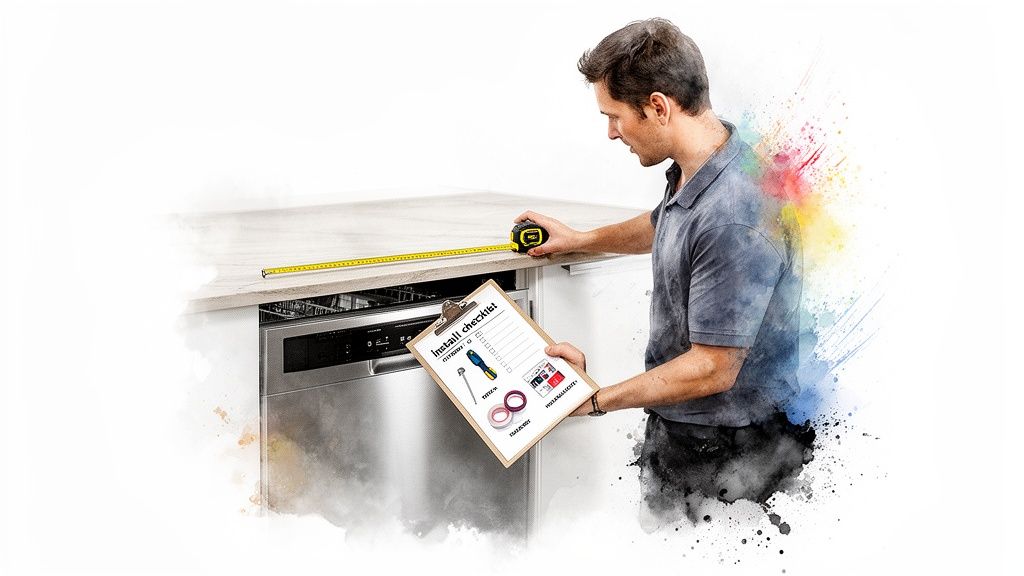
Before diving into the installation, you have to prepare the space and, just as importantly, yourself. A few minutes of prep can save hours of frustration later. From ensuring the new unit will fit to grabbing the right adapter for your water line, this initial stage is non-negotiable. Think of it as a pilot's pre-flight check—solving problems on the ground prevents issues when you have a half-installed appliance taking over your kitchen.
Measure Your Space Meticulously
Honestly, the single most common installation mistake happens right here. You must confirm your new dishwasher will fit the opening. Grab your tape measure and check three critical dimensions of the cabinet opening:
- Height: Measure from the floor to the lowest point of the countertop. Check both the left and right sides, as floors can be surprisingly uneven.
- Width: Measure from cabinet to cabinet, checking at the front and back of the opening. The standard dishwasher width is 24 inches, but it never hurts to double-check.
- Depth: Measure from the front edge of your cabinets straight back to the wall. You need enough room for the dishwasher itself plus its connections (water line, drain hose, power cord) without kinking anything.
Expert Tip: Don't forget to account for your flooring. If you've recently installed thicker flooring, your old dishwasher might be "tiled in," making removal and replacement much trickier.
Gather Your Tools and Materials
Having everything you need within arm's reach is a game-changer, preventing endless trips to the hardware store. While every installation has its quirks, some essentials are almost always needed.
A dishwasher installation kit is incredibly useful, typically including a new braided steel water supply line, a 90-degree brass elbow fitting, and other necessary adapters. Never reuse the old water line; it's a primary cause of future leaks.
Before you start, make sure your toolkit is ready. A professional always comes prepared. For a closer look at professional standards, review our guide on appliance installation in Edmonton.
Here’s a complete checklist of everything you should have on hand for a standard dishwasher replacement.
Essential Tools and Materials for Dishwasher Installation
| Category | Item | Pro Tip |
|---|---|---|
| Tools | Tape Measure | For those critical height, width, and depth measurements. |
| Adjustable Wrench | Essential for tightening water line connections. | |
| Screwdrivers | You'll need both Phillips and flathead types. | |
| Pliers | For gripping and adjusting various components. | |
| Level | Crucial for ensuring the dishwasher is perfectly balanced. | |
| Utility Knife | Handy for cutting packaging or trimming hoses if needed. | |
| Bucket or Pan | A must-have for catching water from the old lines. | |
| Materials | Dishwasher Installation Kit | Includes the new water line and brass fittings. Don't skip this. |
| Teflon Tape (Plumber's Tape) | Creates a watertight seal on threaded pipe connections. | |
| Wire Nuts | Only needed if your unit is hardwired instead of a plug-in. | |
| Safety Gear | Work Gloves | Protects your hands from sharp metal edges. |
| Safety Glasses | A good idea to guard against any unexpected water spray. |
Having these items ready will make the entire process smoother and safer.
Inspect the New Appliance
Once it's unboxed, give your new dishwasher a thorough inspection. Check for any dents, scratches, or cracks that might have occurred during shipping. Pay close attention to the plastic base and the connection points for the water inlet and drain hose. It’s far easier to deal with a return or exchange now than after installing a damaged unit. Double-check that all parts listed in the manual—like mounting brackets, screws, and the toe-kick panel—are in the box.
The Critical Safety Shutdown
This is the most important step of all, so don't rush it. You must completely shut off the power and water supply to the old dishwasher before doing anything else.
- Shut Off the Water: Look under your kitchen sink for the hot water shutoff valve. It's usually a smaller valve on the line heading toward the dishwasher. Turn it clockwise until it's fully closed.
- Shut Off the Power: Go to your home's main electrical panel. Find the circuit breaker labelled for the dishwasher and flip it to the "OFF" position. If your panel isn't clearly labelled, it’s safest to turn off the main breaker.
- Verify Everything Is Off: Confirm it worked. Try to start a cycle on the old dishwasher; the control panel should be completely dead. Then, turn on the hot water tap on your kitchen sink. The flow should stop after a few seconds. This simple check confirms you’re safe to proceed.
Getting Your Old Dishwasher Out of the Way
With the power off and the water supply valve closed, you’re ready to remove the old dishwasher. This is a careful process, not about brute force. Taking your time here prevents damage to your floors and kitchen, setting the stage for a smooth installation.
Your first stop is under the sink, where you'll find three connections: the drain hose, the water supply line, and the power cord. Grab a bucket and some old towels—there’s always some leftover, grimy water in the lines.
Disconnecting the Plumbing and Power
Start with the drain hose, the corrugated plastic tube running from the dishwasher to your garbage disposal or sink's drain pipe. A simple metal clamp holds it in place. Use pliers to squeeze the clamp and slide it down the hose, then gently twist and pull the hose free. Be ready to aim the hose into your bucket, as it will drain.
Next, find the braided steel water supply line connected to the hot water valve you already turned off. Place a towel under the connection, then use an adjustable wrench to loosen the nut. A little water will drip out, which the towel will catch.
Finally, tackle the electrical connection. Your dishwasher is either hardwired or plugged in.
- Plug-In: If you see a regular cord going into an outlet under the sink, simply unplug it.
- Hardwired: You'll see a small metal junction box. Unscrew the cover. Inside, you’ll find three wires connected with plastic wire nuts—black to black, white to white, and the bare copper or green wire to another. Carefully twist the wire nuts counter-clockwise to remove them and separate the wires.
Pro Tip: Before sliding the old unit out, lay a large piece of cardboard or an old blanket on the floor. Dishwasher feet can easily scratch or gouge hardwood, vinyl, and laminate. This simple step can save you from a costly flooring repair.
Freeing and Removing the Unit
With everything disconnected, only two small mounting brackets hold the dishwasher in place. Look at the underside of your countertop, right at the top of the dishwasher opening—you should see two screws. Use a Phillips screwdriver to remove them. In some installations, these brackets might be screwed into the side cabinets instead.
With the screws gone, the dishwasher is free. Gently pull it straight out, wiggling it a few inches at a time to ensure no hoses or wires get snagged. If it feels stuck, the feet might be catching on the flooring; a slight lift at the front while you pull should help it clear the edge.
Slide the old machine completely out onto the protective covering you laid down. Now is the perfect time to give the empty cavity a good cleaning. Sweep up dust and wipe down the floor and walls. Starting the new installation in a clean, prepped space makes a huge difference.
Mastering the Plumbing for a Leak-Free Finish
With the old dishwasher out, it's time to tackle the plumbing. This is where a DIY job can turn into a headache. A tiny, slow leak from a poorly sealed connection can go unnoticed for months, causing serious water damage to cabinets and flooring. The key is to get three connections perfect: the water supply line, the drain hose, and the 90-degree elbow that connects the supply line to your new machine.
Attaching the Water Inlet Fitting
Your new dishwasher has a water inlet valve, usually at the bottom-front left corner. You can't connect the water line directly to it. You need a 90-degree brass elbow, which should come in your installation kit. This fitting is essential because it allows the water line to run neatly under the dishwasher without kinking.
To create a watertight seal, you'll need Teflon tape (plumber's tape).
- Wrap the Threads: Wrap the tape clockwise around the threaded male end of the brass elbow. Three to four wraps is perfect. Keep the tape flat and snug. Wrapping it clockwise prevents the tape from unbunching when you tighten the fitting.
- Attach the Elbow: Carefully thread the taped elbow into the dishwasher's plastic water inlet. Hand-tighten it first to avoid cross-threading. Once snug, use an adjustable wrench for another quarter- to half-turn. Be firm, but do not over-tighten. Cranking down too hard can crack the plastic housing.
Connecting the Water Supply and Drain Lines
With the elbow in place, connect the main lines. It's much easier to do this now, with full access, rather than trying to squeeze your hands into a tight space later.
The Water Supply Line:
Your installation kit should include a new braided steel supply line. Attach one end to the brass elbow you just installed, hand-tightening first, then giving it a gentle snug with a wrench. Route the other end towards the sink cabinet.
The Drain Hose:
The corrugated drain hose is usually pre-attached to the back of the dishwasher. Your job is to guide it through the same hole in your cabinet as the water line and power cord. Make sure it isn't sharply bent or kinked, which could block water from draining.
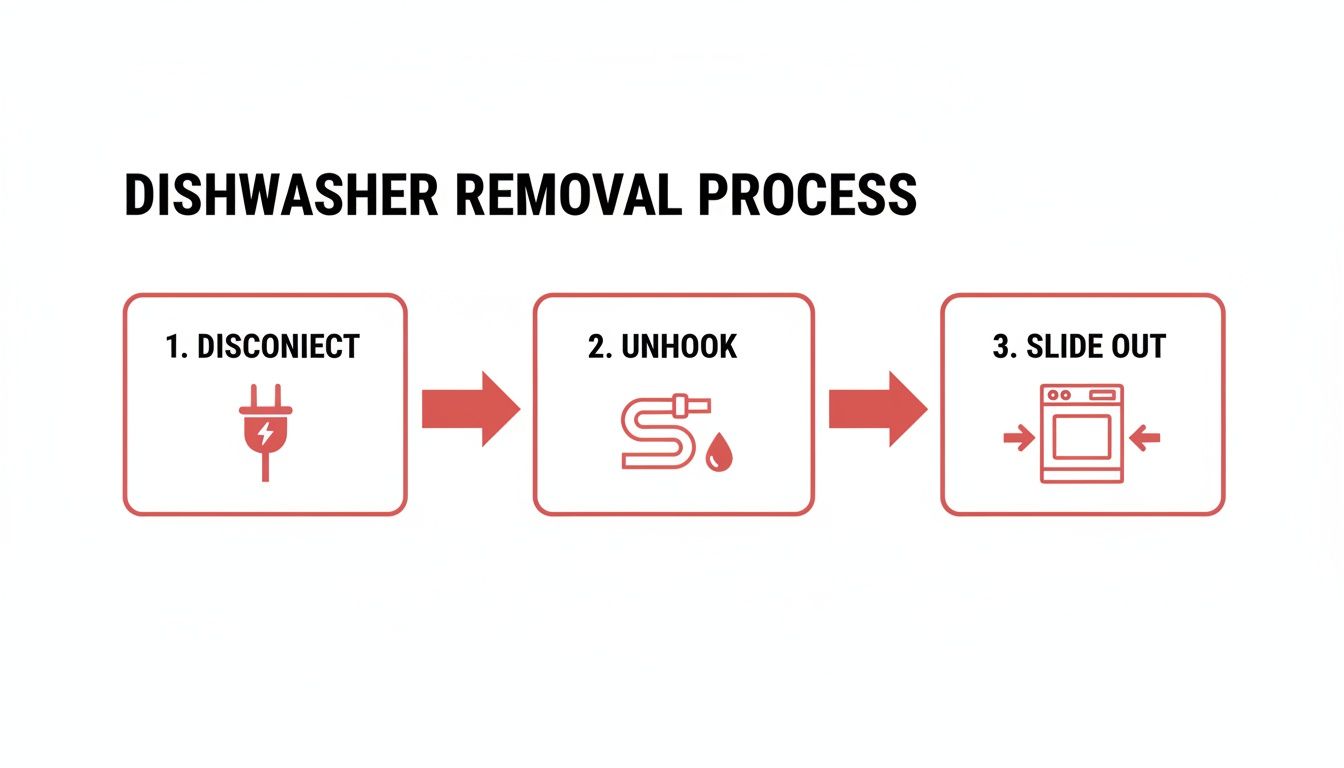
This simple flow shows how getting the old unit out properly sets you up for a smooth, accessible plumbing installation.
Creating the Essential High Loop
This next part is easily the most overlooked step in a DIY dishwasher install, but it’s absolutely critical. Before connecting the drain hose to your sink's plumbing, you must create a "high loop."
Simply lift the drain hose as high as you can under the sink—ideally, right up against the underside of the countertop. Secure it in that position with a strap or clamp. From that high point, the hose then loops back down to connect to the garbage disposal or sink drainpipe.
Why is this so important? The high loop creates an air gap that prevents dirty water from your sink from flowing backward into your dishwasher. Without it, you could end up with smelly, contaminated water in your "clean" dishwasher. This isn't just a recommendation; it's a standard plumbing code requirement in Alberta.
Once the loop is secured, attach the end of the drain hose to the inlet on your garbage disposal or drainpipe and tighten the clamp. If you run into issues, find troubleshooting tips in our guide on why your dishwasher is not getting water.
With all lines connected and routed, you're ready to carefully slide the dishwasher into its cabinet.
Navigating the Electrical Work for a Safe Connection
Now for the final major step: the electrical connection. This is where you must be precise and prioritize safety. Getting this right ensures your dishwasher runs reliably and prevents serious hazards.
First, ensure the power is off at the circuit breaker. Don't just assume you flipped the right switch. Use a voltage tester to be 100% sure the power is off. This is the single most important safety step.
Dealing with a Plug-In Dishwasher
If your new dishwasher came with a standard three-prong power cord, this is the easier route. Carefully guide the cord to the outlet under your sink, ensuring it doesn’t get pinched. Most modern kitchens in Alberta should have a dedicated GFCI (Ground Fault Circuit Interrupter) outlet, a crucial safety device for any appliance near water. Just plug the cord in firmly, and you're good to go.
Connecting a Hardwired Dishwasher
A hardwired installation means connecting your home's wiring directly to the dishwasher's junction box. It comes down to matching the colours correctly. Once you feed your home's power cable through the back of the dishwasher's junction box, you'll see three wires.
- Black to Black: This is your "hot" or live wire.
- White to White: The white wire is the neutral.
- Ground to Ground: The bare copper or green wire is your ground. This connects to the green grounding screw or wire.
Use new wire nuts to secure each pair. Twist them clockwise until snug, then give each wire a light tug to confirm it’s held tight. A loose connection can cause arcing, a major fire risk. For more details on electrical safety, see our guide on the types of fuses and why they matter.
Expert Tip: Always double-check the manufacturer’s wiring diagram, usually on a sticker near the junction box. After connecting, neatly tuck the wires back into the box and screw the cover on. Never leave exposed wires.
It's also crucial to follow local codes. While this guide is a solid start, regulations can vary. For example, electrical wiring standards Australia shows how specific these can be. Always ensure you're compliant with Alberta's electrical codes.
Electrical mistakes can be dangerous. Faulty connections are behind more than 40% of early appliance failures, turning a weekend DIY project into an expensive service call. At Repair My Appliance, our licensed technicians handle these connections daily, ensuring everything is safe, secure, and up to code.
Getting Your New Dishwasher Positioned, Levelled, and Secured
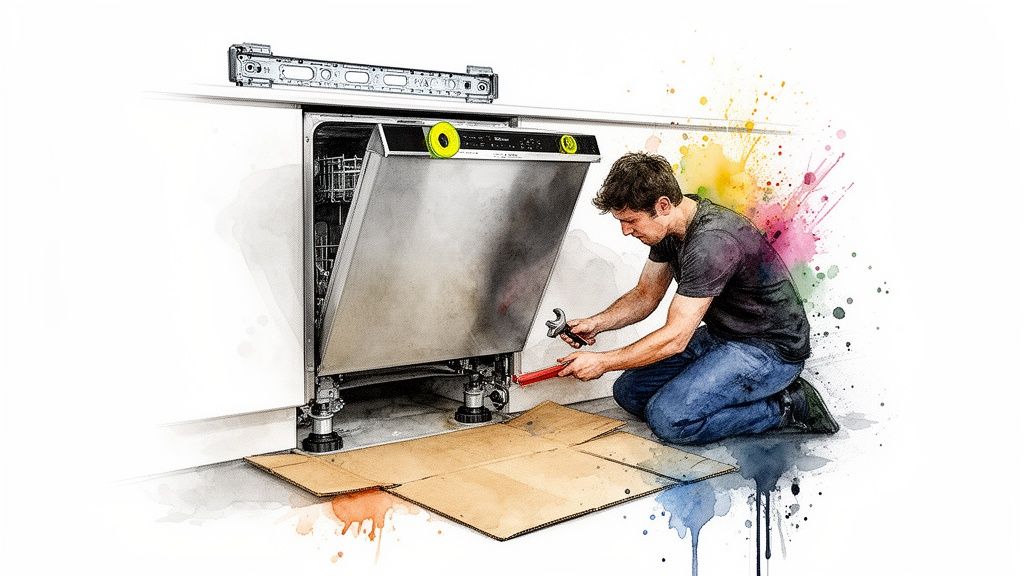
You're on the home stretch. A perfectly positioned and levelled dishwasher is crucial for performance—it ensures spray arms spin freely, water drains completely, and the machine doesn't rattle.
Start by carefully sliding the new dishwasher into its cabinet opening. As you push it in, gently pull the water line, drain hose, and electrical cord through to make sure they don't get kinked or pinched behind the unit.
Fine-Tuning the Levelling Feet
Once the dishwasher is mostly in, it's time to get it perfectly level. This step is non-negotiable for proper operation. An unlevel dishwasher is a recipe for leaks, poor cleaning, and noise. Most dishwashers have three adjustment points: two adjustable feet at the front corners and a single screw for the rear height.
- Front Feet: Turn these by hand or with pliers. Twist clockwise to lower or counter-clockwise to raise.
- Rear Foot: Look for a long screw, often in the centre of the bottom front panel. Turning this screw raises or lowers the back of the dishwasher, saving you from pulling the whole unit out for minor adjustments.
Place your level on the top edge of the open door to check it side-to-side. Tweak the front feet until the bubble is dead centre. Now, put the level on the bottom dish rack and slide it in to check the front-to-back balance. Use the central screw to adjust the rear until it's perfectly level.
A perfectly level installation is about efficiency. An unlevelled dishwasher can cause poor water circulation, increasing cycle times and energy use. A professional install avoids the 25-35% failure rate spike seen in improper DIY jobs, ensuring your appliance operates at peak efficiency from day one.
Securing the Dishwasher in Place
With the unit level, anchor it to stop it from tipping forward when you pull out a loaded rack. Your dishwasher should include mounting brackets for this.
- Mounting to the Countertop (for Wood or Laminate): Attach the brackets to the underside of your counter. Use short screws and be very careful they aren't too long—you don't want a screw popping through the top.
- Mounting to the Side Cabinets (for Granite or Quartz): For a stone countertop, mount to the sides. Attach the brackets to the dishwasher's frame and screw them into the adjacent cabinet walls. You may need to break off the top tabs on the brackets as shown in your manual.
This final step provides a clean, built-in look and ensures your dishwasher is safe and stable. Once secured, attach the decorative toe-kick panel at the bottom.
The Final Check: Running a Test Cycle
With your new dishwasher snug in its place, it’s time for the moment of truth. This is the final quality check to catch any small issues before they become big, wet problems.
First, turn the utilities back on. Go under the sink and turn the water supply valve counter-clockwise all the way. Then, go to your electrical panel and flip the dishwasher's circuit breaker back to "ON." The control panel should light up.
Running the First Cycle
Don't load it with dishes yet. The goal is to run a short, empty cycle, like a "Rinse Only" or "Quick Wash," to put your new connections under pressure. Once you hit "Start," you should hear the unit come to life and water begin to fill the tub.
That's your cue. Grab a flashlight and inspect every connection point:
- Water Inlet: Check around the 90-degree brass elbow where it meets the dishwasher.
- Supply Line: Look at the connection to the hot water shutoff valve under the sink.
- Drain Hose: Make sure the clamp where the hose connects to the garbage disposal or sink drain is bone dry.
Run your fingers around each connection to feel for even the tiniest bit of moisture.
Troubleshooting First-Run Problems
Even careful DIYers can hit a snag. Most initial hiccups are simple fixes.
Problem 1: The Dishwasher Won't Power On
- Check the Breaker: Are you sure you flipped the right one? Double-check the panel.
- Check the Connection: For a plug-in model, ensure the cord is firmly in the outlet. For hardwired units, a loose wire nut is the usual culprit. Turn the power back off at the breaker before opening the junction box to check connections.
Problem 2: The Dishwasher Powers On But Won't Fill
- Is the Water Valve Fully Open? Give the shutoff valve another turn to ensure it's completely open.
- Is the Supply Line Kinked? A sharp bend in the water line is a common culprit. You might need to gently pull the dishwasher out an inch to straighten it.
A botched DIY installation often ends with one of these issues. We see a 20-30% failure rate on amateur jobs due to small mistakes during these final steps. A successful test run is your best guarantee for a long-lasting, leak-free appliance.
If your unit fills but doesn't drain, the issue might be in your home's plumbing. Understanding the signs of a blockage is key, as explained in this resource: 5 Ways Your Dishwasher Could Be Alerting You To A Clogged Pipe. For other issues, our guide on common dishwasher repairs can help.
When to Call a Professional for Your Dishwasher Installation
While this guide empowers you to tackle a DIY install, knowing when to put the tools down is crucial. A straightforward swap is one thing, but unexpected problems are another.
If you find issues like heavily corroded plumbing, outdated aluminum wiring, or a cabinet space that needs modification, it’s time to call in a professional. Forcing a connection or attempting a makeshift electrical fix can lead to disastrous leaks or fire hazards. Your home’s safety always comes first.
When Professional Help Is Non-Negotiable
Stop immediately and pick up the phone if you find:
- Signs of Water Damage: Soft flooring or mouldy drywall behind the old dishwasher points to an existing leak that needs fixing first.
- Complex Electrical Setups: If your home has aluminum wiring or an improperly grounded circuit, a licensed technician is essential for a safe, code-compliant connection.
- Plumbing That Won’t Budge: Seized or corroded shutoff valves can break if forced, causing an uncontrollable water situation.
Don't risk thousands in potential water damage to save a few dollars on installation. A professional install is an investment in peace of mind, ensuring the job is done correctly, safely, and is fully insured.
For homeowners in Edmonton, Calgary, Red Deer, and surrounding areas, our licensed technicians at Repair My Appliance handle these challenges daily. We offer same-day service and ensure every installation meets Alberta's strict safety codes. Learn more about our dishwasher installation services near you and get the job done right the first time.
Frequently Asked Questions (FAQ)
Do I need a plumber and an electrician to install a dishwasher?
For a standard replacement where all hookups are in place, a qualified appliance technician is all you need. The team at Repair My Appliance has the plumbing and electrical expertise for these jobs. However, if you're installing a dishwasher in a new location without existing lines, you'll need a licensed plumber and electrician first to create the connections.
Can I connect a dishwasher drain to a garbage disposal?
Yes, this is the standard setup. The crucial step is to remove the knockout plug from a new garbage disposal. It's a small plastic disc inside the dishwasher inlet port. Use a screwdriver and hammer to tap it out, then retrieve the plastic piece from inside the disposal (with the power off!). Forgetting this step will prevent your dishwasher from draining.
What is a "high loop" and why is it important for a dishwasher?
A "high loop" is created by raising the drain hose as high as possible under the sink before connecting it to the drain. This creates an air gap that prevents dirty water from your sink from flowing back into your dishwasher. This is not just a best practice; it's a requirement under Alberta's plumbing codes to prevent contamination of your clean dishes.
How long does it take to install a dishwasher?
For an experienced DIYer, a standard replacement typically takes 2 to 3 hours. If you're new to this or encounter issues like a stuck connection, it could take 4 hours or more. A professional technician can usually complete the job in 60 to 90 minutes, handling any surprises quickly and efficiently.
Need appliance repair? Visit RepairMyAppliance.ca or call 587-416-5888 for fast, professional service.