
When an appliance breaks down, your first instinct is to get it fixed—fast. Whether it's the fridge failing or the washer flooding, that urgency is exactly what scammers prey on. They bank on your panic, hoping you'll overlook the red flags of a shady operation.
Before you book any service, it's crucial to verify the company's legitimacy. This means checking for a real physical address, confirming their business license, and carefully reading online reviews for signs of fraud. A few minutes of homework can be the difference between hiring a professional and letting a fly-by-night operator into your home.
The Hidden Dangers of Unverified Repair Services
These aren't just one-off cases of a technician overcharging for a simple fix. Modern appliance repair scams are often sophisticated cons. They create fake "local" business profiles on Google, use untraceable phone numbers, and put up slick-looking websites that vanish without a trace. Their goal is always the same: take your money and deliver little to no real service.
The Real Cost of a Bad Call
Hiring an unverified repair service can cost you far more than just a service call fee. The financial and safety risks are serious, especially for homeowners and property managers in busy hubs like Edmonton and Calgary.
One common trick is when a technician shows up and immediately diagnoses a "catastrophic failure." They'll insist your appliance is a total write-off and push you to buy a new one, often from a "partner" company that gives them a kickback. Another classic scam is the phantom part replacement, where you're billed for an expensive component that was never even installed.
Either way, you're left with a broken appliance, an empty wallet, and the headache of starting the repair process all over again with a legitimate company.
Expert Insight: The most dangerous scams involve unqualified people trying to fix complex appliances, especially gas dryers or ovens. An improper gas line connection can lead to a leak, creating a massive fire or explosion hazard. This is why verifying a technician’s credentials isn't just about money—it's about keeping your home and family safe.
The Scope of the Problem in Alberta
This isn't some far-off problem; it's happening right here in Alberta. Homeowners are dealing with a rising number of appliance repair scams. Data from the Better Business Bureau (BBB) shows over 1,200 complaints related to home services in 2024 alone, with many concentrated in Edmonton and Calgary where busy families and landlords make prime targets.
Provincial consumer protection reports estimate these scams cost Albertans around $2.5 million annually. Appliance repair cons make up 18% of those cases, which translates to roughly $450,000 in losses each year. You can find more details on these consumer risks reported by ABC7 News.
These numbers paint a clear picture: scammers are getting good at using online platforms to look legit. They know a high Google ranking or a few positive reviews is often enough to win your trust. That's why it's so important to understand why Yelp may not show the full picture of a business's reputation and why you need to dig a little deeper.
Beyond Financial Loss to Lasting Damage
The damage from a scammer can stick around long after they're gone. An unqualified technician can wreck your appliance, turning what was a minor, fixable issue into a total loss.
Think about these real-world scenarios:
- The Overloaded Circuit: An amateur "fixes" a dishwasher but wires it all wrong, causing it to constantly trip your home's circuit breaker.
- The Stripped Connection: A scammer in a hurry uses the wrong tool on a washing machine water line, stripping the threads. This creates a slow, hidden leak that leads to major water damage and mould weeks down the road.
- The Fried Control Board: Someone without proper diagnostic tools tries to fix a refrigerator, misdiagnoses the problem, and shorts out the main control board, frying the entire electronic system.
In every one of these cases, the homeowner ended up in a much worse spot than before they picked up the phone. Taking a few minutes to do your due diligence is the best way to protect your home from these hidden dangers.
Building Your Pre-Call Vetting Checklist
Your best defence against an appliance repair scam is a solid game plan before you even pick up the phone. Just a few minutes of vetting a company upfront can save you hundreds of dollars and a massive headache down the line. This isn't just about glancing at star ratings; it’s about digging into a company's digital footprint to make sure they're a real, local business.
A common trick these days is for a company to look like your friendly neighbourhood service when they're actually a national call centre. These outfits often don't have any actual technicians in your area. They just farm out the jobs to whoever they can find—qualified or not—while taking a big cut for themselves. By using a simple checklist, you can filter these players out from the start.
This whole process is about moving past the slick ads and using publicly available tools to see if a company is what they claim to be. It puts you in the driver's seat, making sure only trustworthy pros get an invitation into your home.
Confirming a Legitimate Business Presence
First things first: check if the company has a real, physical address in your community. I'm not talking about a P.O. Box or just a generic city name on their website. Scammers love to stay anonymous, and they'll often use fake addresses or register their "business" to a random house that has nothing to do with their operation.
Pull up their listed address on Google Maps and switch to Street View. What do you see? A commercial building? An industrial park? Or does it drop a pin in the middle of an empty lot or a residential neighbourhood? A legitimate business, even a small one, should have a verifiable physical location. If the address looks fishy or just plain doesn't exist, that's a huge red flag.
You can take this a step further by checking official records. It only takes a minute.
- Service Alberta Corporate Registry: Run the company's name through the provincial registry. This is a quick way to confirm they are a legally registered business in Alberta.
- Local Municipal Business Licences: See if the company holds a valid business licence for your city, whether it's Edmonton, Calgary, or another municipality. Operating legally usually requires one.
- WCB-Alberta Coverage: Check for active Workers' Compensation Board coverage. This is a clear sign of a professional company that protects its employees and, by extension, its customers.
If a company doesn't show up in these official databases, it's best to just move on.
Decoding Online Reviews and Digital Footprints
Online reviews can tell you a lot, but you have to learn how to read between the lines. Scammers are masters at faking their online reputation with bogus testimonials. Instead of just looking at the overall star rating, you need to look for patterns.
Be suspicious of a sudden flood of five-star reviews all posted within a short window. This is a classic sign of bought-and-paid-for reviews. Also, keep an eye out for reviews that are super generic—think "Great service!" with zero details about the repair, the technician, or the appliance. Real, authentic reviews usually have a bit more substance.
This process chart shows the typical flow scammers use, kicking things off with high-pressure tactics to rush you into a bad decision.
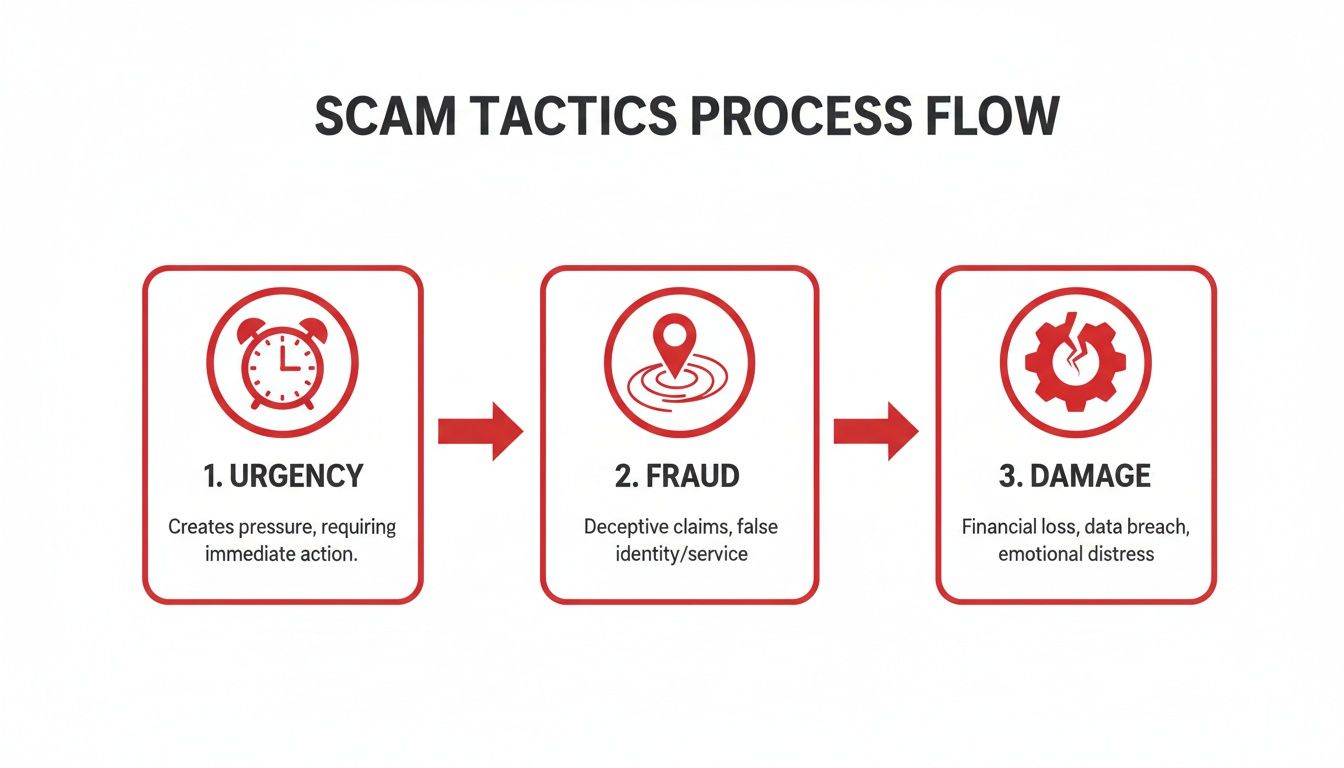
As you can see, they prey on your urgent need for a fix, hoping you'll call them before you've had a chance to do your homework.
A professional company will have a consistent history of reviews spread out over months, if not years. When they get a negative review, you'll often see a thoughtful response from the owner trying to make things right. Scammers? They'll either have a perfect, spotless record or they'll just ignore any negative feedback completely.
Fake Google Business Profiles are a massive problem in our industry. In fact, according to Google's Western Canada enforcement data, over 800 fraudulent listings were reported in 2024 across Edmonton, Calgary, and Red Deer alone. These scams tricked homeowners into paying a collective $320,000 for phantom repairs from ghost techs who just took the deposit and disappeared.
Learning how to spot fake appliance repair companies on Google Maps is a crucial skill for every homeowner. The table below breaks down exactly what to look for.
Red Flags in Online Listings and Reviews
Here’s a quick-reference guide to help you instantly spot the warning signs of a fraudulent appliance repair company online.
| Red Flag | What It Looks Like | Why It's a Concern |
|---|---|---|
| Keyword-Stuffed Name | "Best Edmonton Calgary Appliance Repair Fridge Service" instead of a real business name. | This is an old-school SEO trick to manipulate search rankings, not a sign of a legitimate company. |
| No Local Address | The address is missing, listed as "serving Edmonton," or is just a P.O. Box. | Real local businesses have a physical base of operations. A lack of one suggests a lead-gen site. |
| Stock Photos Only | No pictures of actual technicians, branded vans, or a real shop—just generic stock imagery. | Legitimate companies are proud of their team and equipment and want to show them off. |
| Suspicious Review Patterns | A huge number of 5-star reviews posted in a few days, or reviews that are all vague and sound similar. | This often points to purchased or fake reviews designed to create a false sense of trust. |
| No Online History | The business profile was created very recently, and they have no other online presence (like a website or social media). | Scammers create and burn profiles quickly. An established company will have a history. |
Pay close attention to these details. A company with a profile full of stock photos, no real-world address, and a name packed with keywords is almost certainly a listing designed to deceive you, not help you.
Mastering the First Phone Call to Spot Scams
Once you’ve done your homework online, the first phone call is your chance to really size up a company. Think of it as an interview. You’re confirming the details you found and, more importantly, listening for those subtle cues that separate a real pro from a scammer.
A legitimate business will be ready for your questions and answer them clearly. Scammers? They often get defensive, vague, or try to rush you into a decision. Remember, you're in the driver's seat. A simple list of questions is all you need to cut through the noise and make a smart choice. Don't hesitate to take notes—if they can't give you straight answers, that's your first major red flag.
Questions to Uncover Their Pricing Structure
First things first: let's talk money. Vague pricing is a classic scam tactic because it leaves them room to tack on surprise fees later. Get right to the point with these questions.
- "What is your service call fee?" This is the basic charge for a technician to come out and diagnose the problem. A professional company will state this fee without hesitation.
- "Is the service call fee waived if I approve the repair?" Many reputable companies, including us, will roll this fee into the final cost of the repair if you move forward. It’s a good sign of fair business practices.
- "How do you bill for labour—is it a flat rate or hourly?" Scammers love hourly rates because they can drag their feet to inflate the bill. A transparent, flat-rate repair quoted after diagnosis is what you want to hear.
- "Are there any other potential charges I should know about, like for weekend calls or specific parts?" This little question can save you from a nasty surprise on the final invoice.
If they get cagey about their service call fee or how they bill, just hang up. It’s not worth the risk.
Verifying Their Credentials and Protections
Next, you need to be sure they're a legitimate business that's insured and stands by its work. These questions are non-negotiable. They protect you from shoddy repairs and, in a worst-case scenario, legal liability.
A crucial step in building your pre-call vetting checklist is knowing what to ask. The insights gleaned from important questions to ask executive security companies can guide your inquiries, helping you identify red flags and ensure you're choosing a reputable provider.
Ask these questions directly to confirm they’re operating above board:
- "Can you confirm your business licence number?" You might have already found it online, but asking them to state it over the phone is a quick and easy way to verify.
- "Is your company fully insured, and are your technicians covered by WCB?" This is absolutely critical. If an uninsured tech gets hurt in your home, you could find yourself on the hook.
- "What is your warranty on parts and labour?" A trustworthy company will always offer a warranty, usually from 90 days up to one year. No warranty? That means they have zero confidence in their own work.
Spotting Verbal Traps and High-Pressure Sales Tactics
Scammers thrive on creating a sense of urgency. They want to get a technician through your door before you have a chance to second-guess the decision or call another company for a quote.
Keep an ear out for these common manipulation tactics:
- False Urgency: Lines like, "We have a technician just finishing a job nearby, but you have to book right now," are designed to make you panic and commit. A real company has a real schedule.
- Demands for Large Upfront Payments: Asking for a hefty deposit over the phone—especially via cash or e-transfer—is a huge red flag. A standard service call fee is normal. A large down payment before any work is done is not.
- Vague Cost Estimates: Be suspicious of a super-low quote offered over the phone without anyone seeing the appliance. This is almost always a "bait-and-switch" tactic, where the final price ends up being much higher.
A professional dispatcher will be calm, patient, and focused on scheduling a diagnostic visit. Their goal is to understand your problem, not to pressure you into a payment. When searching for reliable appliance repair near me, a calm and transparent phone call is the very first sign you've found a company you can trust.
Managing the In-Home Service Visit Safely
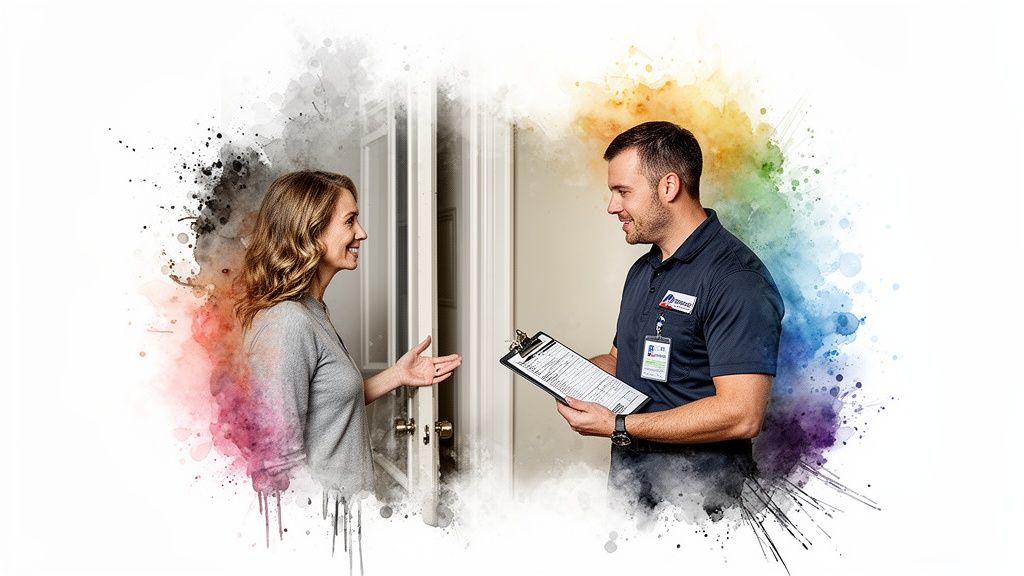
The moment a technician arrives, your careful vetting process enters its most important stage. This is your chance to confirm you’re dealing with a genuine professional, not just someone looking for a quick payday. The entire interaction should feel professional, transparent, and focused on one thing: fixing your appliance, not cornering you into a decision you’ll regret.
Start with the basics. A real pro will show up in a company-branded vehicle and be wearing a uniform. Don't feel awkward asking to see their company ID—it’s a standard request. If they pull up in an unmarked van with no identification to offer, that’s a major red flag right from the get-go.
Navigating the Diagnostic Process
Once inside, a legitimate technician will have a methodical approach. They’ll listen to you describe the problem, ask smart follow-up questions, and then get to work inspecting the appliance. You'll see them using proper diagnostic tools, not just poking around with a screwdriver and hoping for the best.
Feel free to watch them work and ask questions. A good technician is happy to explain what they’re looking for and what their tests are revealing. This openness is a sign of a trustworthy company. Be suspicious of anyone who gets defensive, tries to block your view, or is secretive about what they're doing.
One of the oldest tricks in the scammer’s playbook is the lightning-fast, catastrophic diagnosis. They’ll barely glance at your machine before declaring it’s "a total write-off" or that some obscure, wildly expensive part has failed. This is often just a tactic to pressure you into an overpriced repair or sell you a brand-new appliance on the spot. A real diagnosis takes time and thorough testing.
This isn't just a hypothetical problem. Appliance repair fraud is on the rise across Alberta. In 2024, reports from Calgary to the Alberta Consumer Contact Centre jumped by 42%, with 320 cases specifically involving fridge and dryer scams. The Better Business Bureau notes that victims in our province lost an average of $1,700 in each incident. Data from Service Alberta also shows that fake technicians often charge service call fees that are 75% higher than legitimate rates, only to declare an appliance 'unfixable' to push a costly replacement. You can read more about these troubling home improvement scam trends and their financial impact.
Demanding a Detailed Written Estimate
This is non-negotiable: never, ever agree to any work without a detailed, written estimate. A verbal quote means nothing and offers you zero protection. The written estimate is your contract and your safety net.
A proper estimate must clearly break down every cost. Look for:
- A Clear Problem Diagnosis: What, specifically, is wrong with the appliance?
- Itemized Parts Costs: A list of every part needed, with individual prices and part numbers.
- Labour Charges: How much their time will cost, ideally as a flat rate for the job.
- Total Cost: The final, all-in price, including taxes and any extra fees.
- Company Information: The business’s full name, address, and phone number should be printed on the document.
If the technician hesitates, gets vague, or scribbles a single number on a piece of scrap paper, that's your cue to end the appointment. Thank them for their time, pay only the service call fee you agreed to beforehand, and show them the door.
Resisting High-Pressure Sales Tactics
Scammers thrive on creating a false sense of urgency. They might tell you your appliance is a serious fire hazard that needs to be repaired right now. While some problems are genuinely urgent (like a gas leak), this is usually a ploy to scare you out of taking the time to get a second opinion. For real gas concerns, it's critical to know the correct steps for gas oven safety and what to do when you smell gas.
Keep an eye out for these other classic pressure tactics:
- The "Special Discount": Offering a big price drop, but only if you commit to the repair immediately.
- Sourcing Rare Parts: Claiming a part is incredibly hard to find and that you must pay for it in full, upfront, before they can even order it.
- Exaggerating the Problem: Turning a minor fix into a major overhaul involving multiple expensive parts to jack up the price.
A true professional will present their findings and the estimate, then give you the time and space you need to make a smart decision. If you feel rushed or pressured, trust your instincts. You always have the right to say, "Thanks, I'm going to think about it."
What to Do After the Repair Is Complete
The repair is finished, your appliance is humming along again, and the technician is packing up. It's tempting to just pay and move on, but your diligence isn't over just yet.
These final moments of the service call are actually crucial for protecting yourself long after the van is gone. Getting the right paperwork is your single best defence if a problem comes back or you realize you’ve been overcharged.
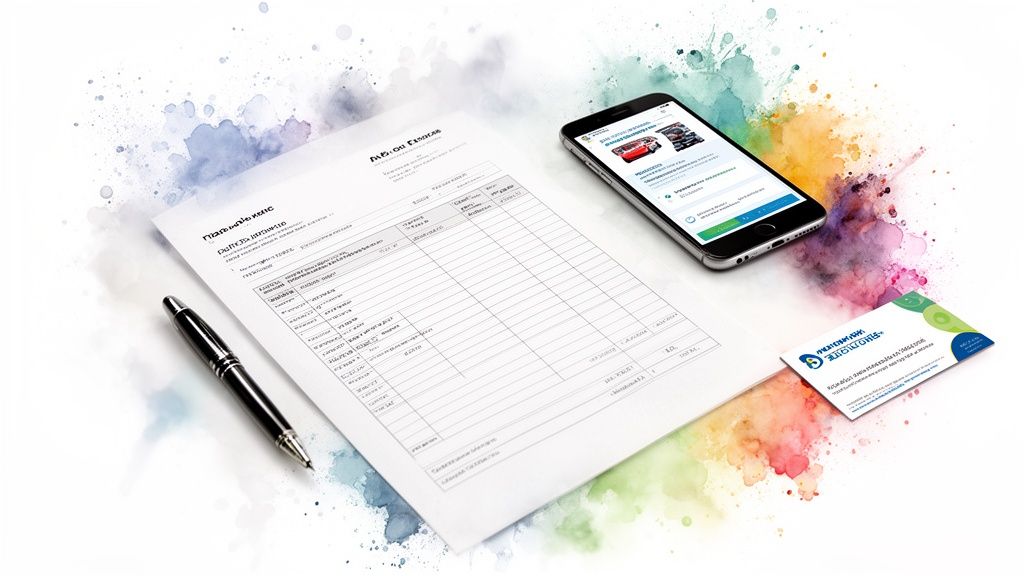
Before you even think about paying, you need to get a detailed, itemized invoice. This isn't just a receipt; it's a legal record of the service you received. A professional company will always provide a clear, comprehensive breakdown—a vague bill with just one lump sum is a massive red flag.
Securing the Right Documentation
Your first move? Insist that the final invoice includes a few key pieces of information. A legitimate company’s paperwork will always be thorough and transparent.
Make sure the invoice clearly lists:
- Full Company Information: The business’s legal name, physical address, phone number, and business licence number.
- Description of Work: A detailed summary of what they found during the diagnosis and the specific repairs they performed.
- Itemized Parts List: The name and, most importantly, the specific part number for every single component that was replaced.
- Labour and Parts Costs: A clear separation between the cost of the work and the cost of the parts.
- Warranty Details: The exact length and terms of the warranty covering both the new parts and the labour.
This level of detail is standard practice for any professional operation. You can learn more about what a proper guarantee looks like by reviewing our guide on appliance repair warranty coverage. An invoice missing these details leaves you completely exposed.
Knowing Your Recourse If You Suspect a Scam
So, what happens if the appliance fails again a week later, or you do some research and discover you were charged $300 for a $50 part? If you suspect you've been taken for a ride, it’s important to act quickly and methodically. That detailed invoice you secured will be the cornerstone of your complaint.
Start by contacting the company directly to try and resolve the issue. If they're unresponsive, uncooperative, or give you the runaround, it’s time to escalate.
Expert Insight: In Alberta, you're not on your own. Consumers are protected by specific legislation, so don't ever feel like you have no options. Keeping meticulous records—your first phone call notes, the written estimate, and the final invoice—gives your complaint the credibility it needs to be resolved in your favour.
If you can't get a resolution with the business, here are your next steps in Alberta:
- File a Complaint with Service Alberta: The Consumer Investigations Unit is the provincial body that enforces consumer protection laws. They can investigate your case and may even mediate a solution.
- Contact the Better Business Bureau (BBB): The BBB is a great resource for mediating disputes, and their public complaint system puts pressure on businesses to operate ethically.
- Consider Small Claims Court: For significant financial losses, filing a claim in provincial court is a viable step to recover your money.
Remember, fraudulent operators count on their victims feeling powerless or too embarrassed to report them. By taking these steps, you’re not just seeking justice for yourself—you’re helping protect other homeowners in your community from falling into the same trap.
Frequently Asked Questions (FAQs)
When an appliance gives out, you've got enough on your plate without having to second-guess the repair process. It's totally normal to have questions, and getting clear answers is your first line of defence against scams.
Let's walk through some of the most common concerns homeowners have, so you can feel confident and in control during your next service call.
Is It Normal to Pay for an Appliance Repair Service Upfront?
Absolutely not. If a company demands full payment or a hefty cash deposit before lifting a finger, that's a massive red flag.
A legitimate, professional company will charge a standard service call fee. This covers the technician’s time and travel to diagnose the problem. Often, this fee is rolled into the total cost of the repair if you decide to go ahead with the work. Demanding a big payment upfront is a classic scam tactic—they might just take your money and vanish. You should only pay in full once the job is finished and you're happy with the result.
What Should I Do If a Technician Pressures Me to Decide Immediately?
You should never feel backed into a corner. A true professional will give you a clear diagnosis, hand you a detailed written quote, and then give you the time you need to think it over.
High-pressure tactics are a sure sign something’s off. Watch out for things like:
- A "special price" that's only good for the next five minutes.
- Scare tactics that exaggerate a safety risk to push you into a costly, on-the-spot repair.
- Claims that parts are hard to get and must be ordered and paid for right now.
Just politely tell them you need a moment to review the estimate. If the pressure continues, that's your cue to end the conversation and show them the door.
How Can I Verify an Appliance Part Is Genuinely New?
That’s a smart question to ask. Before the technician starts the installation, ask to see the new part in its original, sealed box or packaging.
Reputable companies pride themselves on using new, manufacturer-approved parts and can easily provide you with the specific part numbers. Your final, itemized invoice should also list the part number and state that it's new. If a technician shows up with an unboxed part, it's fair to ask why and where it came from. Having a basic grasp of the repair, like knowing how to stop water dripping into a washing machine, can also give you a better sense of whether the work is being done correctly.
Are Online-Only Companies Without a Physical Address Legitimate?
This is a tricky one. While some excellent mobile-only services are perfectly legitimate, a complete lack of a real, physical address is a major red flag. Scammers love using P.O. boxes or pinning fake addresses on Google Maps to look like they're local.
A great tip is to use Google Maps Street View to check out a company's listed address. An established, trustworthy business will have a real footprint in the community. If you can't find any proof they actually exist where they say they do, it's much safer to find someone else.
Need appliance repair? Visit RepairMyAppliance.ca or call 587-416-5888 for fast, professional service.