

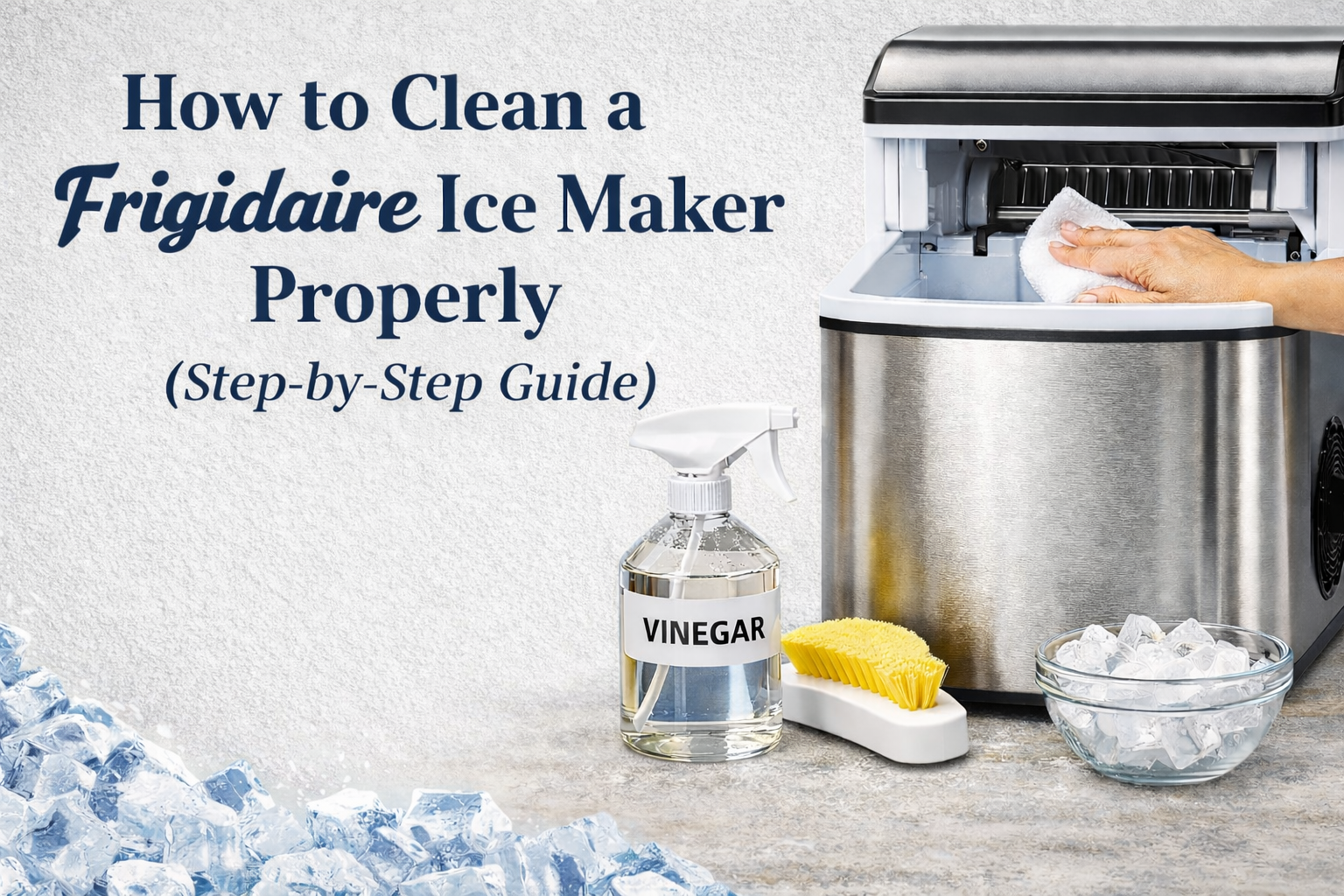
A Frigidaire ice maker is designed to provide clean, fresh ice whenever you need it—but only if it’s maintained properly. Over time, mineral deposits, stagnant water, and residue can quietly build up inside the unit, affecting ice quality, taste, and performance. Regular cleaning isn’t just about hygiene; it directly impacts how efficiently your ice maker runs and how long it lasts.
Whether or not your model has a clean button, this tutorial explains how to clean a Frigidaire ice maker safely and effectively. It also covers vinegar cleaning methods, filter care, countertop ice maker instructions, and preventative maintenance—without unnecessary jargon or repeated keywords.
Why Regular Ice Maker Cleaning Matters
Ice makers constantly cycle water through internal components, making them vulnerable to scale buildup, mold, and bacteria. When left uncleaned, these issues can lead to:
- Unpleasant-tasting or odorous ice
- Brittle or hazy ice cubes
- A slower rate of ice formation
- Unusual sounds produced by operations
- A shorter lifespan for appliances
Maintaining consistent ice quality and preventing mechanical issues can be achieved by cleaning your ice maker every three to six months.
Understanding How a Frigidaire Ice Maker Works
A water inlet, filter, freezing tray or mold, temperature sensors, and ejection mechanism are some of the interconnected parts of Frigidaire ice maker. When it’s ready, water is released into the ice bin after freezing into cubes.
Hard water minerals and impurity residue can build up on interior surfaces because water stays in the system for long periods of time. This clarifies why regular cleaning, particularly descaling, is necessary rather than optional.
Signs Your Frigidaire Ice Maker Needs Cleaning
You don’t always need to wait for a scheduled cleaning. Watch for these warning signs:
- Ice has an odd taste or odor.
- The ice looks hazy or discolored.
- The generation of ice decreases
- The ice cubes are shaped incorrectly or are smaller.
- Evident residue within the reservoir or ice bin
These symptoms usually indicate mineral buildup or contamination inside the unit.
Preparing Your Ice Maker for Cleaning
Before starting, take a few minutes to prepare properly. This ensures safety and better results.
Safety First
- Turn off the ice maker and unplug it from the power source
- Empty the ice bin and discard existing ice
- Drain any remaining water from the reservoir
Supplies You’ll Need
- Warm water
- White vinegar, which is non-toxic and safe for food
- Soft dish soap
- A sponge or soft cloth
- A toothbrush or a little brush for confined spaces
- Use fresh towels to dry
Avoid abrasive cleaners, as they can damage internal components.
How to Clean Frigidaire Ice Maker with a Clean Button
Some Frigidaire models include a built-in cleaning cycle, making maintenance easier.
Steps:
- Empty the water reservoir and remove all ice.
- Combine a cleaning solution (vinegar and water or a cleanser that has been permitted by the manufacturer).
- Fill the reservoir with the solution.
- Hold down the Clean button until the cycle begins.
- Let the cycle finish completely
- Empty the mixture and give it a good rinsing with fresh water.
- Use fresh water for a second rinse cycle.
This process helps remove scale and residue from internal parts you can’t reach manually.
How to Clean Frigidaire Ice Maker Without Clean Button
If your ice maker doesn’t have a cleaning mode, manual cleaning works just as well when done correctly.
Manual Cleaning Method:
- Unplug the device and take out any detachable components, such as the tray and ice bin.
- Use mild dish soap and warm water to clean these parts.
- Use a cloth dipped in a vinegar and water solution to clean interior surfaces.
- To clean narrow passageways or corners, use a little brush.
- Use clean water to rinse every surface.
- Before reassembling, let everything air dry thoroughly.
This approach is especially effective for older models and portable units.
How to Clean Ice Maker Frigidaire with Vinegar (Deep Cleaning)
Vinegar is one of the safest and most effective ways to remove mineral buildup.
Vinegar Cleaning Steps:
- Combine equal amounts of warm water and white vinegar.
- Apply the solution to detachable parts and interior surfaces.
- To break down scale, let it sit for a short while.
- When residue is evident, gently scrub.
- Rinse well to get rid of any remaining vinegar.
Vinegar helps dissolve hard water deposits while being non-toxic and food-safe.
How to Clean Ice Maker Frigidaire Filter
The water filter plays a major role in ice quality and should never be overlooked.
- Find the filter, which is typically located along the water line or inside the unit.
- Take it out as directed by your model.
- Reusable filters should be rinsed under running water.
- As advised, replace disposable filters.
- To stop leaks, reinstall firmly.
A clogged or dirty filter can cause bad-tasting ice and reduced water flow.
Frigidaire Countertop Ice Maker Cleaning Instructions
Countertop and portable ice makers require similar care but often have more removable parts.
- Drain all of the water and unplug the device.
- If the ice basket and reservoir are accessible, remove them.
- Use warm, soapy water to clean detachable components individually.
- Use a vinegar solution to clean the inner walls.
- Carefully rinse, dry, and reassemble
Because countertop units are compact, regular cleaning is essential to prevent odor and residue buildup.
Ongoing Maintenance Tips for Cleaner Ice
Keeping your ice maker clean doesn’t require much effort when done consistently:
- If the water quality is low, clean every three to six months.
- On time, change or clean the water filter.
If the device won’t be used for a long, empty and dry the ice bin.
When feasible, use filtered water. - Before resuming, make sure all internal components are dry.
Preventive maintenance keeps ice fresh and helps avoid repairs.
Troubleshooting After Cleaning
If issues persist after cleaning, consider these checks:
- No ice production: Confirm water supply and proper reassembly
- Small or hollow cubes: Check water flow and freezer temperature
- Bad taste remains: Re-rinse the system and inspect the filter
- Noise continues: Look for loose or misaligned components
Most post-cleaning issues are related to incomplete rinsing or incorrect reassembly.
Frequently Asked Questions
Can I clean a Frigidaire ice maker using vinegar only?
Yes. Vinegar is safe, effective, and widely recommended for removing mineral deposits.
How often should a Frigidaire ice maker be cleaned?
Every three to six months, or sooner if ice quality changes.
Is it safe to clean the ice maker without professional help?
Absolutely. With proper steps and mild cleaners, cleaning can be done at home.
What causes mold inside an ice maker?
Moisture left behind after use or improper drying encourages mold growth.
Final Thoughts
Cleaning your Frigidaire ice maker isn’t complicated, but it’s essential. Whether you’re using the clean button, cleaning manually, or relying on vinegar for deep descaling, consistent care ensures better-tasting ice, smoother performance, and a longer-lasting appliance.
By following these steps and maintenance tips, you can enjoy clean, reliable ice without unnecessary repairs or replacements.