
That sinking feeling when you open the fridge and a wave of warm air hits you is something every homeowner dreads—especially when it’s packed with fresh groceries. Before you assume the worst, take a breath. Many cooling issues are caused by simple problems you can fix yourself in just a few minutes.
This guide walks you through a step-by-step approach to diagnosing the issue, starting with quick, no-tool checks. In many cases, these basic troubleshooting steps can restore cooling, save your food, and even prevent an unnecessary service call.
First Steps for a Refrigerator Not Cooling
Let’s begin with the most common and easily fixable causes. These quick checks address power issues, temperature settings, and airflow—three essentials for a properly functioning refrigerator.
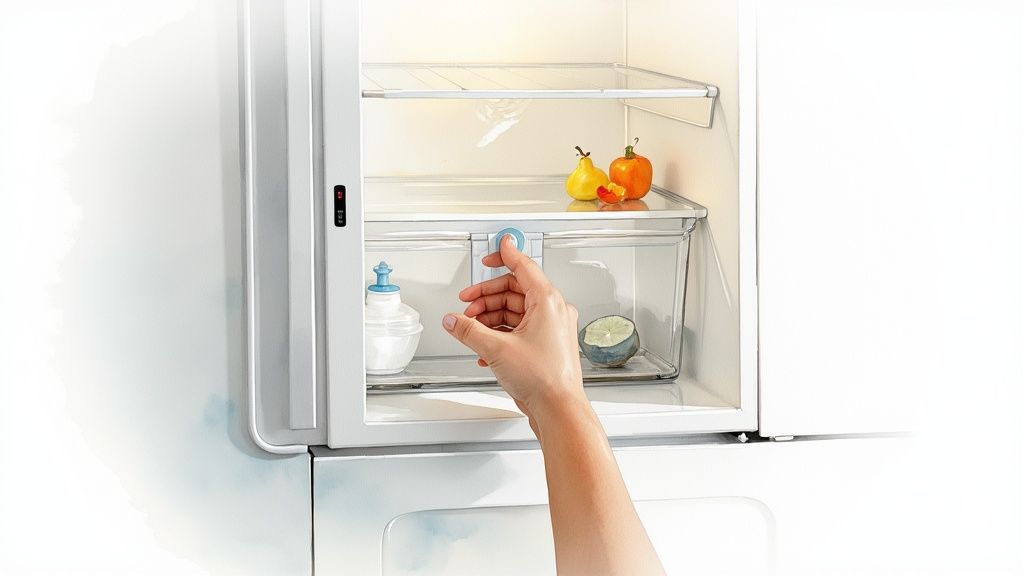
Here’s what you can check in the next 10 minutes.
Initial 10-Minute Troubleshooting Checklist
| Check | What to Look For | Solution |
|---|---|---|
| Power Supply | Is the fridge light turning on? Is the plug loose? | Securely plug in the unit and inspect your breaker panel for a tripped switch. |
| Thermostat Setting | Dial bumped? Digital display changed? | Set the fridge to 4°C (40°F) and freezer to -18°C (0°F). |
| Air Vents | Are items blocking vents inside the fridge or freezer? | Reorganize contents to allow proper airflow. |
| Door Seals | Sticky residue or loose gasket? | Clean the seals and ensure the door closes tightly. |
These basics handle many cooling complaints. Now let’s explore each step more deeply.
Confirm Power and Temperature Settings
A surprising number of repairs come down to simple power issues. Start by checking whether the interior light turns on. If not, ensure the power cord is securely in the outlet.
If the outlet is fine, inspect your home’s breaker panel for a tripped breaker—this happens more often in older homes.
Next, inspect your temperature setting:
- Dial thermostats: Ensure they’re not accidentally set to “off” or the warmest setting.
- Digital controls: Ideal settings are 4°C (40°F) for the fridge and -18°C (0°F) for the freezer.
Inspect Door Seals and Air Vents
Your refrigerator works best when it can keep cold air inside and circulate it freely. A dirty or loose gasket allows warm air in, forcing the compressor to overwork.
Wipe the door seals with a warm, damp cloth. Use the “paper test”: if you can slide a piece of paper out easily while the door is closed, the gasket may need replacement.
Airflow also matters. Items pressed against vents block cold air from circulating. A quick reorganization can restore proper cooling. For more detail, see our guide on freezer door seal issues.
Diving Deeper: Diagnosing Common Cooling Problems
If the quick fixes don’t solve the issue, it’s time to inspect components that commonly cause poor cooling. Before touching anything inside or behind the fridge, remember:
Always unplug the refrigerator before performing any hands-on inspection.
Check and Clean the Condenser Coils
Condenser coils release heat from inside the fridge. Over time, they collect dust and pet hair, restricting airflow and causing cooling loss.
Locations:
- Back of the fridge: Common in older units.
- Underneath: Newer models hide coils behind a front kick plate or rear panel.
Use a long coil brush and vacuum to remove buildup. This simple step alone resolves many cooling complaints.
Inspect the Condenser and Evaporator Fans
Two fans keep your fridge running smoothly:
Condenser Fan: Located near the compressor.
Evaporator Fan: Located inside the freezer.
A failed condenser fan means the compressor overheats. A failed evaporator fan results in a cold freezer but a warm fridge.
If you hear grinding or no noise at all, the fan may need replacing.
Test the Compressor Start Relay
A faulty start relay prevents the compressor from starting. Common symptoms include:
Repetitive clicking
Humming but no cooling
A burnt smell
If shaking the relay produces a rattle, it’s failed. Relays are inexpensive and often fix the issue.
For further compressor testing, see this guide: how to check your refrigerator compressor.
If the compressor feels extremely hot, read our detailed article on what a hot compressor means.
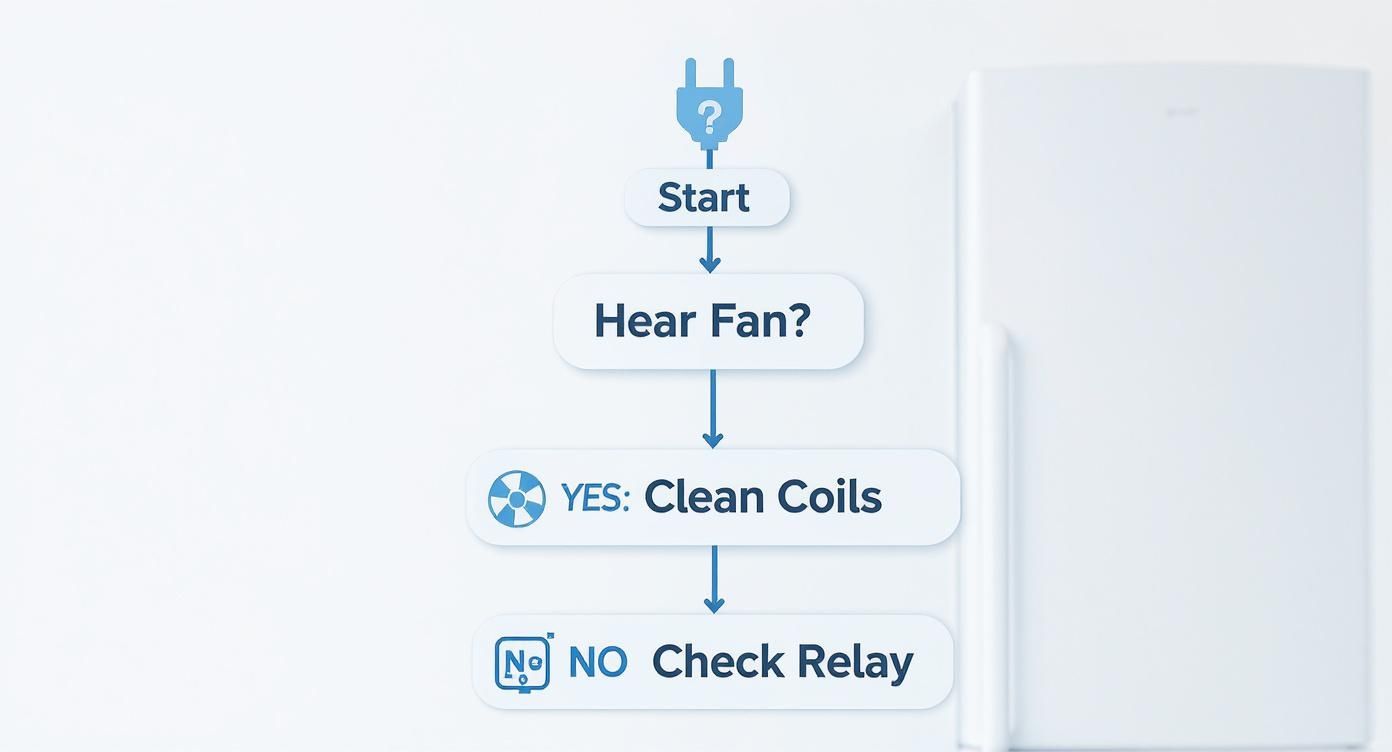
Uncovering Defrost System Failures
If your freezer is heavily frosted and the fridge compartment is warm, a defrost failure is likely. Ice buildup blocks airflow and stops the fridge from cooling.
Possible failed components:
- Defrost heater
- Defrost thermostat
- Defrost timer/control board
A manual defrost (unplugging for 24–48 hours) is a temporary fix. The underlying issue still needs repair.
Testing the Temperature Control Thermostat
If the compressor isn’t turning on, the thermostat may not be signaling properly. Use a multimeter to check for continuity. If the thermostat doesn’t register, replace it.
LG owners can refer to LG refrigerator error code guides for control-related issues.
Recognizing Major System Failures
Some problems require a certified technician:
Signs of a refrigerant leak:
Weak cooling
Oily residue behind the fridge
Compressor running constantly
Signs of a failing compressor:
Clicking but not running
Loud buzzing
Compressor cool instead of warm
These repairs require ODP-certified professionals.
Your Essential Toolkit for DIY Refrigerator Repair
Before you start any repair, gather the right tools. Here’s a streamlined toolkit for the most common fridge repair tasks:

DIY Refrigerator Repair Toolkit
| Tool | Use | Skill Level |
|---|---|---|
| Multimeter | Test electrical components for continuity. | Intermediate |
| Nut Driver Set | Remove panels and covers. | Beginner |
| Condenser Brush | Clean dust from coils. | Beginner |
| Screwdrivers | General disassembly. | Beginner |
| Work Gloves | Protect your hands from sharp metal edges. | Beginner |
Prioritize Your Safety
Key rules:
Always unplug the fridge before inspecting components
Wear gloves to avoid cuts
Move the fridge carefully—get help if needed
Never handle refrigerant without certification
Knowing When to Call an Appliance Repair Professional
DIY troubleshooting is great, but some symptoms require expert attention. Here’s when to stop and call a professional:
Red Flags That Require Professional Service
- Compressor clicks repeatedly but won’t start
- Oily residue or chemical smell — signs of a refrigerant leak
- Electrical burning smell or tripped breaker
- Fridge runs constantly without cooling
In Canada, sealed system work legally requires an ODP-certified technician.
DIY vs Professional Costs
Quick DIY fixes like relays cost as little as $30.
Major repairs like compressors can range from $500–$800.
If you’re unsure, a professional diagnosis prevents guesswork and wasted money.
Book expert service here:
➡️ Professional Refrigerator Repair
Simple Maintenance to Prevent Future Problems
Once your fridge is cooling again, a few small habits can keep it running efficiently for years.
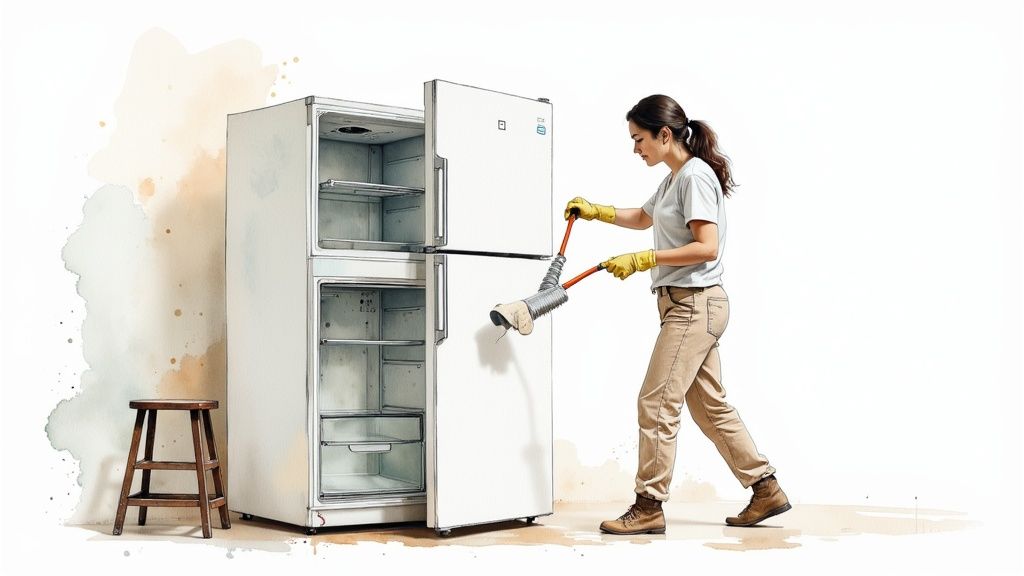
Maintenance Schedule
- Every 6 months: Clean condenser coils
- Every 3 months: Clean door gaskets
- Monthly: Ensure the fridge is level
- Weekly: Organize contents for better airflow
Good Habits
Allow hot food to cool before placing it inside
Avoid overstuffing the compartments
Review brand-specific care guides, such as our LG maintenance manual
FAQ: Refrigerator Cooling Issues
Why Is the Freezer Cold but the Fridge Is Warm?
Most of the time, airflow is blocked by frost or a failed evaporator fan. If the freezer’s back panel is covered in ice, the defrost system isn’t working.
How Do I Know if My Compressor Is Bad?
Watch for: – Silence when it should be running – Repeated clicking – Hot exterior shell – Constant running without cooling
Can I Fix a Refrigerant Leak Myself?
No. Handling refrigerant without certification is dangerous and illegal. Call a licensed technician immediately.
For fast, professional appliance repair across Edmonton, Calgary, and Red Deer:
📞 587-416-5888
🌐 RepairMyAppliance.ca