


When your Samsung ice maker suddenly quits, it usually points to one of a few common culprits. Whether you're getting no ice at all, tiny slushy cubes, or a unit that’s completely frozen solid, the problem often comes down to incorrect freezer temperatures, a clogged water line, or a faulty sensor.
This guide will walk you through the diagnostic steps, from simple DIY fixes to knowing when it's time to call a professional, helping you solve your Samsung refrigerator ice maker problems for good.
Identifying the Root Cause of Your Ice Maker Problem
A broken ice maker is one of the most common headaches for Samsung fridge owners. The good news is, most of these issues stem from a handful of simple, fixable problems. Before you assume the worst, a quick check can often lead you straight to a DIY solution.
The first step is to play detective and match the symptom to its likely cause. For example, if your water dispenser is working just fine but the ice maker isn't, you can probably rule out the main water supply. The issue is almost certainly isolated to the ice maker itself.
On the other hand, if both the water dispenser and the ice maker are on strike, the problem likely starts with the water line hooked up to your fridge. Another frequent culprit for slow ice production or small cubes is a clogged water filter. Making sure you have clean filters for refrigerator ice makers is a crucial first check and often the easiest fix.
Common Failure Points
A few key parts are notorious for causing Samsung refrigerator ice maker problems. Knowing what they are helps you narrow down the search fast:
- Freezer Temperature Settings: The sweet spot for your freezer is 0°F (-18°C). If it’s even a few degrees warmer, the ice maker’s thermostat won’t signal it to start a new cycle. Too cold, and you risk the whole unit freezing over.
- The Ice Bucket and Control Arm: Sometimes, the problem is mechanical. A jam-packed ice bucket or a stuck control arm (the metal bar that senses ice levels) will tell the system it’s full and to stop making ice.
- Water Inlet Valve: This valve lets water into the ice maker. If it gets clogged with mineral buildup or fails electronically, no water can get to the ice mould.
Expert Tip: An ice maker's performance is tied to the fridge's overall health. If you're also dealing with cooling problems, that will absolutely affect ice production. A common sign of bigger trouble is a hot compressor, which you can learn about in our guide to troubleshooting a fridge compressor is hot in our detailed guide. Fixing one issue might just solve the other.
This flowchart gives you a visual path to follow, helping you trace your specific problem to its most likely source.
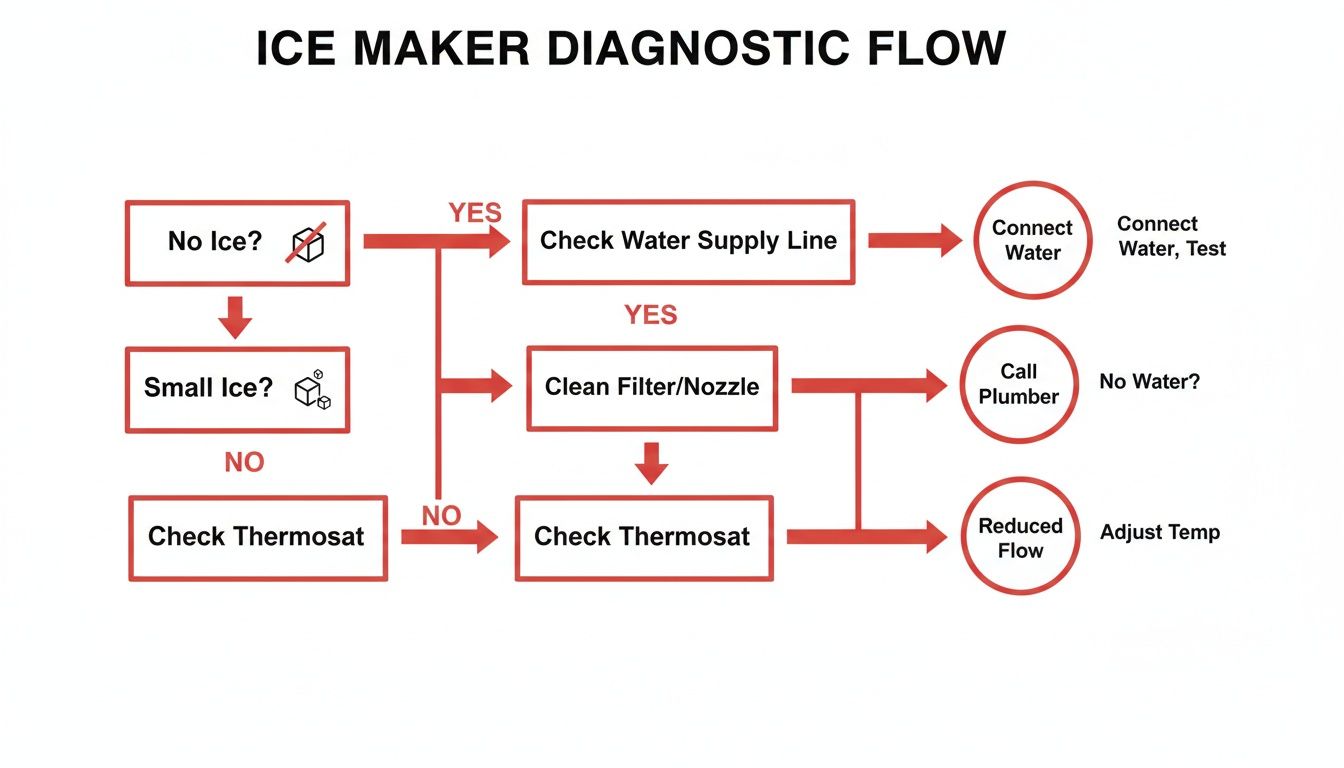
As you can see, a symptom like "No Ice" can lead you down a few different paths, but it always starts with the simple stuff, like checking the power and freezer temperature.
Why These Ice Makers Fail So Often in Alberta
If you're an Alberta homeowner staring at a dead Samsung ice maker, you’re definitely not alone. It’s a story we hear constantly from clients in Edmonton, Calgary, and Red Deer. This has become an incredibly common frustration, especially with models made after 2015. While the design itself has flaws, our local Alberta environment can make a bad situation worse.
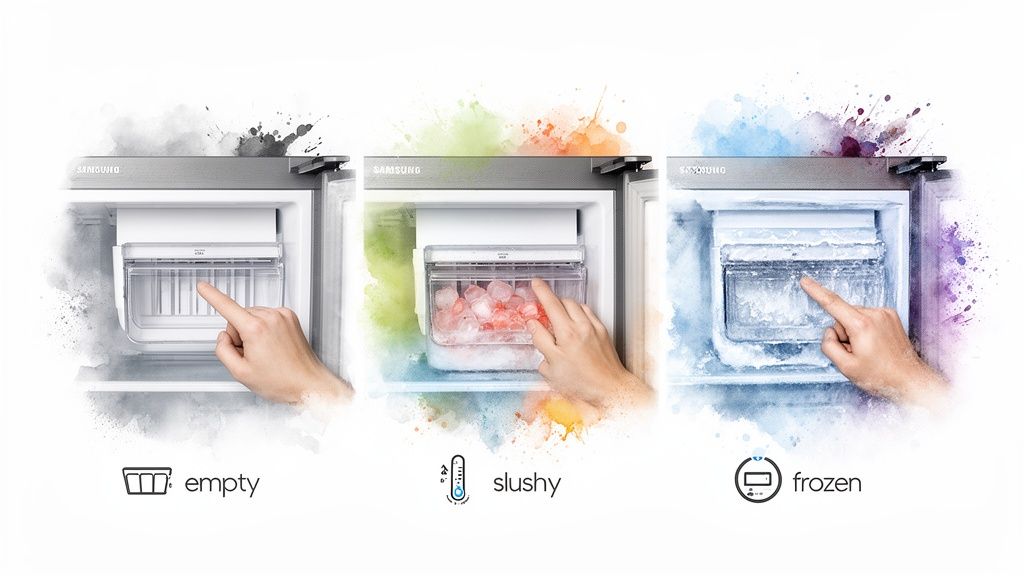
Two major culprits are working against your ice maker: our notoriously hard water and the wild swings in indoor humidity between seasons. Understanding how these local conditions clash with the appliance's design is the first step toward a real solution.
The Impact of Alberta's Hard Water
Alberta’s water is packed with minerals like calcium and magnesium. While fine for us, it’s a nightmare for appliances. This "hard water" is a primary reason for many Samsung refrigerator ice maker problems.
Over time, these dissolved minerals build up inside the tiny water lines and delicate valve components, creating a chalky substance called scale. It’s like plaque in an artery, slowly choking off the flow.
When scale buildup gets bad, you’ll start to see a few tell-tale signs:
- Shrinking Ice Cubes: The ice maker isn't getting enough water, so it produces small, hollow, or oddly shaped cubes.
- No Ice at All: Eventually, the scale can block the water line completely. No water in means no ice out.
- A Leaky Mess: The inlet valve can get so caked with mineral deposits that it gets stuck. It might fail to open, or worse, fail to close properly, leading to a constant drip that overfills the tray and creates a frozen waterfall inside your freezer.
Important Note: Many people assume their fridge’s water filter will prevent this. However, while the filter is great for removing chlorine to improve taste, it is not designed to soften water. It does not remove the dissolved minerals that cause scale.
Humidity and Frost: The Winter Challenge
We all know how dry our homes get during a long Alberta winter. With the furnace running for months, the indoor air becomes incredibly arid. Every time you open your freezer door, that bone-dry air rushes in and collides with the moist, freezing air inside. The result? Instant condensation on every surface of your ice maker.
This isn’t just a little frost; it’s a destructive cycle. That condensation immediately freezes. Open the door again, and another layer forms.
This constant frost buildup is behind some of the most common failures we see:
- Jammed Parts: The ejector arm that pushes finished ice into the bin gets encased in ice, seizing it up.
- Blocked Sensors: The infrared or mechanical sensors that tell the machine when the ice bin is full get blinded by frost. Your ice maker thinks the bin is packed, even when it’s completely empty.
- Total Freeze-Up: In the worst-case scenarios, the entire ice maker compartment becomes one solid block of ice, cutting off airflow and bringing the whole operation to a halt.
This explains why so many Albertans tell us their ice maker problems worsen as the cold weather sets in.
Local Data Confirms a Widespread Issue
This isn’t just a hunch. Service logs from recent years in Alberta show that Samsung ice maker failures make up a significant percentage of all fridge-related breakdown calls in cities like Calgary and Edmonton.
Consider that while Samsung holds a large market share for refrigerators, their ice makers have been a consistent source of complaints. Local data reveals that a high number of Samsung fridges under five years old experience "over-icing." This leads directly to loud fan noise, water leaking under the crisper drawers, and jammed ice buckets.
These aren't isolated incidents; it’s a well-documented pattern. You can even read about the legal actions taken by consumers who have dealt with this. The data confirms what every technician in Alberta already knows: it’s a flawed design that struggles with our local climate.
Practical DIY Fixes You Can Try Today
Before you pick up the phone for a service call, know that many Samsung refrigerator ice maker problems are surprisingly easy to fix yourself. Most of the time, the issue comes down to a few common culprits, from a simple setting being off to a minor ice blockage. With a bit of patience, you can often get your ice maker running again in under an hour.
Let's walk through the exact same first steps our own technicians take on a service call. These are safe, straightforward, and can save you a lot of hassle.
Start with a Simple Ice Maker Reset
Think of it as the classic "turn it off and on again" trick for your fridge. A quick reset can clear electronic glitches and communication errors between the ice maker and the main control board that are notorious for halting the ice-making cycle. It’s the fastest and easiest thing to try first.
The reset button's location changes depending on your Samsung model, but you'll usually find a small, rectangular button on or just underneath the ice maker unit. You’ll probably have to take the ice bucket out to spot it.
- Find the Button: Pull the ice bin out of the freezer. Look around the ice maker assembly for a button, which is often marked "Test" or has a reset symbol.
- Press and Hold: Push and hold that button for about 3 to 5 seconds. You should hear a chime or a whirring noise, which means the ice maker is starting a forced harvest cycle.
- Watch the Cycle: You'll see the ejector arm slowly rotate, and you might hear the water valve click as it gets ready to fill the mould. That's your confirmation that the reset worked.
- Be Patient: Put the ice bucket back in. It can take anywhere from 6 to 24 hours for a new batch of ice to be made, so don't worry if you don't see cubes right away.
Can't find a button? No problem. Just unplug the whole refrigerator from the wall for five minutes. That will perform a hard reset on the entire system.
Check and Adjust the Freezer Temperature
This is one of the most common—and most overlooked—reasons an ice maker stops working. For your Samsung ice maker to do its job, the freezer needs to be set to exactly -18°C (0°F).
If it's too warm, the ice maker's internal thermostat never gets the signal that the water is frozen solid, so the cycle won't continue. If it's set too cold, you risk freezing the fill tube solid, creating an ice dam that stops water from ever reaching the ice mould.
Take a look at your fridge’s control panel and make sure the setting is correct. If you adjust it, remember that the appliance will need a few hours to stabilize at the new temperature before ice production can start again.
Manually Defrost a Frozen Ice Maker
If you’ve opened the freezer to find the whole ice maker unit encased in a block of frost, a manual defrost is your next move. This is a particularly common sight in Alberta homes, especially during our dry winters.
Safety First: Whatever you do, don't use a knife, screwdriver, or any other sharp object to chip away at the ice. It's incredibly easy to puncture a refrigerant line or crack the plastic, turning a simple fix into a very expensive repair.
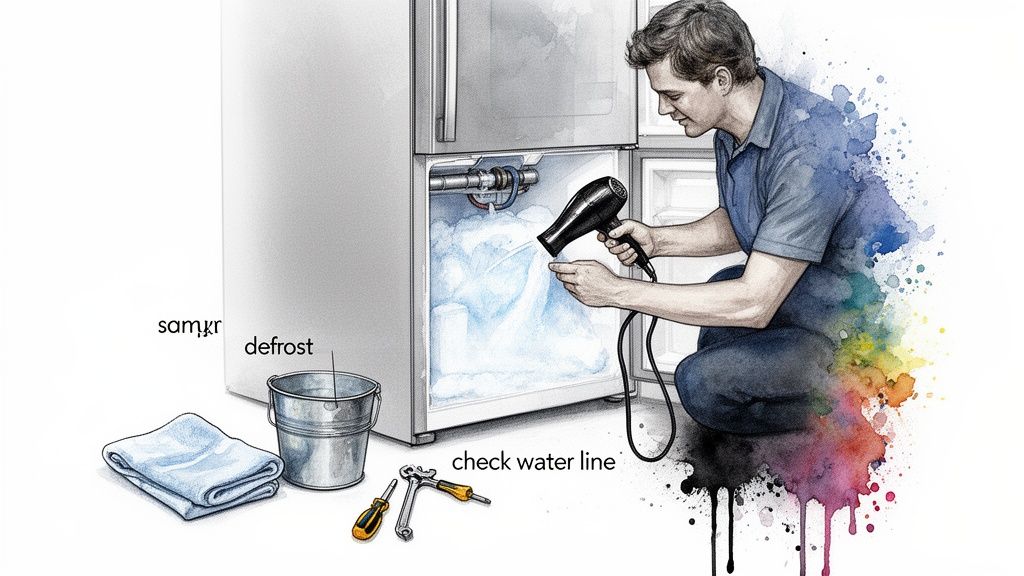
Your best friend for this job is a simple hairdryer. Here's how to do it safely:
- Unplug the Fridge: The first step is always safety. Unplug the refrigerator to avoid any risk of electrical shorts.
- Apply Gentle Heat: Set your hairdryer to its lowest heat setting. Hold it about 15-20 centimetres (6-8 inches) from the ice. Keep the hairdryer moving constantly so the heat spreads out and doesn't melt or warp the plastic parts.
- Catch the Water: Lay a towel down in the bottom of the freezer to soak up the melting water. As bigger chunks of ice loosen up, you can remove them by hand.
- Dry Everything: Once the ice is all gone, grab a dry cloth and thoroughly wipe down the entire ice maker compartment. Any moisture you leave behind will just refreeze and start the problem all over again.
Thaw a Frozen Water Fill Tube
The fill tube is a small water line, usually tucked away at the back of the freezer, that feeds water into the ice mould. Because of its location, it's a prime spot for freezing up, especially if the freezer is too cold or your home’s water pressure is low.
Feel around the back of the ice maker for a small rubber or plastic tube. If you feel a solid block of ice inside or around it, you've found the culprit. You can use the same hairdryer method we just discussed to gently thaw it out. Once it's clear, double-check that your freezer is set to the correct temperature to prevent it from happening again.
The frozen fill tube is a well-known flaw in certain Samsung models. Our service data shows a huge number of these failures in Alberta. You can read more about the history of this widespread issue in this investigation.
A little bit of maintenance can prevent many of these headaches. For instance, while it’s for a different brand, our guide on how to clean a Frigidaire ice maker has some great tips on preventing buildup that apply to any ice maker.
If you’ve tried all these DIY steps and you're still not getting ice, your samsung refrigerator ice maker problems likely point to a faulty part, like the water inlet valve or the main control board, which we'll get into next.
Advanced Troubleshooting for Persistent Issues
So, you've done the reset, defrosted everything, and double-checked the temperature, but your Samsung refrigerator ice maker problems are still sticking around. When simple fixes don't work, it's usually a sign that the issue is deeper, pointing toward a specific part that might be failing.
Don't panic—this doesn't automatically mean a massive repair bill. It just means we need to be more methodical to figure out which component is the culprit. Knowing what to look for can help you decide if it's a part you can replace yourself or if it's time to bring in a pro.
Investigating the Water Inlet Valve
The water inlet valve is the gatekeeper for your ice maker. It’s a smart valve that opens for a few seconds to let just the right amount of water into the ice mould. When it starts to fail, the symptoms can be all over the place.
One common issue is the valve refusing to open. You might hear a faint buzzing or humming sound from the back of the fridge when the ice maker calls for water, but nothing flows. That sound is a big clue—it means the valve is getting power, but it's mechanically stuck, likely from mineral buildup or wear and tear.
On the flip side, the valve can fail to shut off completely, leading to a slow, constant trickle of water. The signs of this are hard to miss:
- Giant, misshapen ice cubes that are frozen together.
- A solid sheet of ice forming over the ice mould.
- Water overflowing and freezing into a solid block at the bottom of your ice bucket.
Spotting a Faulty Sensor or Control Board
Modern Samsung ice makers rely on a network of sensors to operate. If any one of them fails, the entire ice-making process can stop. The most important one is the temperature sensor (or thermostat) located in the ice maker assembly. Its only job is to tell the control board when the water is frozen solid so the harvest cycle can begin.
When this sensor fails, your ice maker gets stuck. It never gets the signal that the ice is ready, so it just sits there with a full tray of perfectly good ice, doing nothing.
The main control board is the brain of your entire fridge. While less common, board failures happen. The telltale signs are usually erratic behaviour—like the ice maker cycling on and off for no reason or completely ignoring a reset attempt. Pinpointing a bad control board can be tricky without the right diagnostic tools.
A faulty control board can sometimes throw other parts of your fridge out of whack, causing temperature swings in the main food compartments. This is different from a hot compressor, which points to issues in the sealed cooling system. You can learn more about what it means when your fridge compressor is hot in our detailed guide.
If you’re constantly dealing with mineral buildup or bad-tasting ice, the problem might be your water source. Installing an under-sink reverse osmosis system can be a game-changer. It filters out the minerals that clog up the delicate parts of your ice maker, preventing many of these headaches down the road.
Knowing When to Call a Professional
While tackling a DIY fix can feel rewarding, there comes a point where you might do more harm than good. Knowing the difference between a simple repair and a serious malfunction is key to avoiding a much bigger—and more expensive—problem.
If you’ve gone through all the troubleshooting steps and your Samsung refrigerator ice maker problems are still present, it’s probably time to call in a professional.
Certain symptoms are clear signals that the issue is beyond a basic fix. These are red flags that point to deeper mechanical or electrical failures that require specialized tools and an experienced hand.
Signs You Need an Expert
Sometimes, the problem isn't just a simple ice dam or a reset glitch. Keep an eye out for these tell-tale signs that it's time to put down the hairdryer and pick up the phone:
- Recurring Electrical Issues: If you see flickering lights on the control panel, the fridge is tripping your circuit breaker, or you notice a faint burning smell, stop what you're doing immediately. These are serious electrical faults that can be dangerous.
- Suspected Sealed System Leaks: The cooling system in your fridge is a closed loop of refrigerant gas. A hissing sound or an oily residue behind the unit could mean a leak, which requires a licensed technician to handle safely.
- DIY Fixes Don't Last: You managed to defrost everything and get it working, but a week later, it’s frozen solid again. This frustrating cycle means there's an underlying cause—like a faulty sensor or a failing defrost system—that a simple thaw won't solve.
- Loud, Unusual Noises: A constant buzzing, grinding, or loud clicking from the back of the fridge isn't normal. It can point to a failing compressor or a bad water inlet valve that needs professional diagnosis.
Handing the job over to a professional isn't admitting defeat; it's a smart decision. Technicians have the diagnostic tools to pinpoint the exact failing component, access to genuine OEM parts, and the experience to ensure the repair is done correctly and safely the first time.
Understanding Repair Costs in Alberta
Calling a professional provides peace of mind, but it’s helpful to know what to expect financially. In Alberta, the cost for common ice maker repairs can vary, but here’s a general idea of what you might be looking at:
| Common Repair Job | Estimated Cost Range (CAD) | What It Involves |
|---|---|---|
| Water Inlet Valve Replacement | $200 – $350 | Replacing the valve that controls water flow to the ice maker. |
| Complete Ice Maker Assembly Replacement | $400 – $650+ | Installing a brand-new ice maker unit, including the mould, motor, and sensors. |
| Control Board Repair/Replacement | $500 – $800+ | Diagnosing and replacing the main electronic board that controls the refrigerator. |
These are estimates and can vary based on your specific Samsung model and location.
The reality is that these repairs can be costly, and repeat failures are frustratingly common. Regional data shows a significant rise in service requests for Samsung ice makers in recent years, with average repair costs being substantial. Many owners end up spending hundreds on repeat fixes because replacement units can also fail. Local technicians often report that a high percentage of these failures are linked to defective sensors in post-2015 models.
Making the right choice is crucial, which is why understanding how to choose the right technician for appliance repair can save you from future headaches and ensure you get a lasting solution.
Your Go-To Samsung Ice Maker Repair Service
If you've tried all the DIY tricks and are still stuck with Samsung refrigerator ice maker problems, it's time to bring in the pros. For anyone in Edmonton, Calgary, or Red Deer, Repair My Appliance is your best bet for a fast, professional fix. We understand how frustrating a dead ice maker can be, and our goal is to get it sorted out quickly.
Our licensed and insured technicians arrive with their vehicles fully stocked with the genuine Samsung parts needed to tackle most ice maker issues on the very first visit. That means less waiting around for you and a quicker return to your daily routine.
Why Choose Our Service
We keep the entire repair process straightforward and honest. No games, no surprises.
- Upfront Pricing: You’ll always get a clear, easy-to-understand quote before we start any work.
- Waived Service Fee: If you decide to go ahead with the repair, we waive the standard service call fee.
- Expert Diagnosis: Our team has seen it all. We can quickly pinpoint the real problem, whether it's a simple sensor issue or something more complex with the control board.
You can learn more about our Samsung appliance repair expertise to see what makes us the right choice.
Expert Tip: Don't let a broken ice maker turn into a constant headache. Getting it professionally repaired means you get a correct, lasting fix that keeps your fridge running the way it should.
Expert Answers to Common Ice Maker Questions
Got a few more questions? You're not alone. Here are some quick answers to the most common head-scratchers we hear from homeowners dealing with a stubborn Samsung ice maker.
How Do I Force a Reset on My Samsung Ice Maker?
Sometimes, all it needs is a reboot. This is often the first and fastest thing to try.
First, pull out the ice bucket so you can see the ice maker unit itself. Look for a small, rectangular button on the side or bottom of the module. It might say "Test" or have a reset symbol.
Once you've found it, press and hold that button for about 3 to 5 seconds. You should hear a chime or the whirring of the motor as it kicks into a test cycle. That's your confirmation it worked. Give it up to 24 hours to see if it starts dropping new ice.
How Long Until I Get Ice Again?
Patience is key here. After you've done a reset or installed a new unit, it usually takes a Samsung ice maker between 6 to 12 hours to produce the first batch of ice.
Once it's up and running, it should settle into a rhythm, dropping a new set of 8-10 cubes roughly every 90 minutes. This all depends on your freezer holding steady at the ideal temperature of -18°C (0°F).
My Whole Ice Maker Is a Block of Ice. What Happened?
This is probably the number one complaint we get, especially with Alberta's dry climate causing frost to build up faster. When your ice maker looks more like a glacier, it's usually due to one of a few culprits:
- The Freezer is Too Cold: Cranking the temperature down too far can backfire, causing the water fill tube to freeze solid and create an ice dam.
- A Leaky Water Valve: If the water inlet valve doesn't shut properly, it will slowly drip water into the unit. That water overflows the tray and freezes over everything, eventually encasing the entire ice maker.
- Blocked Air Vents: A freezer stuffed full can't breathe. Blocked vents mean poor air circulation, leading to temperature pockets and excessive frost.
A Quick Word of Warning: Never use a knife or screwdriver to chip away at the ice. You could easily puncture a coolant line or crack the plastic housing, turning a small problem into a major repair. Your best bet is a hairdryer on a low, warm setting to gently melt the ice away.
Can Samsung Really Fix My Ice Maker for Free?
Surprisingly, it's possible. These ice makers have been the subject of so many complaints and even class-action lawsuits that Samsung has been known to cover repairs, even on fridges that are past their original warranty.
The best approach is to call Samsung Canada's support line directly. Have your fridge's model and serial number handy, explain the issue calmly, and ask if your unit qualifies for a complimentary service call. It's definitely worth a shot.
Need appliance repair? Visit RepairMyAppliance.ca or call 587-416-5888 for fast, professional service.