
When your stove burner gives up, it doesn't just throw a wrench in your dinner plans—it disrupts your entire daily routine. Whether you're in Edmonton dealing with an electric coil that refuses to glow or a gas burner that won’t stop clicking, figuring out the root cause is the first step to a solution. This guide will walk you through diagnosing the problem, understanding common fixes, and knowing when it's time to call a professional for stove burner repair in Edmonton.
Your First Steps in Diagnosing the Problem
Before grabbing any tools, a proper diagnosis can save you time, money, and frustration. It often starts with a simple visual check. Is the electric coil pushed in all the way? Is the cap on your gas burner sitting correctly? Answering these basic questions helps you determine if you have a five-minute fix or a more serious issue that requires a professional.
Think of this initial check as gathering clues—the symptoms your stove is showing will point you in the right direction. The process is similar for both gas and electric cooktops, but the specifics you're looking for will change.
Common Stove Burner Problems and Potential Causes
| Symptom | Possible Cause (Electric Stove) | Possible Cause (Gas Stove) |
|---|---|---|
| One burner won't heat | Faulty burner element, loose connection, bad socket | Clogged burner port, faulty igniter, bad ignition switch |
| Uneven heating | Damaged or warped coil, incorrect pan size | Clogged or blocked burner ports, misaligned burner cap |
| All burners won't work | Blown fuse/tripped breaker, faulty terminal block | No gas supply, faulty main control board, power outage |
| Constant clicking noise | N/A | Wet burner cap, misaligned cap, faulty spark module |
| Orange or yellow flame | N/A | Improper air-to-gas ratio, dirty burner ports |
This table is a great starting point, but always remember to prioritize safety before you start investigating.
Prioritizing Safety Above All
Working with cooking appliances, whether gas or electric, requires a safety-first mindset. Before you touch a single component, make sure the appliance is completely cut off from its power or fuel source.
-
For electric stoves: Unplug it from the wall. If it's hardwired, go to your home's electrical panel and flip the correct breaker to the "off" position.
-
For gas stoves: Find the gas supply valve, usually located behind the stove, and turn it off completely. This is non-negotiable to prevent a dangerous gas leak.
Expert Insight: We've seen it countless times—homeowners get eager and skip these basic safety steps. An unplugged stove or a closed gas valve means you can inspect everything without risking electric shock or a gas leak. It's the only way to troubleshoot safely and effectively.
This flowchart can help you visualize the next steps, guiding you from the type of stove you have to the specific problem you're seeing.
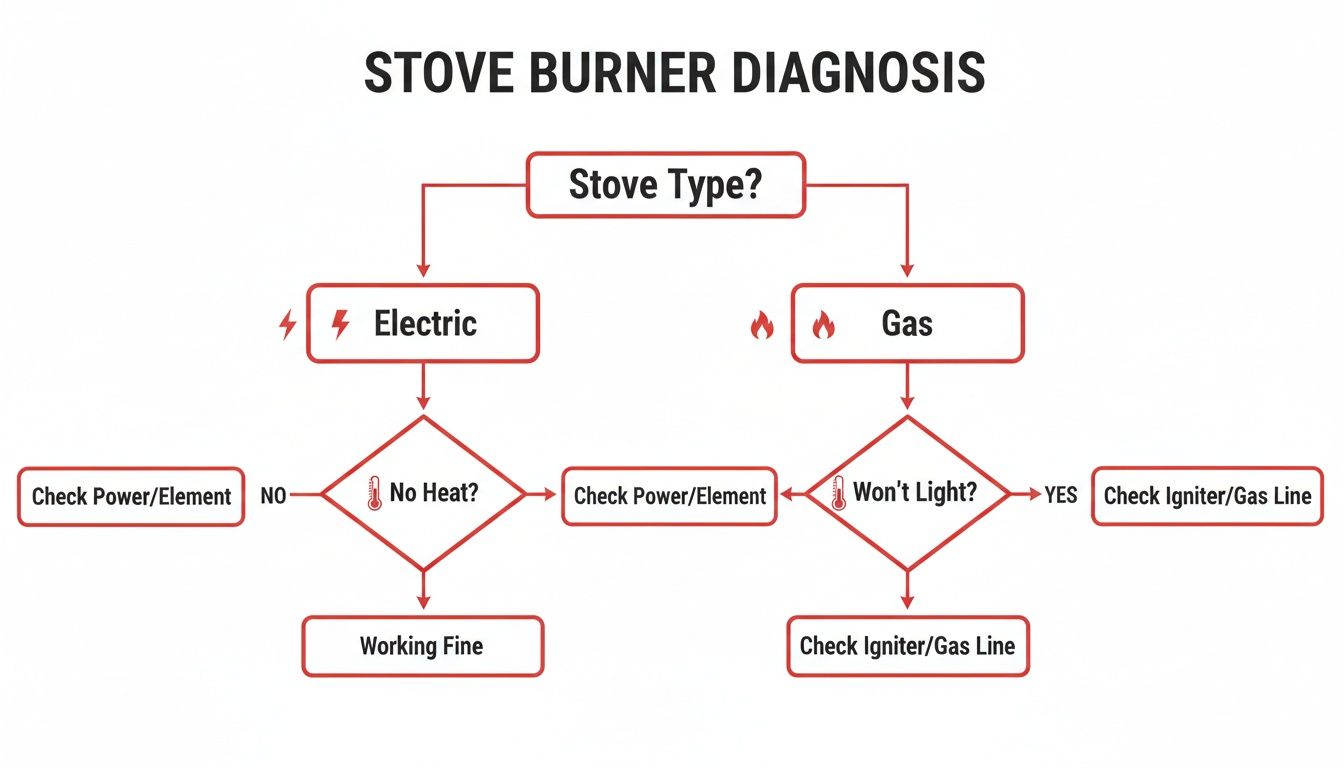
It’s a simple but effective way to narrow down the potential causes and decide on your next move.
Common Symptoms and What They Mean
Once you've made sure everything is safe, take a closer look at the problem. Is it just one burner acting up, or are multiple burners on strike? A single faulty burner usually points to a problem with that specific component, like a bad coil or a clogged igniter.
On the other hand, if all the burners quit working at the same time, the issue is likely more widespread. You could be looking at a problem with the main control board or the power supply to the entire unit. For gas stove owners, the colour of the flame is another huge clue. A healthy flame is blue. You can learn more about how to fix an orange flame on a gas stove to understand what different colours say about your stove's health.
Fixing Common Electric Stove Burner Issues
Electric stoves are workhorses in many Edmonton kitchens, but even the most dependable models can run into trouble. When a burner stops working, the problem usually boils down to the element itself, the socket it plugs into, or the switch that controls the temperature.
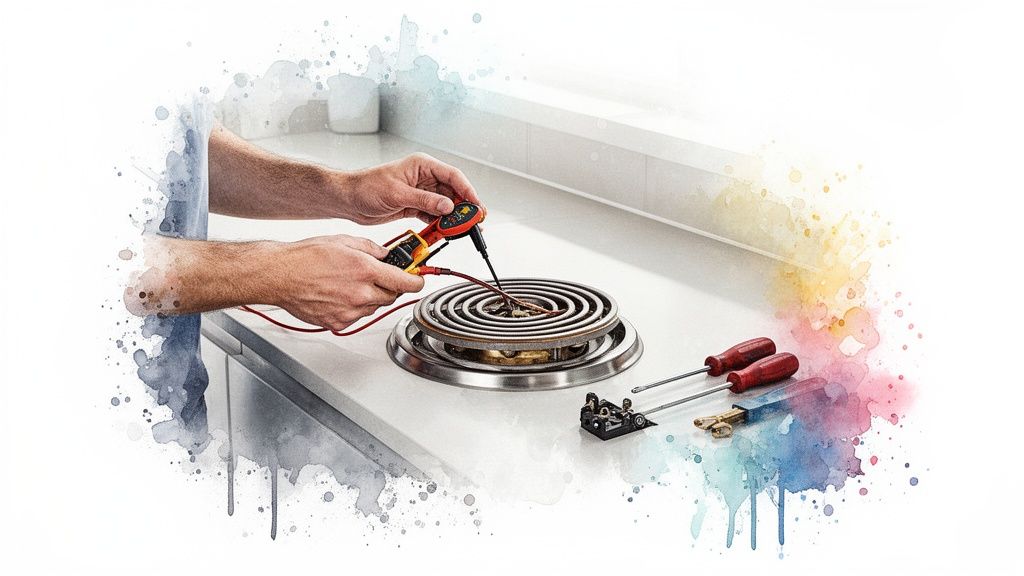
The good news is that many of these fixes are manageable for a DIYer. Let's walk through how you can safely diagnose the issue and get your stove back to working order.
Inspecting the Burner Element and Socket
Your first and easiest move is to check the physical connection between the burner coil and the stove. After ensuring your stove is unplugged, gently lift the problematic burner and pull it straight out of its socket.
Now, inspect both the metal prongs on the element and the terminal block (the socket) they plug into. You’re looking for any obvious signs of trouble:
-
Pitting or Corrosion: White, green, or black residue on the prongs or inside the socket indicates corrosion, which blocks the electrical connection.
-
Burn Marks: Charred or blackened spots are a clear sign of a bad connection that has been overheating.
-
Loose Connections: If the prongs feel loose or look bent, they won't make solid contact inside the socket.
A loose connection is a surprisingly common culprit. Sometimes, firmly pushing the element back into place solves the problem. However, if you see significant burn marks or corrosion, you'll likely need to replace either the socket or the element itself.
Testing the Coil with a Multimeter
If the connection looks clean but the burner is still cold, the element might have an internal break. A multimeter is the best tool for testing continuity—ensuring there’s an unbroken path for electricity.
Set your multimeter to its lowest setting for ohms (Ω). Touch one probe to each of the two prongs on the burner element. A healthy element should give you a reading between 20 and 120 ohms.
If the multimeter's screen shows "OL" (overload) or an infinity symbol, the circuit inside the element is broken. The coil is faulty and needs replacement. This is a common part of a stove burner repair in Edmonton, and finding a replacement coil is typically straightforward. The process is similar to other heating elements; see our guide on how to replace an oven heating element for more context.
Expert Tip: When testing with a multimeter, avoid touching the metal tips of the probes with your hands. Your body can conduct a small amount of electricity, which can skew the reading and give you a false result.
Understanding the Infinite Switch
A classic problem is when a burner only works on the highest setting—you can’t simmer or get medium heat. This almost always points to a faulty infinite switch, which is the control knob you use to select heat levels.
This switch works by cycling power to the element on and off. For low heat, it sends short bursts of power; for high heat, it sends a continuous flow. When the switch fails, it often loses its ability to cycle and gets stuck in the "full power" position.
Replacing an infinite switch is more involved, as it requires accessing the wiring behind the control panel. While manageable for a confident DIYer, this is where many Edmonton homeowners prefer to call a professional to ensure it's done safely.
Solving Gas Stove Ignition and Flame Problems
Gas cooktops offer excellent temperature control, but an ignition problem can be frustrating. When a burner clicks endlessly without lighting, or the flame is weak and yellow instead of strong and blue, it’s a clear sign something is wrong. Fortunately, many of these issues are simple fixes you can handle safely.
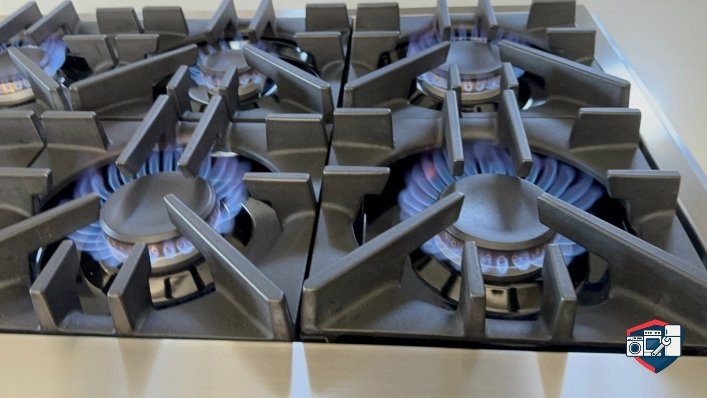
Before you begin, your first and most critical step is to shut off the gas supply. The valve is usually behind the stove. Turning it completely off is non-negotiable to eliminate the risk of a gas leak while you work.
Tackling a Clogged Igniter and Burner Ports
Most of the time, a gas burner that clicks but won’t ignite is simply clogged. Food debris, grease, and cleaning residue can easily block the small ports on the burner head and coat the ceramic igniter.
A thorough cleaning is usually all it takes. With the gas off, lift off the burner cap and head. Use a small, stiff brush or a straightened paper clip to gently clear debris from each port on the burner head. For the igniter, a soft toothbrush can scrub away grime, but be gentle—the ceramic is delicate.
Safety is paramount when working with gas. Beyond shutting off the valve, it's wise to know the signs of a leak. Understanding how to detect gas leaks is a crucial skill for any homeowner with gas appliances.
Once everything is clean and completely dry, reassemble the burner. Ensure the cap is sitting perfectly level; otherwise, it will disrupt the gas flow and prevent proper ignition.
Addressing Weak or Yellow Flames
What if your burner lights, but the flame is weak, uneven, or a worrying yellow-orange colour? A healthy flame should be a steady, vibrant blue. A yellow flame indicates an improper gas-to-air mixture.
This problem often points back to clogged burner ports. Blockages prevent gas from flowing evenly, leading to a sputtering flame. Following the cleaning steps above usually resolves the issue.
If a deep clean doesn’t restore the blue flame, the air shutter may need adjusting. This part controls how much oxygen mixes with the gas. While a possible DIY task, it’s often best left to a professional. An incorrect setting can lead to inefficient burning and the production of carbon monoxide. For persistent flame issues, a professional gas range repair in Edmonton is the safest way to ensure your stove operates correctly.
If these steps don’t solve the problem, the issue may be a more complex component like the spark module or gas valve. At that point, it’s time to call for a professional stove burner repair in Edmonton.
Comparing DIY Costs and Professional Repairs
You're weighing your options: tackle this stove burner repair yourself or call a professional in Edmonton? On the surface, a DIY fix seems more affordable, but there's more to consider than just the cost of a part.
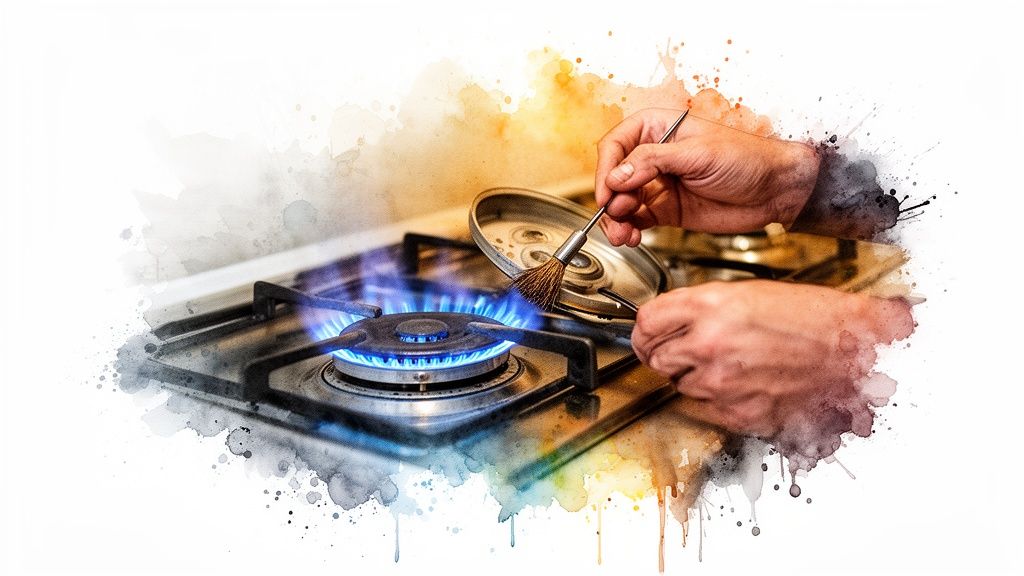
Sure, a simple electric coil replacement can be a quick fix. But what if that’s not the real problem? We've seen homeowners spend time and money on parts that don’t solve the issue because the root cause was something else. A professional's diagnostic experience pays off in these situations.
The Financials of DIY Stove Repair
A DIY approach can save money, but it's important to map out all potential costs before you begin.
Your total investment includes:
-
The Replacement Part: An electric element, a burner socket, or a gas igniter.
-
The Right Tools: Do you have a multimeter, a socket set, or wire strippers? These can add up.
-
Your Time: Factor in the hours spent watching tutorials, finding the right part, and doing the work.
For a simple swap, the savings are significant. For anything more complex, you risk turning a small issue into a larger, more expensive problem.
For landlords and property managers, the decision is clear. The liability risks of a DIY electrical or gas repair in a rental property are too high. A professional, warrantied repair is the only way to protect your investment and ensure tenant safety.
Understanding Professional Repair Costs in Edmonton
Hiring a professional in Edmonton means you're paying for expertise, safety, and peace of mind. A typical invoice covers the service call, labour, and parts.
Here’s a look at what you might pay for parts if you do it yourself versus the all-in cost for a professional service in Edmonton.
DIY vs Professional Repair Cost Comparison
| Repair Type | Estimated DIY Parts Cost | Estimated Professional Repair Cost (Parts & Labour) |
|---|---|---|
| Electric Coil Element | $20 – $50 | $150 – $250 |
| Burner Receptacle/Socket | $15 – $40 | $170 – $280 |
| Gas Burner Igniter | $25 – $60 | $180 – $300 |
| Infinite Switch (Control) | $30 – $70 | $200 – $350 |
While parts are inexpensive, the professional cost covers a technician's time, expertise, and a guarantee that the job is done safely. For many, that's a price worth paying.
If your stove is older and the repair is costly, you may face another decision. Does it make more sense to replace the whole appliance? Our guide on deciding whether to repair or replace your appliances can help you make an informed choice.
Knowing When to Call an Expert in Edmonton
While a straightforward stove repair can be satisfying, some situations require a professional. Knowing the difference between a simple DIY fix and a hazardous problem is crucial. Certain symptoms are red flags indicating a complex electrical or gas system failure.
Ignoring these warning signs can risk more damage to your stove and create serious safety hazards in your Edmonton home. A small mistake with a gas line or high-voltage wiring can have severe consequences.
Red Flags That Demand a Professional
If you encounter any of these issues, stop immediately and seek professional help for your stove burner repair in Edmonton. These problems go beyond a simple part swap and require specialized knowledge.
-
The Smell of Gas: If you smell gas, even faintly, turn off the gas supply, open windows to ventilate, and call a certified gas technician. Never try to diagnose a gas leak yourself.
-
Visible Sparks: Sparks from an electric burner socket or control panel indicate a dangerous short circuit. Unplug the stove or shut off its breaker and do not use it until it's been inspected.
-
Multiple Burners Fail Simultaneously: When all burners stop working at once, it usually points to a larger issue like a faulty main control board, a bad terminal block, or a problem with your home's circuit.
-
Control Panel Malfunctions: A flashing display, unresponsive controls, or erratic behaviour signals a problem with the stove's electronics, which requires an experienced technician.
When hiring a pro, it pays to be cautious. Learning spotting home service scams can help you find a trustworthy technician.
A professional technician doesn't just replace parts; they diagnose the root cause. This prevents you from spending money on components that don't solve the underlying issue, saving you time and frustration.
The Financial Sense of Expert Repair
Calling an expert often makes the most financial sense. A new mid-range stove can cost $800–$1,500. In contrast, the average appliance repair is much less. Repairing a stove that's under 10 years old is almost always the smarter move. You can learn more about the costs of stove repair in Edmonton and see how a professional fix can add years to your appliance's life, saving you from a costly replacement.
Simple Maintenance to Extend Your Stove's Life
The best stove burner repair is the one you never have to make. Proactive, simple maintenance is far cheaper and less frustrating than dealing with a breakdown. Keeping your stove in top shape doesn't require hours of work—it's about building consistent cleaning routines that prevent common burner problems.
A few minutes of care each week can significantly extend your stove's lifespan and ensure it remains a reliable part of your Edmonton kitchen.
Establish a Regular Cleaning Routine
Grime is the primary enemy of any stove burner. Spills, grease, and food particles are inevitable, but letting them build up causes trouble.
-
On gas stoves, debris clogs burner ports, leading to uneven flames or ignition failure.
-
On electric cooktops, caked-on residue corrodes burner sockets and weakens the electrical connection.
Your best defence is a quick weekly wipe-down. Let the burners cool, then wipe the surface with a damp cloth. For a deeper clean, remove electric coils or gas burner caps and grates and scrub them with warm, soapy water. Always ensure every part is completely dry before reassembling to prevent ignition issues on gas stoves and rust on electric models.
Prevent Damage Before It Happens
How you use your stove also impacts its longevity. A few careless habits can lead to damage that cleaning can't fix.
Using a large pot on a small burner reflects excess heat onto the stovetop, which can damage the finish or internal wiring. Dragging heavy cast iron pans across a glass or ceramic cooktop is a surefire way to cause scratches that can weaken the surface.
Expert Warning: Watch out for boil-overs. When liquid spills and seeps into the burner assembly, it can short out electrical connections or corrode the delicate parts of a gas igniter, leading to a frustrating and costly repair.
A malfunctioning gas burner can increase the risk of unburned gas release, and Canadian fire-loss statistics identify cooking equipment as a leading cause of house fires. A failing electric element can draw too much current, increasing your energy bills. Proper maintenance and timely repairs impact your home's safety and efficiency. Learn more about professional range and cooktop repair safety to understand the risks involved.
Your Local Edmonton Stove Repair Solution
If you've tried the DIY route and the burner is still not working, or if you've encountered one of the red flags that require a professional, expert help is just a phone call away. Don't let a faulty stove disrupt your daily routine.
For safe, reliable, and prompt stove burner repair in Edmonton, our certified technicians are ready to diagnose the problem and fix it right the first time. We handle everything from simple element swaps to complex control board diagnostics on all major brands. Our goal is to get your kitchen back to full working order with a repair you can trust.
You can learn more about our comprehensive stove repair services in Edmonton and see exactly how we can help.
Need appliance repair? Visit RepairMyAppliance.ca or call 587-416-5888 for fast, professional service.