
Discovering a puddle of water around your refrigerator is a frustrating experience for any homeowner. Before you panic about potential damage or costly repairs, know that many causes of a water leaking in the fridge are common and often fixable. This guide will walk you through the essential safety steps, help you diagnose the problem, and provide clear, step-by-step instructions to stop the leak.
First Steps When You Find Water Leaking in the Fridge
Water and electricity are a dangerous combination. Your immediate priority is to secure the area and prevent accidents. As professional technicians in Calgary and Edmonton, we always stress a safety-first approach.
The very first thing you must do is unplug the refrigerator from the wall outlet. Do not hesitate. Once the power is off, use towels to thoroughly dry the floor. This action protects your flooring from water damage and eliminates the risk of a slip-and-fall accident. Even a small drip can warp floorboards or damage grout if left unattended.
What to Do Next
With the immediate danger managed, you can begin troubleshooting. A calm, methodical approach will help you identify the source of the leak efficiently.
- Protect Your Food: Move perishable items like meat, dairy, and produce into a cooler with ice packs to prevent spoilage. This simple step can save you hundreds of dollars in groceries. To understand the importance of a working fridge, learn more about what happens when you don't have a refrigerator.
- Identify the Leak's Location: Play detective for a moment. Is the water pooling inside the fridge, under the crisper drawers? Is it collecting on the floor directly beneath the unit? Or is the puddle forming behind the appliance? The location of the water is the most significant clue to pinpointing the cause.
A small leak can escalate quickly. Unchecked fridge leaks contribute to significant water waste and can cause thousands in damages, mirroring larger-scale plumbing failures. The impact on Alberta families can be severe, especially when minor drips turn into floor-warping disasters.
For a broader perspective on tracking down hidden water issues around your home, this guide on how to detect water leaks offers some really valuable tips.
Pinpointing the Cause of Your Fridge Leak
You've secured the area and cleaned up the initial mess. Now, it’s time to find out what’s causing the leak. The good news is that most refrigerator leaks stem from a few common issues. By matching the location of the puddle to the potential causes below, you can quickly narrow down the problem.
This flowchart provides a visual overview of the diagnostic process, from initial safety checks to identifying the source.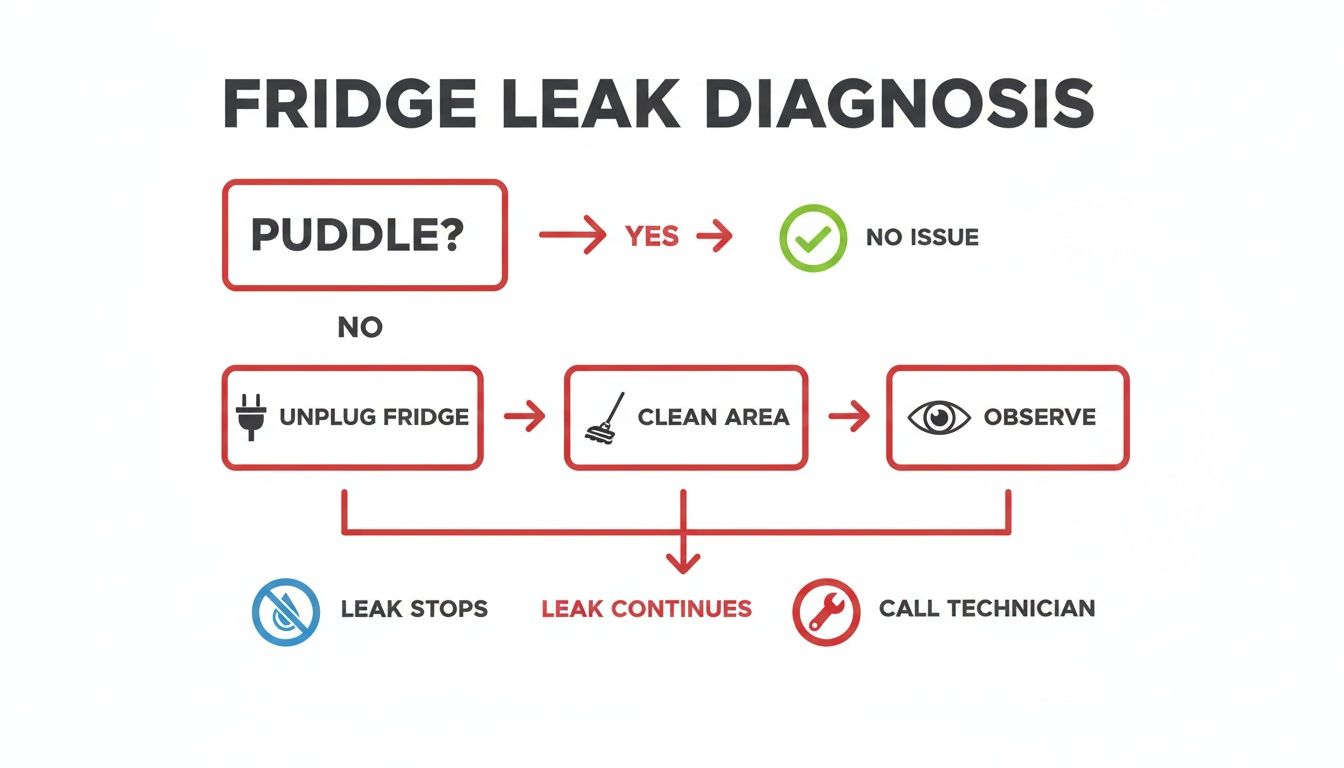
Following a logical process ensures your safety and helps you find the root cause faster.
Use this quick reference table to match the leak's location with the most likely culprit.
Quick Leak Diagnosis Cheat Sheet
| Location of Water | Most Likely Cause | DIY Difficulty | Recommended First Action |
|---|---|---|---|
| Inside, under crisper drawers | Clogged Defrost Drain | Easy | Clear the drain tube using warm water. |
| On the floor, under the fridge | Cracked or Overflowing Drain Pan | Easy | Inspect the pan at the back for damage or clogs. |
| On the floor, behind the fridge | Damaged Water Supply Line | Moderate | Check the water line and its connections for drips. |
| Inside, on shelves or dripping | Faulty Door Gasket (Seal) | Easy | Clean the gasket and test its seal with a dollar bill. |
This table is a great starting point. Let’s dive deeper into each of these common issues.
The Clogged Defrost Drain
This is the most frequent cause of water leaking in the fridge. Every refrigerator runs a defrost cycle to melt frost from the evaporator coils. This water is supposed to travel down a small drain tube into a pan underneath the fridge, where it evaporates. When food crumbs, ice chips, or mineral deposits block this drain, the water backs up and overflows, typically pooling at the bottom of the fridge beneath the crisper drawers.
A Cracked or Overflowing Drain Pan
If you find water on the floor directly under the fridge, the drain pan is the prime suspect. This shallow tray, located at the bottom of the appliance near the warm compressor, catches water from the defrost drain. Over time, the plastic can become brittle and crack. A humid environment can also cause the pan to collect more water than can evaporate, leading to an overflow.
A Leaky Water Supply Line
If your refrigerator has an ice maker or water dispenser, a puddle behind the unit almost always points to the water supply line. This thin plastic or copper tube connects your fridge to your home's water pipe.
Common failure points include:
- Loose Fittings: Connections can vibrate loose over time at both the wall and the fridge.
- Kinks and Cracks: The line can get pinched or cracked if the fridge is moved.
- Wear and Tear: Older plastic lines can become brittle and develop small fissures that drip.
A slow leak from a water line is deceptive. It can go unnoticed for months, seeping under flooring and causing serious subfloor damage. Regularly checking the line behind your fridge can save you from a massive headache and an expensive repair bill.
Faulty Door Gaskets (Seals)
A damaged door seal won't cause a large puddle on the floor, but it is a common source of condensation and drips inside the fridge. The rubber gasket creates an airtight seal to keep warm, moist air out. When this seal is dirty, torn, or warped, warm air enters, forcing the fridge to run constantly and creating excess condensation that drips onto shelves. For more details, see our guide on freezer door seal issues.
How to Unclog Your Refrigerator's Defrost Drain
If you've discovered water under your crisper drawers, you've likely found the most common source of a refrigerator leak: a blocked defrost drain. I've personally fixed this issue for countless homeowners across Alberta.
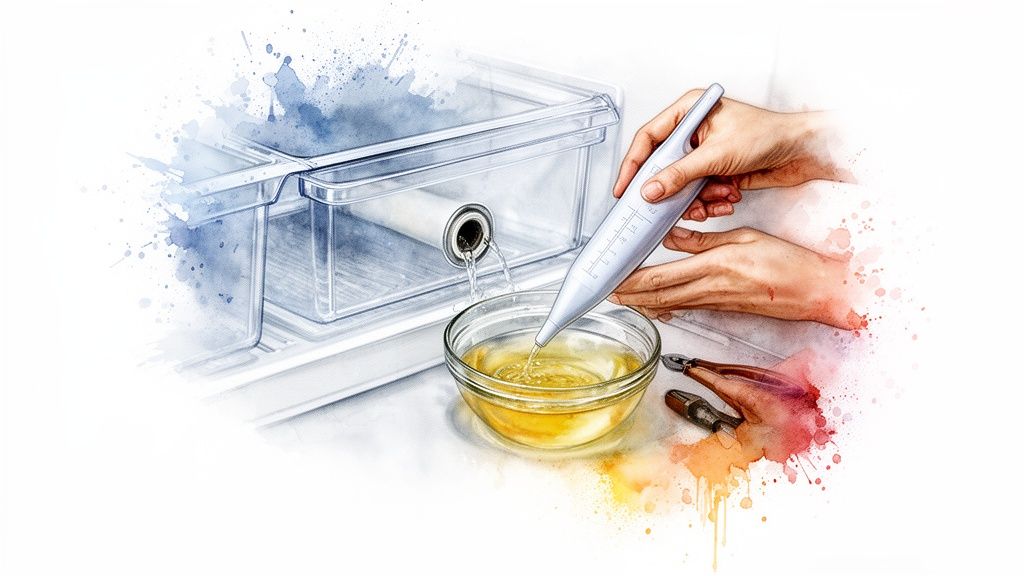
When the defrost drain gets clogged with food particles or ice, the melted frost has nowhere to go but out onto the floor of your fridge. Fortunately, this is often a straightforward DIY fix.
Locating and Clearing the Drain Hole
First, locate the drain hole. It’s usually a small opening at the bottom of the back panel inside the fresh food or freezer compartment. You may need to remove a small plastic cover to access it.
Once you find it, your goal is to clear the blockage. Here’s a safe and effective method:
- Use a turkey baster or a large syringe filled with warm water.
- Insert the tip into the drain hole and forcefully squirt the water down the line.
- The water pressure is often enough to dislodge minor clogs. Repeat this a few times until water flows freely.
Crucial Safety Tip: Never use a sharp object like a screwdriver or a coat hanger to poke at a clog. The drain line is made of soft plastic and can be easily punctured, turning a simple fix into a much more complicated and expensive repair.
If this problem persists, our guide on a fridge water dripping inside offers more advanced troubleshooting steps.
Accessing the Drain Tube and Pan
If flushing the drain from inside didn't work, the clog may be further down the line. To check, you'll need to access the back of your refrigerator.
Carefully pull the fridge away from the wall and remove the lower access panel. You'll see the drain tube—a flexible hose running from the drain hole down to the drain pan. Look for a small rubber valve at the end of the tube (often called a duckbill valve). This valve can get clogged with debris. Gently squeeze it to break up any gunk, or remove and wash it with warm, soapy water. While you're there, inspect the drain pan for cracks and clean it out.
Troubleshooting Leaks from Water Lines and Door Gaskets
If the puddle is behind your fridge, the water supply line is the likely culprit. If you're dealing with condensation and drips inside the unit, a faulty door gasket is the probable cause. Let's walk through how to inspect these two common sources of a water leaking in the fridge.
Checking the Water Supply Line
The water line is a thin tube that supplies water to your ice maker and dispenser. Over time, it can crack, or its connections can loosen.
First, unplug the fridge and pull it away from the wall. Use a flashlight to trace the line from the wall to the fridge, looking for moisture, cracks, or kinks. A line that has been pinched is a common failure point.
Next, check the connections:
- At the Fridge: Ensure the fitting at the water inlet valve is snug but not overtightened.
- At the Wall: Check the connection to your home's water supply valve. A slow drip here can cause hidden damage over time.
If you find a crack in the line, it needs to be replaced. A loose fitting may just need to be gently tightened with a wrench. Water line issues can also cause other problems, so if your ice maker is acting up, our guide on Samsung refrigerator ice maker problems may be helpful.
Testing the Door Gaskets
A worn-out door gasket allows warm, humid air into the fridge, creating condensation that drips onto your shelves. The fix is often simple.
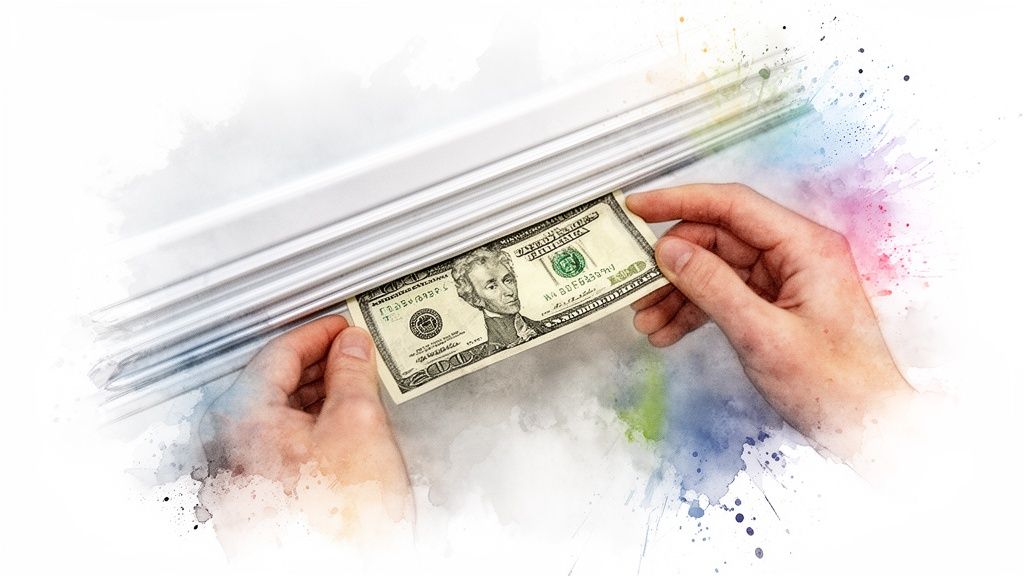
Use the "dollar bill test" to check the seal. Close the fridge door on a banknote and try to pull it out. If you feel resistance, the seal is good in that spot. If the bill slides out easily, you've found a gap.
Expert Tip: Don't just check one spot. Test the gasket all the way around the door—top, bottom, and both sides. A seal can fail in just one small section and still cause big problems.
If you find a weak spot, first try cleaning the gasket with warm, soapy water to remove any grime. If the gasket is visibly torn, cracked, or brittle, it’s time for a replacement. A new gasket stops leaks and improves your fridge's energy efficiency.
Regular maintenance is key. You might be surprised how common leaks are, even in commercial settings. A recent survey found that 50% of supermarkets were leaking refrigerants. For homeowners in Alberta, this highlights how a simple water leak in a Calgary or Edmonton kitchen could signal bigger efficiency losses. You can discover more insights about these commercial system failures and see why being proactive is so important.
Knowing When It’s Time to Call an Appliance Professional
There's great satisfaction in a successful DIY repair, but knowing your limits is crucial. When you’re dealing with a water leaking in the fridge, recognizing when to call a pro can save you from costly mistakes and keep you safe.
If you've cleared the defrost drain, checked the water line, and inspected the drain pan, but the leak persists, the problem likely lies deeper within the appliance and requires specialized diagnostic tools.
Red Flags That Demand an Expert
Some problems are more than just a simple leak—they're warnings. If you notice any of the following, call a professional for help immediately.
- An Oily or Chemical Smell: If the leaking liquid feels oily or has a chemical odour, you likely have a coolant leak. Coolant is a hazardous material that only certified technicians should handle.
- Any Electrical Issues: If you see flickering lights, hear buzzing sounds, or notice the leak is near the compressor or wiring, stop and call for help.
- Problems with Sealed Components: Leaks appearing to come from the ice maker's internal parts, the main water inlet valve, or the compressor area are not DIY jobs. These repairs involve complex components and can cause more damage if attempted yourself.
A professional technician does more than just stop the leak you can see; they find the root cause. Our teams in Edmonton, Calgary, and Red Deer use specialized equipment to test water pressure, check valve integrity, and spot hairline cracks you’d never see with the naked eye. This is how we make sure the repair is done right the first time.
Attempting complex repairs can also void your warranty and create serious safety hazards. When you're in over your head, calling a professional is the safest and most effective solution.
Your Questions About Refrigerator Leaks Answered
When you find a puddle around your fridge, questions are natural. We've gathered answers to the most common queries we hear from homeowners to help you understand the problem and what to do next.
How Much Does It Cost to Fix a Leaking Refrigerator in Alberta?
The cost varies widely. A simple DIY fix like clearing a clogged defrost drain costs nothing but your time. If you need a professional, the price depends on the part and labour. For a common repair like replacing a faulty water inlet valve, you can expect to pay between $150 and $350. At Repair My Appliance, we provide clear, upfront quotes. We also waive the service call fee in Edmonton, Calgary, or Red Deer once you approve the repair, so there are no surprises.
Is It Safe to Use a Leaking Fridge?
Safety always comes first. If water is near the power cord, electrical components, or pooling on the floor, unplug the appliance immediately. If the leak is small and contained inside the fridge, it's less of an immediate electrical hazard, but it should still be addressed quickly to prevent mould and food contamination. When in doubt, unplug it.
Can a Clogged Defrost Drain Stop My Fridge from Cooling?
Yes, absolutely. When the defrost drain is clogged, water backs up and freezes over the evaporator coils. This ice buildup blocks the flow of cold air, preventing your fridge from cooling properly. Clearing the clog is essential not just to stop the leak but to restore your fridge's cooling performance.
Why Is There Water Under My Crisper Drawers?
This is the classic sign of a clogged defrost drain. Melted frost is supposed to flow down a drain tube into an evaporation pan. When the drain is blocked by ice or food debris, the water backs up and overflows, settling at the lowest point inside your fridge—which is almost always under the crisper drawers. Clearing that drain line is the solution.
Beyond the immediate fix, it's wise to understand your coverage. Find out if Does homeowners insurance cover water damage from an appliance, as it can help with repairs to floors or cabinets.
Still Puddling? When to Call a Pro for Your Leaky Fridge
Don't let a small puddle turn into a major headache. If you've tried the steps in this guide and are still dealing with a leak, our certified technicians are ready to help. We understand the urgency of a water leaking in the fridge and are equipped for fast, effective solutions.
Our team has the tools and experience to diagnose and fix any refrigerator issue, often in a single visit. We offer same-day service across Calgary, Edmonton, and Red Deer because we know you need your kitchen back to normal quickly. For complex problems like those covered in our guide to fridge repair in Edmonton, a professional is always the safest choice.
Need appliance repair? Visit RepairMyAppliance.ca or call 587-416-5888 for fast, professional service.