

Picking the right appliances for a rental property is a classic balancing act. As a landlord, you’re always weighing upfront cost against long-term value. For most property owners, the sweet spot is the mid-range price tier. It delivers the best return on investment by offering durability without the frequent breakdowns of cheap models or the unnecessary expense of high-end units.
This guide will walk you through why mid-range is the smartest choice, what to look for in each appliance, and how to manage your investment for long-term profitability.

Thinking Like an Investor, Not Just a Buyer
It's easy to get overwhelmed when you're standing in an appliance store. Go too cheap, and you're signing up for constant repair calls and frustrated tenants. Spend too much, and you'll probably never see that money back in your rental income.
The key is to think like an investor, not just a buyer. This means understanding the Total Cost of Ownership (TCO), a concept that forces you to look past the sticker price and see the bigger picture.
Here's what TCO accounts for over an appliance's life:
- Repair Frequency: Budget models use cheaper parts that don't last, leading to more service calls.
- Energy Bills: An energy-efficient appliance is a strong selling point for tenants who pay their own utilities.
- Lifespan: A solid mid-range fridge that runs for 10 years is a much smarter buy than a budget model you have to replace in five. Check out the average lifespan for a refrigerator to learn more.
- Tenant Satisfaction: Reliable appliances mean fewer complaints. Happy tenants tend to stay longer, which reduces turnover and vacancy costs.
Why Are Prices Creeping Up?
It’s not just your imagination—appliances are getting more expensive. We’re seeing the effects of inflation, supply chain issues, and new technology driving up costs. If you're wondering why are appliances getting more expensive, it's these larger economic forces at play.
This trend makes it even more critical to choose wisely. You want every dollar you spend to deliver real, lasting value.
Rental Appliance Price Ranges at a Glance
This table summarizes the typical costs for essential rental appliances, categorized by tier. It's a quick reference to help you budget and assess your investment options.
| Appliance Type | Budget Tier (Entry-Level) | Mid-Range (Best Value) | High-End (Premium) |
|---|---|---|---|
| Refrigerator | $650 – $900 | $900 – $1,500 | $1,500+ |
| Range (Stove/Oven) | $600 – $850 | $850 – $1,400 | $1,400+ |
| Dishwasher | $450 – $600 | $600 – $900 | $900+ |
| Washer & Dryer Set | $1,000 – $1,400 | $1,400 – $2,200 | $2,200+ |
| Over-the-Range Microwave | $250 – $400 | $400 – $650 | $650+ |
Note: Prices are estimates and can vary based on brand, features, and local Alberta retailers.
These numbers show why the mid-range column is so appealing. It offers a significant jump in quality and reliability without breaking the bank.
By focusing on that mid-range sweet spot, you protect your cash flow, keep tenants happy, and minimize those dreaded 10 p.m. emergency calls about a dead fridge. It's the most reliable path to running a profitable and less stressful rental business.
Navigating the Three Appliance Price Tiers
When outfitting a rental property, it helps to think like you're buying a vehicle for a small business. A cheap used car has a low initial price, but you'll be dealing with constant breakdowns. A luxury SUV is overkill, loaded with expensive features you don't need. The smart money is on the reliable work truck: built to handle the daily grind without the fancy frills.
That's the exact mindset you need for rental appliances. Each tier—budget, mid-range, and high-end—comes with its own set of trade-offs that directly impact your bottom line.
The Budget Tier: A False Economy
The pull of budget appliances is their low sticker price. You can save several hundred dollars per unit upfront, but this is almost always a false economy.
These models are built with cheaper components and flimsier materials, resulting in a shorter lifespan of just 5-7 years compared to the 10+ years you can get from a solid mid-range machine.
Here’s a quick rundown of what you get in the budget aisle:
- Bare-Bones Functionality: They do the basic job and nothing more.
- Lower-Grade Materials: Think plastic tubs in dishwashers and thinner metal casings that dent easily.
- Higher Failure Rates: Cheaper parts are the first to go, meaning more service calls.
- Basic Warranties: A standard one-year warranty offers little long-term protection.
The constant repair costs and the need for earlier replacement often make budget appliances the more expensive choice in the long run.
The High-End Tier: Unnecessary Expense for Rentals
At the opposite end are premium appliances: smart fridges, professional-grade ranges, and whisper-quiet dishwashers. They're fantastic for a homeowner's dream kitchen but a poor investment for a rental property.
Tenants rarely use features like Wi-Fi connectivity or a sous-vide function. When those complex, tech-heavy components fail, repair bills are significantly higher. You're paying a premium for bells and whistles that don't increase your rent but absolutely increase your maintenance headaches.
The Mid-Range Tier: The Landlord's Sweet Spot
This is where experienced landlords invest their money. Mid-range appliances deliver the best balance of durability, efficiency, and practical features without the unnecessary cost of high-end models. They are the true workhorses of the rental world.
The real advantage of mid-range appliances is their superior build quality. Manufacturers use better materials—like stainless steel drums in washing machines and more reliable motors in fridges—which directly leads to a longer, more dependable service life.
Opting for this tier means you’re getting:
- Real Durability: These machines are built to withstand tenant use, often lasting 10 years or more.
- Better Energy Efficiency: Lower utility bills can be a great perk to mention to prospective tenants.
- Features That Matter: Tenants genuinely appreciate details like adjustable shelves, quieter operation, and easy-to-clean surfaces.
- Stronger Warranties: They frequently come with better warranty terms and have parts that are easier to source for repairs.
This middle ground is crucial as local regulations change. For example, some regions now mandate that landlords provide essential appliances, pushing property owners to find reliable options. To better understand how these choices impact your finances, you can see a detailed breakdown of appliance costs in our guide. For landlords looking to meet requirements affordably and reliably, the mid-range tier is the only logical choice.
Finding The Sweet Spot For Each Appliance
We've established that mid-range is the landlord's best friend. Now, let's get into the specifics. Choosing the right appliances for your rental isn't a one-size-fits-all deal; it demands a practical, item-by-item game plan. Each appliance has its own must-have features and, more importantly, features that are just future repair calls waiting to happen.
The Refrigerator: The Reliable Workhorse
When it comes to a rental fridge, the mission is simple: keep food cold. Anything fancier is often an unnecessary risk. The sweet spot for a dependable rental refrigerator is usually between $900 and $1,200. In this range, you get a unit with a better compressor and sturdier materials without the complex electronics of high-end models.
Here's what to look for:
- Top-Freezer Models: They have fewer moving parts than French door or bottom-freezer models, meaning fewer things can break.
- Simple Controls: A single, sturdy dial for temperature is more tenant-proof than a digital touchpad.
- Durable Shelving: Look for solid, spill-proof glass shelves. They hold up much better than flimsy wire or plastic ones.
Warning: Avoid in-door ice and water dispensers. They are the number-one source of refrigerator repair calls, from leaks that wreck flooring to complex mechanical failures. If you want to offer an icemaker, stick to a simple one inside the freezer.
The Range or Stove: The Durable Cooktop
A stove in a rental has to be three things: tough, safe, and easy to clean. You’ll find the best options between $850 and $1,400. This price point gets you a solid unit that can handle daily cooking without delicate, high-tech features.
For maximum durability, consider these features:
- Coil-Top Electric Ranges: While not as sleek as glass tops, they are incredibly tough and cheap to fix. Replacing a single burner is a minor repair, whereas a cracked glass cooktop is a huge expense.
- Basic Knob Controls: Knobs are more resilient to spills, heat, and constant use than digital touchpads.
- Self-Cleaning Ovens: This is a feature tenants genuinely love, and it can help keep your appliance in much better shape.
The Dishwasher: The Quiet Achiever
A dishwasher is a fantastic amenity that can make your rental unit stand out. You'll find the best value in the $600 to $900 range, which offers a perfect balance of performance, quiet operation, and durability.
This chart helps visualize the three main tiers, showing why that mid-range sweet spot offers the best return.
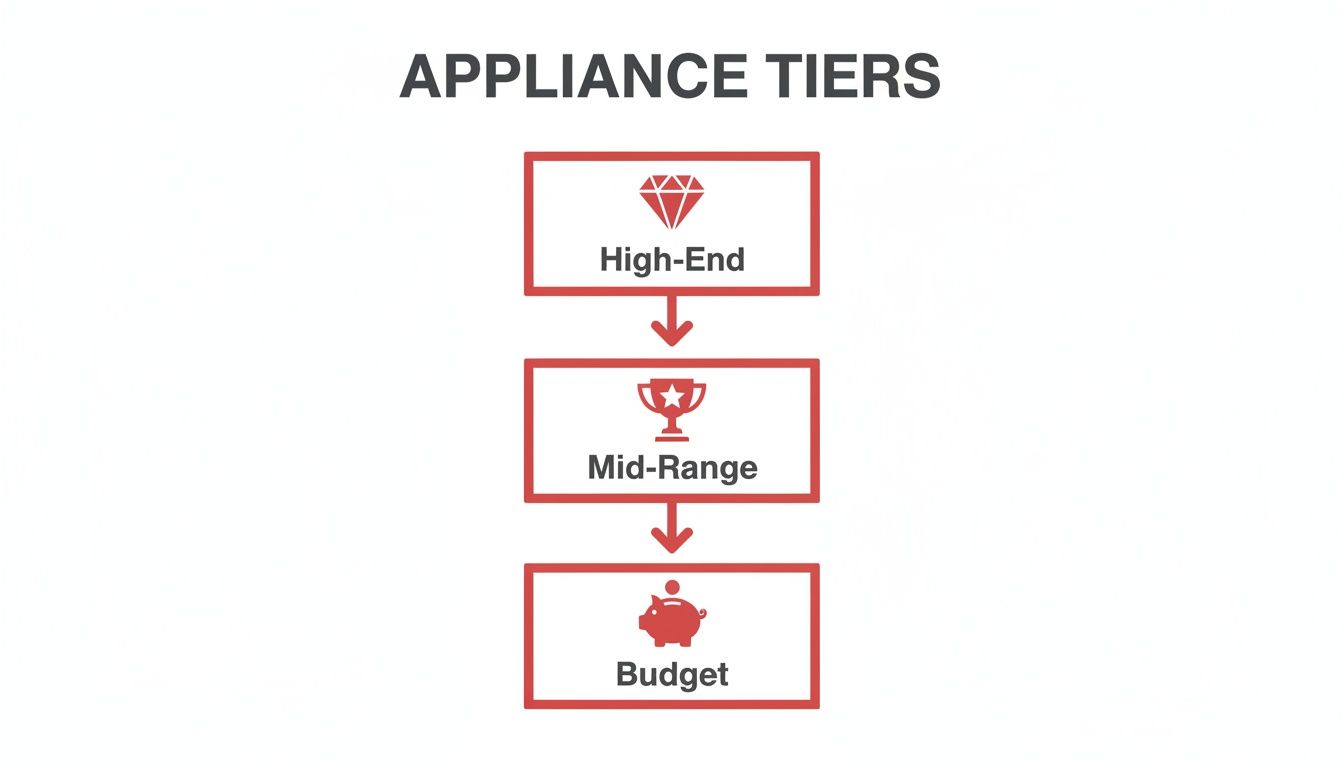
As you can see, the trophy icon for the mid-range tier is the winner, giving you that ideal blend of quality and cost-effectiveness.
When picking out a dishwasher, focus on these features:
- Stainless Steel Tub: It resists stains and odours better than plastic tubs and can handle higher heat for better drying.
- Simple Wash Cycles: A model with a few basic cycles like Normal, Heavy, and Light is all a tenant needs.
- Decent Sound Rating (dBA): Look for a model under 55 dBA. In a compact apartment, a loud dishwasher can be a major source of complaints.
The Washer and Dryer: The Laundry Champions
In-unit laundry is one of the most powerful draws for tenants. A reliable washer and dryer set in the $1,400 to $2,200 range is a smart investment that pays for itself with lower vacancy rates.
For rental properties, durability and simplicity always win. Top-load washers with a traditional central agitator are often the most robust choice. They're mechanically simpler than many high-efficiency front-loaders and can handle heavy use with fewer problems.
Choosing dependable, mid-range appliances is a sound financial move, similar to boosting your kitchen remodel return on investment by making your property more attractive without over-investing.
Here are the key things to look for in laundry machines:
- Top-Load Washer: These are typically workhorses—more durable and with shorter wash cycles.
- Simple Dryer Controls: A dryer with a mechanical timer knob is much less likely to fail than one with a finicky digital sensor.
- Good Parts Availability: Stick to well-known brands with a strong service presence in Alberta. This is crucial for fast repairs.
Thinking Beyond the Initial Purchase Price
Any savvy landlord knows an appliance’s sticker price is just the down payment. To make a smart investment, you must consider the Total Cost of Ownership (TCO). This mindset shifts your perspective from buying a machine to strategically acquiring a critical business asset.
TCO covers every expense an appliance will incur, from installation to disposal. Forgetting these long-term costs is a classic mistake that can drain your profits through surprise repairs and tenant turnover. When sizing up an appliance, four key factors determine its real value.
Durability And Build Quality
Durability is the foundation of a good rental appliance. A machine that can handle the daily grind of tenant use is worth its weight in gold. Cheaper models use flimsy plastic parts and less robust motors, leading to early breakdowns.
When you're shopping for mid-range models, look for tangible signs of quality:
- Stainless Steel Tubs: In a dishwasher, a stainless steel tub resists stains, handles higher heat, and won’t crack.
- Solid Shelving: For fridges, choose thick, tempered glass shelves. They’re easy to clean and won't buckle under a full grocery run.
- Simple Mechanics: Stick with appliances that have straightforward, sturdy controls. A beefy knob will almost always outlast a delicate digital touchpad in a rental.
Warranty And Parts Availability
A great warranty is your first line of defense, but it’s useless if you can't get service or find parts. This is especially critical in Alberta, where a busted furnace in winter or a dead fridge anytime is a full-blown emergency. Choosing a brand with an established service network in cities like Edmonton and Calgary is non-negotiable.
Before you buy, research the brand’s parts distributors and authorized repair services in your area. If parts are hard to find, a simple fix can drag on for weeks. The decision between appliance repair or replacement often comes down to how quickly you can get the necessary parts.
Energy Efficiency
Energy efficiency benefits everyone. First, it’s a fantastic marketing tool. For tenants paying their own utilities, an ENERGY STAR® certified appliance translates to monthly savings, making your unit more attractive.
Second, efficiency often signals better engineering. Appliances that use less energy typically have higher-quality compressors, motors, and insulation. This superior construction contributes to a longer, more reliable lifespan for the machine. It’s a clear win-win.
Investing a little more for an energy-efficient model often pays for itself through lower operating costs and enhanced durability, reinforcing the idea that the cheapest option is rarely the best value.
Ease Of Use
Never underestimate the power of simplicity. An appliance with a complicated control panel is a recipe for tenant-caused service calls. When a tenant can't figure out how to run the dishwasher, you're the first person they're going to call.
Choose appliances that are intuitive and straightforward. Clear labels and simple dials reduce the chances of user error. An easy-to-use machine means fewer questions, less frustration for your tenants, and smoother property management for you.
How To Source And Maintain Your Appliances

Picking the right appliance is only half the battle. How you buy and care for it are what truly protect your investment and keep your rental business running smoothly.
Smart Sourcing Strategies For Landlords
Thinking like a business owner can unlock serious savings. If you manage more than one property, you should always be asking about bulk discounts. Retailers are often ready to negotiate when you’re buying for multiple units.
And don't forget about these other high-value plays:
- Holiday Sales Events: Major sales around Boxing Day or Black Friday bring some of the biggest markdowns of the year.
- Scratch-and-Dent Outlets: These stores are a landlord's best friend. They sell new appliances with small cosmetic flaws for a huge discount. A tiny dent on the side of a fridge won’t matter to your tenant, but the 20-40% savings will matter to you.
- Floor Model Clearances: Stores often sell their display models at a great price to make room for new inventory. These are new units with a full warranty.
Combining these strategies can help you land high-quality, mid-range appliances for a price closer to the budget tier.
The Power Of A Reliable Repair Partner
Even the most dependable appliance will eventually need a repair. When something breaks down, how fast you respond directly affects your tenant's happiness and your bottom line. Having a go-to repair partner is a game-changer.
A broken appliance is more than an inconvenience; it’s a potential reason for a tenant to leave. An unhappy tenant with a dead fridge won't stick around.
That’s why a reliable service like Repair My Appliance is so valuable for landlords in Edmonton, Calgary, and surrounding areas. Our same-day service is built to solve problems fast, keeping disruptions to a minimum. Our technicians arrive with fully stocked vans, ready to handle most repairs in a single visit.
Beyond the initial purchase, you need a plan for maintenance. Learning some tips for prioritizing tenant maintenance requests can help your operation run smoothly. It also helps to know the quirks of different brands; our guide on prolonging the life of your LG appliances is packed with practical advice.
With clear, upfront pricing and a commitment to quality work, we turn appliance emergencies into resolved issues, helping you keep your rental properties profitable and in high demand.
Frequently Asked Questions (FAQ)
Here are answers to common questions landlords ask when it's time to buy new appliances.
Should I Buy New or Used Appliances for My Rental?
Buying new is almost always the smarter move for a rental property. When you buy new, you get a manufacturer's warranty—a crucial safety net for the first year. With a used appliance, you have no idea about its history, maintenance, or if a major part is about to fail. That initial savings can vanish with the first big repair bill.
Is Stainless Steel Worth the Extra Cost for a Rental?
Stainless steel gives a kitchen a modern, premium feel that can attract better tenants. However, classic shiny stainless steel is a magnet for fingerprints. A great middle-ground solution is to look for the newer fingerprint-resistant stainless steel finishes. You get the modern look without the constant cleaning. For more basic units, clean white or black appliances are cheaper, durable, and better at hiding minor scuffs.
How Often Should I Replace Rental Property Appliances?
For solid, mid-range models, you should reasonably expect to get about 10 years of service. Budget models might last five to seven years if you're lucky. The best strategy is to be proactive: plan to replace appliances as they near the 10-year mark, ideally during a tenant turnover to minimize disruption.
Who Is Responsible for Appliance Repairs in an Alberta Rental?
In Alberta, the landlord is responsible. Under the Residential Tenancies Act, it is your legal duty to maintain the property and any provided appliances in a reasonable state of repair. If an appliance breaks down from normal wear and tear, the responsibility to get it fixed is yours. This is why choosing durable appliances and having a reliable repair service on call is so critical.
Need appliance repair? Visit RepairMyAppliance.ca or call 587-416-5888 for fast, professional service.