

That sinking feeling when your fridge goes warm or your dishwasher falls silent is all too familiar. Before you immediately search for "appliance repair near me," taking a moment to check the basics can save you time, money, and hassle. The fix is often simpler than you think, and a little troubleshooting can prevent a service call you don't even need. This guide will walk you through what to do when an appliance breaks, how to find a trustworthy pro, and what to expect during the repair.
What to Do the Moment Your Appliance Breaks Down
When your oven refuses to heat up, it's easy to assume the worst. But hold off on calling a professional just yet. A quick, methodical check can often solve the issue on the spot or, at the very least, arm you with the critical information a technician needs to get the job done right the first time.
For tenants, the process is a bit different. Your first move should always be to follow your property's procedure for how to submit a maintenance request. Your landlord or property manager will take it from there and coordinate the repair for you.
Start with Basic Safety and Power Checks
Safety first, always. If you can safely get to the outlet, unplug the appliance. This is non-negotiable, especially if you see any water pooling or smell something burning.
Once it's safe, run through these simple checks that solve a surprising number of problems:
- Look at the Circuit Breaker: Head to your electrical panel. Has the switch for that appliance flipped? A quick power surge could be the culprit. Try flipping it back on—just once.
- Test the Outlet Itself: Is the outlet even working? Grab a small lamp you know works and plug it in. If it doesn't light up, you've found your problem.
- Inspect the Plug and Cord: Make sure the appliance's cord is pushed firmly into the wall. Give the cord a quick visual check for any obvious damage, like fraying or chew marks from a pet.
Gather the Details Before You Call
If those simple steps don't bring your appliance back to life, it's time to gather some intel. Doing this prep work makes your call to a repair service far more productive. It helps the technician diagnose the problem faster and increases the odds they'll have the right part on their truck for the first visit.
A customer who can provide specific details gets a faster fix. Telling us "the fridge is running, but it's not cooling down" is infinitely more helpful than just saying "my fridge is broken." It turns a vague service call into a targeted repair mission.
For instance, if your refrigerator isn't getting cold, certain brands have well-known weak spots. Digging into resources like how to fix a refrigerator not cooling can give you a better idea of what might be going on behind the scenes.
Before you pick up the phone, use this checklist to make sure you have everything ready.
Immediate Appliance Breakdown Checklist
Follow these quick steps before calling for service to ensure you have the necessary information on hand.
| Checklist Item | Why It's Important |
|---|---|
| Appliance Brand, Model & Serial Number | This is the most crucial info. It allows the technician to look up parts and service manuals ahead of time. |
| Specific Symptoms | Note exactly what it's doing (or not doing). Is it making a weird noise? Is there an error code? Is it leaking? |
| When the Problem Started | Did it happen suddenly, or has it been getting worse over time? This context helps diagnose the root cause. |
| Any Recent Changes | Did you recently move the appliance, or was there a power outage just before it broke? Little details can be big clues. |
Having these details ready makes the entire process smoother. You'll sound like you know what you're talking about, and you'll empower the technician to solve your problem efficiently. It’s the best first step you can take.
Finding and Vetting Local Repair Companies
A quick "appliance repair near me" search can feel like a shot in the dark. Turning that search into a confident booking means looking past the first result and doing a little homework. It’s all about a smart vetting process to make sure you hire a qualified, trustworthy pro who will fix the problem right the first time.
When you start digging into companies in areas like Edmonton or Calgary, pay close attention to the details in their customer feedback. Don't just glance at the star ratings—read the actual comments. Are people consistently praising the company for being on time, professional, and great at diagnosing problems? A pattern of positive comments about first-visit fixes is a huge green light.
This visual breaks down the simple path from a broken appliance to getting professional help.
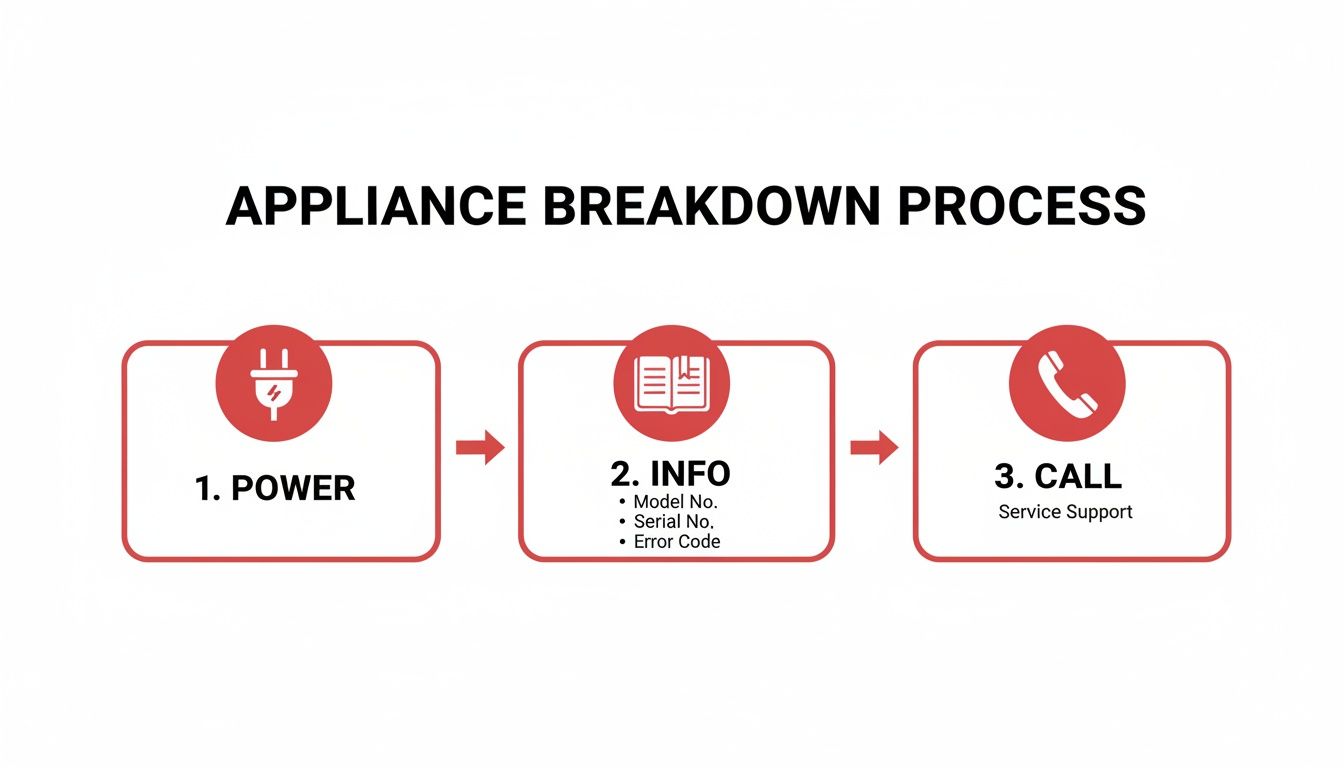
It really just boils down to doing a few initial checks yourself, gathering the appliance info, and then making the call to a pro.
Questions to Ask Before You Book
Once you have a shortlist, the phone call is your most powerful tool. This is where you separate the real professionals from the rest. Get ready with a few direct questions and listen carefully to how they respond. A reputable company will have no problem giving you clear, straight answers.
Here are the essentials you need to ask:
- Are your technicians licensed and insured? This is non-negotiable. It protects you from any liability if an accident happens on your property.
- What’s your experience with my specific appliance brand? A technician who specializes in your brand—whether it's Samsung, LG, or Whirlpool—is far more likely to have the right parts and expertise.
- Do you use genuine manufacturer (OEM) parts? Original Equipment Manufacturer parts are made specifically for your appliance. They guarantee a better fit and a longer-lasting repair than generic alternatives.
- What kind of warranty do you offer on parts and labour? A solid warranty, like 90 days or more, shows the company stands behind its work.
A company’s willingness to answer your questions transparently says everything about their business practices. If they get dodgy about insurance or where they source their parts, consider it a major red flag.
Verifying a Company's Legitimacy
Unfortunately, online search results can be deceiving. It's crucial to confirm you're dealing with a real, local business and not just a faceless lead-generation service. Look for a physical address in your area and signs of a genuine local presence, like photos of their team or marked service vans. To protect yourself, it helps to understand how to spot fake appliance repair companies on Google Maps and steer clear of common scams.
The demand for skilled technicians is high. In Alberta, the appliance repair sector is booming, with licensed pros seeing demand that rivals high-salary markets. With over 15 million repairs happening annually across North America—a huge chunk of which are residential calls in provinces like Alberta—finding a qualified expert is more important than ever. Taking these extra vetting steps ensures you hire a competent professional who provides lasting peace of mind.
Navigating Repair Costs, Service Calls, and Warranties
Let's be honest—nobody likes surprise bills. Understanding the financial side of an appliance repair upfront is the key to avoiding headaches and feeling confident when you search for "appliance repair near me." A transparent company will always be direct about its pricing, starting with the service call.
The process almost always begins with a service call fee. This is a standard charge in the industry, and it covers the technician's travel time, fuel, and the initial diagnostic work needed to figure out exactly what’s wrong with your appliance. Think of it as the cost of getting a trained expert to your door to give you a professional assessment.
Here's a good sign to look for: many reputable companies in Edmonton and Calgary will waive that fee entirely if you decide to go ahead with their recommended repair. It shows they're confident in the value they provide, not just in charging for a diagnosis.
Why You Need a Written Estimate
After the technician has identified the problem, they should provide you with a detailed, written estimate. This document is your best friend when it comes to financial clarity. It breaks down the total cost so you know precisely what you're paying for.
A professional estimate will always include:
- Cost of Parts: It lists any new components needed, whether it’s a simple fuse or a major motor.
- Cost of Labour: This is the charge for the technician's time and expertise to install the parts and test the appliance.
- Total Price: The final, all-in cost, including any taxes, with no room for hidden charges.
Never, ever agree to a repair without getting that quote in writing. A vague verbal agreement is a recipe for disaster and can lead to unexpected costs and arguments down the road. A professional service will insist on it to protect both you and them.
This step is non-negotiable. If a company seems hesitant to put their numbers on paper, consider it a major red flag. You need a clear record of the agreed-upon price before any work starts.
The Importance of a Good Warranty
Finally, let's talk about warranties. A company's warranty on parts and labour speaks volumes about the quality of their work and the components they use. It’s your safety net if something goes wrong after the repair is done.
To help you vet potential services, here’s a quick comparison of what to look for versus what to avoid when it comes to common policies.
Evaluating Appliance Repair Services
| Feature | What to Look For | Red Flags to Avoid |
|---|---|---|
| Service Call Fee | Clearly stated upfront; waived if you proceed with the repair. | Vague pricing or pressure to approve repairs before a diagnosis. |
| Written Estimate | A detailed, itemized quote provided before any work begins. | Verbal-only estimates or reluctance to put the price in writing. |
| Warranty | 90 days or more on parts and labour, showing confidence in their work. | 30-day warranties or unclear terms that offer little protection. |
| Parts Quality | Use of OEM (Original Equipment Manufacturer) or high-quality parts. | No information on part sources or use of generic, low-quality components. |
Warranty terms can vary a lot between companies. Some might only offer a basic 30-day warranty, but more confident and reliable services will stand behind their work for 90 days or even a full year. A longer warranty is a strong signal that the company uses high-quality, durable parts and trusts its technicians' skills completely.
For a deeper dive into what different coverage levels mean for you, exploring a company's policies can be very insightful. You can learn more about our comprehensive warranty coverage to see what a commitment to quality looks like. Choosing a service with a solid warranty protects your investment and gives you peace of mind long after the technician has left.
Why Same-Day Service Is a Game Changer

When your refrigerator dies or the washing machine gives out, waiting days for a fix isn’t just an inconvenience—it’s a massive disruption to your life. This is where same-day service really separates the good repair companies from the great ones. It’s a clear sign of a company that’s efficient, customer-focused, and has its operations dialled in.
Think about it: your oven breaks down the day before a big holiday dinner in Edmonton. Getting a technician to your door within hours can be the difference between a memorable celebration and a complete disaster. This kind of quick response gets your home back to normal fast.
The Logistics Behind a Rapid Response
So, how do companies actually pull this off? It's definitely not by accident. Offering true same-day service requires a finely tuned system built for one thing: speed.
- Well-Stocked Service Vans: Technicians show up with their vans already loaded with the most common parts for all the major brands. This means they can solve the vast majority of problems, like a bad fridge compressor or a snapped dryer belt, in a single visit.
- Smart Dispatch Systems: Modern repair services use advanced software to manage their calls. This tech optimizes routes, tracks where technicians are, and matches the right expert to your specific problem, ensuring the closest available pro is sent your way.
- Experienced Local Technicians: A deep understanding of the local area, from Calgary to Red Deer, helps technicians dodge traffic and get to you faster. Plus, their years of experience mean they can diagnose the issue and get it fixed right, the first time.
This mix of smart preparation and technology is what makes immediate help possible. When you’re looking for "appliance repair near me," a company’s ability to offer quick service is a huge indicator of their professionalism.
Why Speed Matters More Than Ever
In a fast-growing province like Alberta, the demand for timely repairs is higher than ever. With Edmonton's population surging and Calgary's housing density increasing, local families and landlords are dealing with frequent breakdowns. Refrigerators top the list at 30% of all repairs, with washing machines close behind at 28%.
Waiting for a repair means more than just being inconvenienced. A broken fridge can lead to hundreds of dollars in spoiled food. A busted washer means piles of laundry and added stress for an already busy family.
Ultimately, when you choose a company that prioritizes speed, you're choosing one that respects your time and gets how urgent the situation is. For a closer look at how it works, our guide on what to expect from same-day appliance repair offers more detail. It’s a commitment that makes a real difference when you need help the most.
What to Expect During the Repair Visit
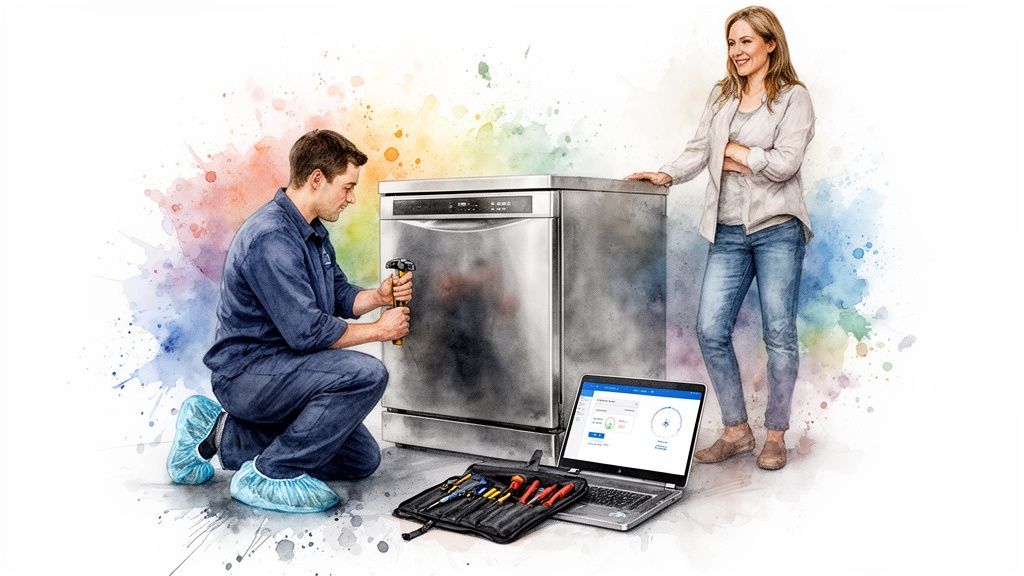
Knowing what a professional service call involves can turn a stressful situation into a smooth, predictable process. When you book a local appliance repair, the visit from a qualified technician should follow a clear path, starting the moment they arrive at your door.
A true professional will show respect for your home right away. This isn't just about being polite; it's the small but significant details, like wearing shoe covers to protect your floors and having their tools neatly organized for efficiency. They should greet you, confirm the problem you reported, and then get straight to work.
The Diagnostic and Quoting Process
The first real step is troubleshooting. The technician will usually ask a few questions about what's been happening before performing a series of tests on the appliance. This is where their expertise really shines, as they use specialized tools to pinpoint the exact cause of the breakdown. It’s a systematic process, not just guesswork.
Once they've identified the root of the problem, the most critical part of the visit happens: the explanation and the quote. A reputable technician will never start any work until they've clearly explained three things:
- The Problem: They'll tell you what part has failed and why, using simple language you can actually understand.
- The Solution: They will detail the exact repair needed, including any parts that must be replaced.
- The Total Cost: You'll get an upfront, all-inclusive price that covers both parts and labour. No surprises.
A professional never leaves you in the dark. They should provide a firm quote before picking up a single tool for the actual repair. If you feel pressured or get a vague "we'll see how it goes" answer, that's a major red flag.
Preparing Your Space for the Technician
A little prep work on your end can make a huge difference in how smoothly the visit goes. Before the technician arrives, try to clear the area around the broken appliance. This means moving any furniture, kitchen clutter, or laundry baskets that might be in the way.
For a refrigerator repair, make sure there's easy access to the back. If it's your washing machine, clearing the space around it allows the technician to work safely and efficiently. This simple step saves valuable time and helps them focus completely on the repair without any obstructions.
After you approve the quote, the technician will complete the repair. Once they're done, they should test the appliance thoroughly to confirm it’s working correctly and clean up their workspace, leaving it just as they found it. This complete, respectful service is the hallmark of a top-tier company and exactly what you should expect every time.
Frequently Asked Questions About Appliance Repair
When an appliance gives up, you've got questions. We've got answers. Here are some of the most common things homeowners ask when they're looking for a reliable repair service.
How much should I expect to pay for an appliance repair?
This is the big one, isn't it? The truth is, repair costs aren't one-size-fits-all. The final price depends on what's broken, the type of appliance, and the parts needed to get it running again.
Most reputable companies start with a service call fee, which usually runs between $75 and $150. This covers the technician's time and travel to diagnose the problem. A good sign you're dealing with an honest company? They'll often waive that fee if you decide to go ahead with the repair. Always ask for a written, itemized quote before any work starts—that way, there are no surprises on the final bill.
Is it better to repair my old appliance or buy a new one?
It's the classic dilemma. A good rule of thumb is the "50% Rule." If the repair costs more than half the price of a brand-new, similar appliance, it's probably time to start shopping.
Age and quality matter, too. A high-end, five-year-old oven is almost always worth fixing. But if your basic, 15-year-old washer has seen better days, investing in a new machine is likely the smarter long-term move. A good technician won't just try to sell you a repair; they'll give you an honest opinion based on your machine's condition.
What information should I have ready when I call for service?
A little prep work on your end can make the whole process faster and smoother. Before you dial, try to gather a few key details:
- Appliance Type: Be specific—is it a French door refrigerator or a top-load washer?
- Brand and Model Number: You can usually find this on a sticker inside the door, on the back, or along the frame. It's a lifesaver for finding the right parts.
- A Clear Description of the Problem: What's it doing (or not doing)? Note any weird noises (grinding, clicking), error codes on the display, or symptoms like "not draining" or "not cooling."
Having this info ready helps the repair company send the right technician with the right parts, increasing the odds of a fix on the very first visit.
Appliance breakdowns are a year-round headache, but the data shows a clear pattern. In Alberta, a whopping 70% of repair requests are for refrigerators, washers, ovens, and dishwashers. Urban areas like Calgary and Edmonton account for 65% of all service calls. This reflects a larger trend across North America, where the industry is expected to hit $4.5 billion in Canada by 2024, largely because over 1.5 million households are dealing with aging units. You can find more industry insights by checking out the home appliance repair market report on MarketGrowthReports.com.
How can I tell if an appliance repair company is licensed and insured?
Simple: just ask! Any professional, legitimate business will have no problem confirming their credentials. They should be able to provide proof of their licensing and liability insurance without hesitation. Many even list this information right on their website.
If a company gets cagey or avoids the question, that's a major red flag. Insurance is non-negotiable—it protects you and your home from liability if something goes wrong during the repair. Think of it as a clear sign you're dealing with a true professional.
Need appliance repair? Visit RepairMyAppliance.ca or call 587-416-5888 for fast, professional service.