

The E15 error code has suddenly appeared on your Bosch dishwasher, stopping your wash cycle cold. So, what does it mean? In short, it’s a water leak alert. Your dishwasher's anti-flood safety system has detected water in the base pan where it shouldn't be and has shut down to prevent a flood. This guide will walk you through what to do next, from easy DIY fixes to knowing when it's time to call a professional.
What the E15 Error Code Means
Seeing an E15 error flash on your Bosch dishwasher can be alarming, but it’s a common issue with a clear explanation. It's a protective measure, not a sign that your appliance is broken beyond repair. This error is one of the most frequent issues we see in the field, especially with the advanced safety features in Bosch's popular 300, 500, and 800 series dishwashers.
The system is quite clever. It uses a simple but effective mechanism in the base pan of the dishwasher.
At the very bottom of your dishwasher, a shallow tray houses a sensor, often a small styrofoam float. When water from a leak collects in this tray, it lifts the float, which triggers a safety switch. This switch instantly signals the control board to shut off the water intake, stop the cycle, and display the E15 code.
Simply put, your dishwasher is doing exactly what it was designed to do: protect your home from water damage.
E15 Error Code Breakdown
| Aspect | Explanation |
|---|---|
| Error Trigger | The safety sensor in the base pan has detected pooled water. |
| Dishwasher's Response | The wash cycle is immediately stopped and the drain pump is activated to prevent a flood. |
| What It Signifies | It's a symptom of an underlying leak, not a failure of the control system itself. |
This safeguard is your first line of defence against water damage. By stopping the operation immediately, it contains the problem before it can escalate into a major leak that could ruin your flooring and cabinets.
Understanding The Anti-Flood System
Understanding this concept is key to troubleshooting. The E15 error isn't the problem; it’s a symptom pointing you toward the real issue—the leak. Our guide to Bosch appliance repair in Calgary offers more insights into how these systems work.
Finding the Source of the E15 Error
To resolve the E15 error for good, you need to find the source of the leak. The good news is the list of potential culprits is manageable, ranging from simple usage mistakes to worn-out parts. I typically group the causes into three categories: user-related issues, installation faults, and component failures. Often, the fix is simpler than you might think.
Common User-Related Causes
Before you worry about a major mechanical breakdown, check these common—and easy to fix—causes related to how the dishwasher is used.
-
Using Too Much or the Wrong Soap: Excessive detergent, especially with soft water, can create a mountain of suds. These suds can spill over into the base pan, tripping the E15 sensor. Warning: Never use regular dish soap; it's a guaranteed recipe for a suds disaster.
-
A Dirty or Clogged Filter: The filter at the bottom of your dishwasher catches food debris. If it becomes clogged, water can't drain properly, causing it to back up and leak into the base. Regular cleaning is the best prevention.
-
Improper Loading: Overloading the racks or blocking the spray arms with large items can cause water to splash out. If water constantly hits the door seal or vents, it can eventually find a way out.
Mechanical and Installation Faults
If you've ruled out user errors, it's time to investigate mechanical or installation issues. These involve the dishwasher's physical parts and its initial setup.
A common installation mistake I see is an unlevel machine. If the dishwasher isn't perfectly level, water can pool in one corner, putting extra pressure on seals and eventually causing a leak.
Other mechanical problems can develop over time from normal wear and tear.
Potential Mechanical Failures:
-
Worn-Out Door Seal: The rubber gasket around the dishwasher door can become brittle, cracked, or loose over time, creating an easy escape path for water.
-
Cracked Spray Arm: A small crack in a spinning spray arm can send a jet of water directly at the door seal, causing a leak.
-
Faulty Water Inlet Valve: This valve controls water flow into the dishwasher. If it gets stuck partially open, it can allow a slow, steady drip that eventually fills the base pan.
Understanding the different ways your dishwasher might be leaking from the bottom is the first step to solving the E15 error.
Your Step-by-Step DIY Troubleshooting Guide
Ready to tackle that E15 code yourself? Following these steps can often solve the problem without a service call.
Safety First: Always disconnect your dishwasher from the power source. Unplug it from the wall or turn off the dedicated breaker in your electrical panel. This is non-negotiable, as water and electricity are a dangerous combination. Understanding a proper guide to ground fault protection is always a smart move.
The Initial Reset and Tilt Fix
Start with these two simple DIY fixes. They are designed to clear a minor system glitch or remove water already pooled in the base pan.
-
Perform a Power Cycle: Unplug the dishwasher and let it sit for at least 10 minutes. This allows the internal control board to fully reset. Plug it back in and check if the error is gone.
-
Try the "Tilt Fix": This is a classic trick in the appliance repair community. Carefully slide the dishwasher out from under the counter. With towels ready, gently tilt the machine backward to a 45-degree angle and hold it for 30-60 seconds. This allows any trapped water in the safety pan to drain out.
Expert Tip: Before tilting, place old towels under the front of the dishwasher to soak up any water that drains out. If a significant amount of water appears, it confirms you have an active leak.
After tilting, set the dishwasher back, reconnect the power, and run a quick rinse cycle. If the E15 error is gone, you've solved the immediate issue. However, if the code returns, there's an ongoing leak that needs further investigation.
The infographic below highlights the three main sources of an E15 error: user mistakes, part failures, or installation issues.
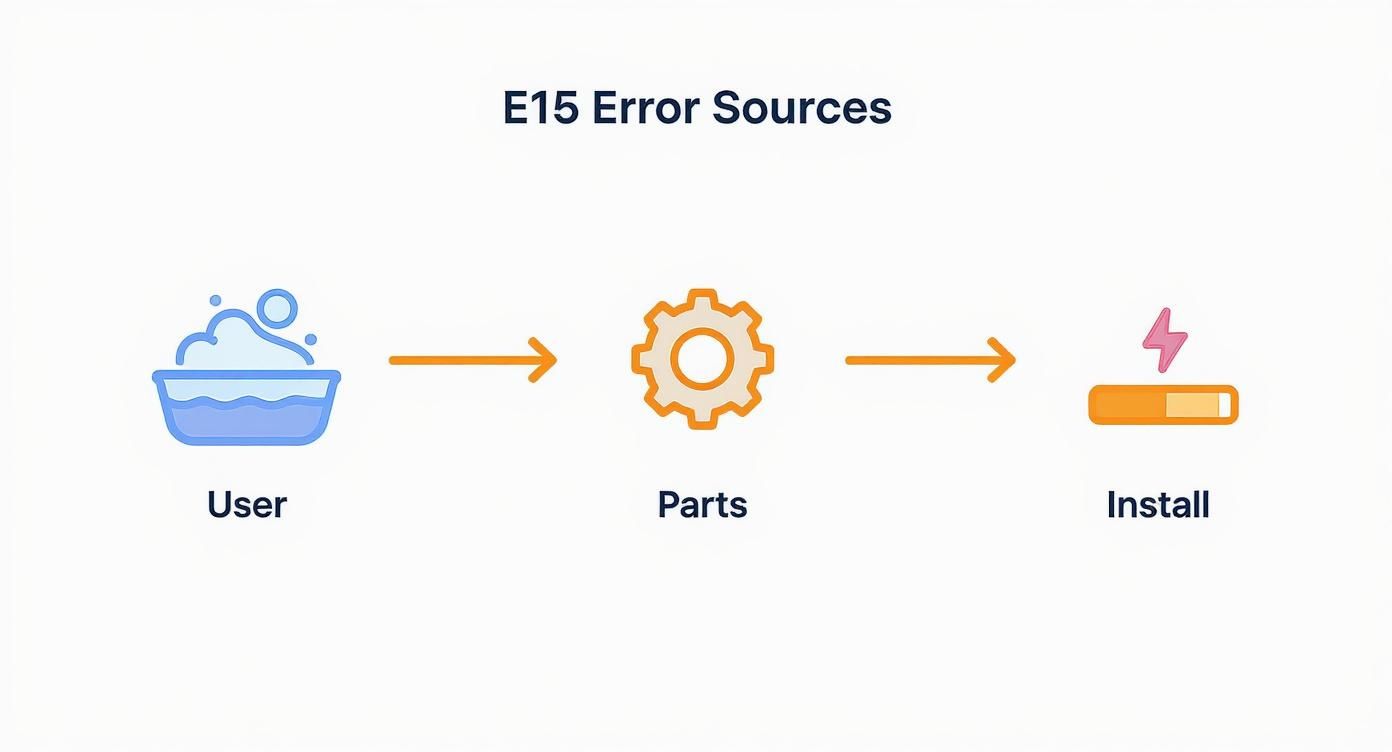
This can help you narrow down the source of the problem.
Deeper Inspection for Leaks
If the reset and tilt didn't provide a permanent solution, it's time to inspect the most common leak sources inside the dishwasher. Remember to keep the power disconnected.
Inspect and Clean the Filter System
-
Remove the Bottom Rack: Pull the lower dish rack out completely.
-
Locate the Filter: You'll find the filter assembly at the bottom of the tub.
-
Twist and Remove: On most Bosch models, a simple counter-clockwise twist unlocks and removes the filter.
-
Clean Thoroughly: Rinse all filter components under warm water. Use a soft brush to remove any food particles, grease, or buildup. A clogged filter is a primary cause of water backing up and leaking.
Check the Drain Hose and Connections
-
Inspect for Kinks: Look behind the dishwasher to ensure the drain hose isn't bent or pinched, which can obstruct water flow.
-
Check Connections: Examine where the drain hose connects under your sink or to the garbage disposal. Ensure the connection is tight and secure with no signs of dripping.
Following these checks often helps pinpoint the cause of the E15 error. If the problem persists, it may indicate a more serious issue with an internal component, which we cover in our homeowner's guide to common dishwasher repairs.
When to Call a Professional Technician
While DIY troubleshooting can often solve the problem, there are times when calling a professional is the smartest and safest choice. Knowing your limits is crucial. Attempting complex repairs without the right experience can turn a minor issue into major water damage or an electrical hazard.
If you've tried the reset and tilt fix but the e15 code bosch dishwasher error immediately returns, it’s a clear sign of an active, ongoing leak that simple methods won't resolve. This indicates a persistent mechanical problem.
Similarly, if you can see water actively dripping from underneath the dishwasher, it’s time to call for help. A visible, continuous leak suggests a more serious failure, like a cracked sump housing or a split internal hose, which requires disassembly and component replacement.
Red Flags That Demand an Expert
Certain symptoms are clear indicators that the problem is beyond a simple DIY fix. If you notice any of the following, contact a certified technician.
-
Loud or Unusual Noises: Grinding, humming, or buzzing sounds could signal a failing drain pump or motor. Running the appliance with a faulty motor can lead to more expensive damage.
-
Visible Damage to Internal Parts: If you noticed cracked spray arms, a split in the tub, or significant corrosion on electrical parts during your inspection, these issues require professional diagnosis.
-
Electrical Concerns: If the error code is accompanied by flickering control panel lights or a tripping circuit breaker, water may have reached the wiring, creating a short circuit. This is a serious electrical safety risk.
Attempting complex mechanical or electrical repairs without proper training can void your warranty and lead to costly mistakes. A professional has the diagnostic tools to pinpoint the exact cause quickly and safely, ensuring the repair is done right the first time.
Understanding the top reasons for hiring an appliance repair company can save you time, money, and stress.
What to Expect from a Professional Repair
If you’ve tried the DIY fixes and the E15 error persists, calling a certified technician is the fastest and safest way to get your Bosch dishwasher running again. A professional arrives with expertise, specialized tools, and the correct parts to solve the problem efficiently.
A technician's first step is a thorough diagnosis. They use tools like multimeters to test electrical components such as the water inlet valve and drain pump. They will systematically check all potential failure points—from hidden hoses to the sump assembly—to identify the true source of the leak.
Common Repairs and Costs
Once diagnosed, the technician will explain the necessary repair. Service data shows the E15 error accounts for 30-40% of all Bosch dishwasher service calls in Canada, making it the most common fault code. Repair costs can range from $200 to $800 CAD, depending on the complexity of the issue. You can learn more about the popularity of Bosch dishwashers and their features on bestbuy.com.
Here is a breakdown of estimated costs for common E15 error repairs in Canada to help you budget.
Estimated E15 Error Repair Costs in Canada
| Repair Type | Estimated Part Cost (CAD) | Estimated Total Cost with Labour (CAD) |
|---|---|---|
| Door Gasket Replacement | $40 – $70 | $150 – $250 |
| Water Inlet Valve Replacement | $60 – $100 | $220 – $350 |
| Drain Pump Replacement | $80 – $150 | $250 – $450 |
| Sump Assembly Repair/Seal | $120 – $200 | $350 – $600+ |
Note: These are estimates. The final cost may vary based on your specific dishwasher model and location.
The value of a professional service call includes the expert diagnosis, use of high-quality OEM (Original Equipment Manufacturer) parts, and a warranty on the work. This ensures a lasting solution, not a temporary patch.
Ultimately, hiring a professional provides peace of mind. Their experience ensures the job is done safely and correctly, protecting your appliance and your home from further damage.
Common Questions About the Bosch E15 Error
It’s normal to have questions about the e15 code bosch dishwasher error, even after trying a few fixes. Here are answers to the most common questions we hear from homeowners.
Can I Still Use My Dishwasher with an E15 Code?
No, you should not use your dishwasher while the E15 code is displayed. This is a critical safety alert indicating a leak. The anti-flood system has activated to prevent water damage to your home.
Attempting to run another cycle could worsen the leak, leading to significant damage to your kitchen floors and cabinets. In most cases, the dishwasher's software will lock the controls anyway. The only safe course of action is to turn off and unplug the unit until the leak is repaired.
Why Does the E15 Error Keep Coming Back?
If the E15 error returns a day or two after you performed the "tilt fix," it's a clear sign of an active leak. Tilting the machine is a temporary measure that only drains water from the base pan; it does not fix the source of the leak.
A recurring E15 error almost always points to a mechanical issue that requires repair.
Common causes for a returning E15 error include:
-
A faulty water inlet valve that is slowly dripping.
-
A small crack in the drain pump housing or sump assembly.
-
A worn-out door or pump seal that has lost its integrity.
-
A pinhole leak in an internal hose.
At this point, it's time to call a qualified technician to pinpoint and replace the failing part.
How Can I Prevent the E15 Error in the Future?
While parts eventually wear out, proactive maintenance can significantly reduce the chances of seeing an E15 error. These simple habits are your best defence against leaks.
Think of it as preventative care for your appliance. A few minutes of attention each month can save you from a major headache and an expensive repair bill.
Follow these best practices:
-
Clean the Filter System Monthly: Remove and rinse the filter at the bottom of the tub to prevent clogs and water backups.
-
Use the Right Detergent and Amount: Stick to high-quality detergents made for automatic dishwashers and use the recommended amount.
-
Ensure the Dishwasher is Level: Check that your dishwasher is perfectly level to prevent water from pooling and stressing the seals.
-
Inspect the Door Gasket: Periodically wipe down the rubber door seal and check for any signs of cracking, brittleness, or damage.
These simple steps can help ensure your Bosch dishwasher operates reliably for years to come.
Need Your Bosch Dishwasher Repaired?
If you’ve tried the DIY route and the E15 error won't go away, it's time to call a professional. An expert technician can diagnose the leak source quickly, saving you time and preventing further damage. Professional dishwasher repair is the surest way to get a lasting fix. For those interested in broader sanitation technology, you can explore various commercial dishwashing solutions to see how industrial systems operate.
Need appliance repair? Visit RepairMyAppliance.ca or call 587-416-5888 for fast, professional service.