
It’s a question every homeowner asks: “How long should my fridge actually last?” Understanding the answer can save you from unexpected costs and the hassle of a kitchen emergency.
On average, a refrigerator should give you somewhere between 10 and 18 years of reliable service. Think of it as a hardworking member of your household, quietly working day and night to keep your food fresh. While the typical median age for replacement is around 13 years, the specific type of fridge you own plays a huge role in its expected lifespan.
Understanding the Average Refrigerator Lifespan

Before you can figure out how to extend your refrigerator’s life, it helps to have a realistic baseline. Here’s a little insider secret: not all fridges are created equal. Those simple, classic designs often outlast their more complex, feature-heavy counterparts.
A basic top-freezer model, for instance, has fewer moving parts and electronics that can fail compared to a modern French door unit with an in-door ice dispenser, water filter, and smart technology. All those extra bells and whistles are fantastic when they work, but they also introduce more potential points of failure. This difference in complexity directly impacts how long you can expect your appliance to last.
Knowing where your appliance falls within this range gives you a clearer picture of whether it’s in its prime, middle-aged, or nearing the end of its reliable service.
Comparing Refrigerator Lifespans By Model
To give you a practical overview, let’s break down the expected lifespan for the most common refrigerator types. This table is a quick reference to help you gauge where your current appliance stands and what to expect for repair costs.
| Refrigerator Type | Average Lifespan (Years) | Common Repair Cost Range |
|---|---|---|
| Top-Freezer | 13 – 17 Years | $150 – $400 |
| Bottom-Freezer | 12 – 15 Years | $200 – $500 |
| Side-by-Side | 10 – 14 Years | $250 – $600 |
| French Door | 10 – 12 Years | $300 – $700+ |
| Compact / Mini-Fridge | 6 – 10 Years | $100 – $250 |
These numbers provide a solid starting point for making informed decisions about maintenance and eventual replacement. For a deeper dive into the specifics, check out our guide on what is the average lifespan for a refrigerator.
Key Takeaway: The more complex your refrigerator’s features (like in-door ice makers and electronic displays), the shorter its expected lifespan tends to be. Simplicity often translates directly to durability.
This initial knowledge is the first step toward becoming a proactive appliance owner. It empowers you to spot issues early and take the right steps to keep your kitchen’s most important appliance running smoothly for as long as possible.
The Hidden Factors That Determine Your Fridge’s Longevity
Ever wonder why one fridge is still humming along after fifteen years, while another gave up in under seven? While the brand and model give you a general idea of what to expect, the real story is often told by the hidden factors in its day-to-day life.
Think of your refrigerator’s compressor as its heart. Its entire job is to keep things cool, and its lifespan is directly tied to how hard it has to work. Several factors can put extra strain on this vital component, forcing it to run longer and hotter than it should. Over time, that accumulated stress is what leads to an early breakdown.
The good news? You have more control over these factors than you might think. By understanding what makes your fridge work harder, you can actively lighten its load and add years to its life.
The Impact of Your Kitchen’s Environment
The layout and temperature of your kitchen play a surprisingly big role in your fridge’s health. If you’ve placed it right next to an oven, dishwasher, or a window that gets blasted by the afternoon sun, it’s fighting a constant battle against external heat.
This forces the compressor into overdrive just to maintain its internal temperature, which leads to faster wear and tear. On top of that, proper ventilation is absolutely non-negotiable.
A refrigerator needs “breathing room” to dissipate the heat it removes from its interior. Without adequate clearance at the back, top, and sides, heat gets trapped, forcing the cooling system into a relentless cycle of overwork.
This is a common problem in sleek, custom-fitted kitchens where the appliance’s functional needs are sometimes overlooked for a seamless look. As this guide on the factors influencing Atosa 2-door refrigerator lifespan points out, energy efficiency and design features are directly linked to durability.
How Daily Habits Affect Longevity
The small things you do every day really add up. Over the years, these simple habits can either protect your fridge or slowly wear its parts down.
- Overloading Shelves: When you pack your fridge to the brim, you’re blocking the flow of cold air. This creates warm spots and makes the compressor run longer to get everything evenly chilled.
- Leaving the Door Open: Every second the door hangs open, cold air rushes out and warm, humid kitchen air rushes in. Your fridge then has to work extra hard to cool things down and remove all that new moisture.
- Storing Hot Food: Putting a steaming container of leftovers inside forces the appliance into emergency cooling mode to deal with the sudden spike in temperature. Just letting food cool on the counter first makes a massive difference.
These seemingly harmless habits create a pattern of stress that fatigues components over time. Often, one strained part can cause a domino effect on others. To get a better sense of this, you can learn about the parts that most commonly break in your refrigerator and see how they’re often tied to these usage patterns. A little mindfulness in how you use your fridge is one of the best ways to help it reach its full potential lifespan.
Practical Maintenance to Help Your Refrigerator Last Longer
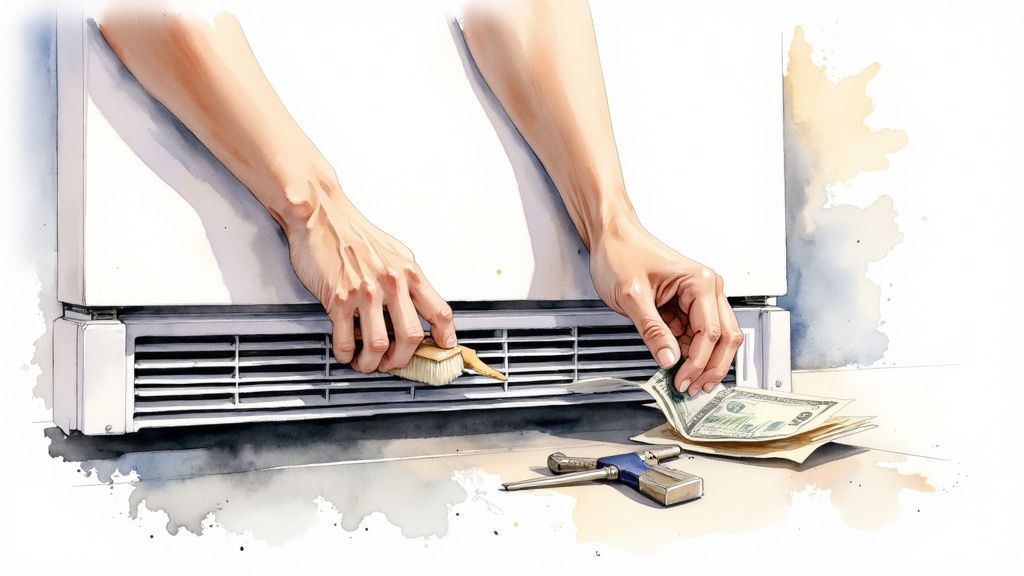
While the model you bought and how you use it sets a baseline, the real secret to a long-lasting refrigerator is proactive maintenance. Think of it like regular oil changes for your car; these simple, consistent actions stop small issues from snowballing into major, expensive breakdowns.
A bit of care goes a long way. It dramatically reduces the strain on your fridge’s hardest-working parts, especially the compressor. When your machine runs more efficiently, you don’t just add years to its life—you also shave dollars off your energy bills. This is your playbook for turning good intentions into powerful, money-saving habits.
Most of these tasks only take a few minutes every few months, but their impact over time is enormous. Let’s walk through the most important maintenance steps that anyone can do.
Keep the Condenser Coils Clean
The condenser coils are your refrigerator’s radiator. You’ll find them on the back or underneath the unit, and their one job is to get rid of the heat pulled from inside the fridge.
But over time, these coils get caked in dust, pet hair, and other gunk, which acts like an insulating blanket. All that trapped heat forces the compressor to work much harder and much longer to keep things cool, leading to higher energy bills and premature failure.
A quick cleaning every six to twelve months can make a world of difference.
- Safety First: Always unplug your refrigerator from the wall before you start any maintenance.
- Find the Coils: Check your owner’s manual to find their exact location. They’re usually a set of large, winding tubes at the back or hidden behind a grille at the bottom.
- Clean Gently: Grab a soft-bristled brush or the brush attachment on your vacuum and gently clear away all the built-up dust and grime.
Honestly, this one task is probably the single most effective thing you can do to boost efficiency and help your refrigerator last.
Check and Clean the Door Seals
That rubber gasket framing your refrigerator door is crucial. It creates an airtight seal that keeps the cold air in and the warm air out. If that seal is dirty, cracked, or loose, your fridge is fighting a losing battle against temperature swings.
This constant struggle to re-cool the air puts a massive, unnecessary strain on the compressor. The good news is you can easily check your seals with a simple trick.
The Banknote Test: Close the refrigerator door on a banknote. Try to pull the note out. If it slides out easily without any drag, your seal is too loose and is definitely leaking cold air. Make sure to test a few different spots around the door.
To keep the seals in good shape, just wipe them down every few months with some warm, soapy water. This gets rid of sticky food residue and grime that can stop it from closing tightly. A good seal means your fridge isn’t working overtime for nothing. For more brand-specific advice, our complete maintenance manual for prolonging the life of your LG appliances has some great model-specific tips.
Set the Right Temperature
Setting your refrigerator to the correct temperature isn’t just about food safety—it’s about efficiency. If you set it too cold, you’re just wasting energy and overworking the components for no reason.
The sweet spot for the refrigerator compartment is between 2°C and 4°C (35°F and 38°F). Your freezer should be set right at -18°C (0°F). These settings are perfect for keeping food fresh without making the appliance run itself into the ground.
Change the Water Filter
If your fridge has a water dispenser or an ice maker, it also has a water filter that needs to be replaced regularly. When a filter gets clogged, it doesn’t just slow down the water flow; it makes the ice maker work harder. Even worse, it can eventually lead to leaks and mineral buildup in the water lines, which is a recipe for serious damage.
Most manufacturers suggest swapping the filter every six months. Keeping up with this schedule is about more than just clean water—it’s about protecting the internal mechanics of your dispenser system. You can learn more about specific types like Samsung refrigerator ice and water filters to see how vital these components are.
Warning Signs Your Refrigerator Is About to Fail
A refrigerator rarely dies without a fight. Long before it gives up completely, your appliance will start sending out distress signals. Think of them as whispers of trouble—subtle hints that something is wrong. Learning to recognize these warning signs is the key to catching small problems before they escalate into a full-blown, food-spoiling emergency.
Consider this your diagnostic checklist. By paying attention to strange sounds, weird temperatures, and unexpected moisture, you can often step in early. These symptoms are your fridge’s way of asking for help, and listening can save you a lot of hassle and money down the road.
Unusual Noises and Constant Running
You get used to the gentle hum of your refrigerator. It’s part of the background noise of a home. But when that sound profile changes, it’s time to pay attention.
- Loud Buzzing or Humming: This is often the sound of a struggling compressor. The compressor is the heart of your fridge’s cooling system, and a loud, persistent hum means it’s working way too hard.
- Clicking Sounds: Hear a repetitive clicking noise? That could be a problem with the compressor’s start relay or even a faulty thermostat trying to kick on.
- Constant Running: If your fridge motor never seems to cycle off, it’s a huge red flag. It means the appliance can’t reach or maintain its set temperature, forcing it to run non-stop.
Ignoring these sounds is like putting tape over your car’s check engine light. It doesn’t solve the problem; it just delays the inevitable breakdown of a critical part.
Excessive Heat from the Back
It’s perfectly normal for the back of your refrigerator to feel a little warm. That’s where the condenser coils live, and their job is to release the heat that’s been removed from inside the unit. However, if that area becomes excessively hot, you’ve got a problem.
This intense heat usually means the compressor is being pushed to its absolute limit. The cause could be as simple as dirty, clogged condenser coils that are suffocating the system, or it could point to a more serious internal failure. A hot compressor is a sign of extreme stress. If you notice this, our guide on what to do when your fridge compressor is hot can help you figure out the next steps.
Expert Tip: Carefully place your hand near the back of the fridge. If it’s so hot you can’t comfortably keep your hand there for more than a few seconds, the cooling system is dangerously overworked.
Moisture and Temperature Problems
Your refrigerator is supposed to be a self-contained cold box, expertly managing temperature and moisture. When that system starts to fail, the evidence shows up right inside.
- Condensation or “Sweating”: Finding beads of moisture inside or outside your fridge is a classic sign that warm air is getting in. The usual culprit is a worn-out or damaged door seal (gasket), which forces your fridge to run constantly to fight the temperature difference.
- A Freezer That Looks Like an Ice Cave: A little frost is one thing, but if you’re seeing thick sheets of ice building up on the freezer walls, there’s likely an issue with the defrost system. When it fails, ice clogs the evaporator coils, strangling the appliance’s ability to cool properly.
- Food Spoiling Quickly: This is the most undeniable sign of all. If milk is souring days before its expiry date or your veggies are wilting almost overnight, your fridge is failing at its one true job. Don’t second-guess this one—it’s a direct signal that the internal temperature is all over the place.
To make it easier to connect the dots, we’ve put together a quick guide to what your fridge might be trying to tell you.
Decoding Refrigerator Failure Symptoms
Use this table as a quick reference to translate your fridge’s warning signs into potential causes and figure out your best next move.
| Warning Sign | Potential Cause | Recommended Action |
|---|---|---|
| Loud, unusual noises | Failing compressor, fan motor issue, or worn-out start relay. | Pinpoint the source of the noise. If it’s from the back, call a technician. |
| Water leaking on floor | Clogged defrost drain or a leaking water supply line for the ice maker. | Unplug the fridge. Check the drain pan and water lines for obvious issues. |
| Excessive frost in freezer | Faulty defrost system (timer, heater, or thermostat). | A manual defrost may help temporarily, but a professional repair is needed. |
| Fridge not cold enough | Dirty condenser coils, failing thermostat, or a bad door seal. | Clean the coils and check the door gasket. If that doesn’t help, it’s time for a service call. |
| Constant running | Low refrigerant, faulty compressor, or dirty coils forcing the unit to overwork. | This is a serious symptom. Unplug the unit for a few hours and if the problem persists on restart, call for service immediately to avoid burnout. |
Remember, catching these signs early often leads to a simpler, less expensive repair. Waiting until the fridge stops working entirely usually means you’re facing a much bigger problem.
Making the Call Between Repair and Replacement
So, your fridge is acting up. It’s a frustrating moment that leaves you with a tough, and often expensive, choice: do you sink money into a repair, or is it time to start shopping for a new one? It can feel paralyzing, but there’s a straightforward way to think it through.
A great place to start is with the 50% Rule. It’s a simple gut check that we use in the industry all the time.
If a repair is going to cost more than half the price of a brand-new, comparable refrigerator, replacement is almost always the smarter financial move.
But it’s not just about that one repair bill. You have to consider the age of your fridge. Pouring a few hundred dollars into a 12-year-old unit that’s already lived a full life might just be a temporary fix before the next component fails.
Weighing the Long-Term Costs
You need to look beyond the immediate problem and think about the big picture. A modern refrigerator isn’t just a shiny new box for your kitchen; it’s an investment in energy efficiency that can actually put money back in your pocket.
Over the last decade, the standards for appliance efficiency have improved dramatically. An old fridge, especially one that’s already struggling, can be a serious energy hog, quietly inflating your monthly electricity bill. The savings from a new ENERGY STAR certified model can be huge, often helping to offset the sticker price over its lifetime.
Think about it this way: a $400 repair might seem cheaper than a $1,200 replacement. But what if that new, efficient model saves you $10 a month on electricity? That’s $120 a year you’re saving, which makes the replacement a much better decision for your wallet in the long run.
This is where a quick symptom check comes in handy.
As the graphic shows, basic issues like weird noises, a bit of condensation, or the unit feeling too warm often point to a specific, repairable problem—not a total system meltdown.
Making a Confident Choice
Ultimately, the choice boils down to balancing three key things:
- The immediate cost of the repair.
- The age and overall condition of your current fridge.
- The potential long-term energy savings from a new unit.
By using the 50% Rule as a guide and factoring in future energy costs, you can get past the stress and make a smart, informed decision that protects your finances now and for years to come.
A Few Common Questions We Hear
We’ve walked through the big picture, but you probably still have a few specific questions bouncing around. That’s perfectly normal. Below, we’ve tackled some of the most common things homeowners ask us about their fridges.
Think of this as a quick-reference guide to help you make smarter decisions about your appliance, from choosing a brand to knowing when a repair just isn’t worth it.
Which Refrigerator Brand Lasts the Longest?
This is the million-dollar question, isn’t it? While certain brands like Whirlpool, GE, and KitchenAid have built a solid reputation for durability over the years, the truth is a bit more complicated. A well-cared-for budget fridge will almost always outlive a high-end, neglected one.
The brand name is a starting point, but your maintenance habits are the real deciding factor. Before you buy, always check out reviews for the specific model you’re considering.
Is It Worth Repairing a 10-Year-Old Refrigerator?
It really depends on two things: the cost of the repair and the quality of your fridge. If you have a premium, built-in model and the repair costs less than 50% of a replacement, fixing it is often the right move.
But for a standard, mid-range fridge that’s already pushing past its 10-year mark, a major repair is usually throwing good money after bad. Don’t forget to factor in the energy savings a new, more efficient model offers—it can make a real difference on your monthly hydro bill.
Expert Insight: An older, inefficient refrigerator can be an energy vampire. Sometimes, the money saved on your monthly hydro bill can help offset the cost of a new appliance over time, making replacement the smarter long-term financial decision.
How Can I Make My Refrigerator More Energy-Efficient?
The single best thing you can do is clean the condenser coils regularly. Dust and pet hair build-up forces the fridge to work much harder. Beyond that, a few simple habits help:
- Check your door seals. Make sure they’re clean and create a tight seal. A loose seal lets cold air pour out.
- Set the right temperature. Aim for around 3°C for the fridge and -18°C for the freezer. Colder isn’t always better.
- Keep it fairly full. An empty fridge has to work harder to cool down warm air every time you open the door. A full (but not stuffed) one holds the cold better.
Can I Replace My Refrigerator’s Compressor?
Technically, yes, a compressor can be replaced. But should you? Probably not. It’s one of the most complex and expensive repairs you can do. The part itself is costly, and the labour is significant.
For most refrigerators, especially those getting on in years, the cost of a compressor replacement gets you dangerously close to the price of a brand-new appliance. It almost always makes more financial sense to put that money toward a replacement instead.
Need Professional Refrigerator Repair?
If your refrigerator is acting up, don’t wait for a small problem to turn into a full-blown crisis. Getting a professional in quickly can add years to your appliance’s life and save you a lot of money in the long run. Our certified technicians are experts in fast, effective refrigerator repair, pinpointing the issue and getting your unit back to peak performance.
Need appliance repair? Visit RepairMyAppliance.ca or call 587-416-5888 for fast, professional service.