
When your refrigerator stops working, it's more than just an inconvenience—it's a race against the clock. Your perishable food, like meat, dairy, and leftovers, immediately enters the "temperature danger zone" (above 4°C). This is the ideal breeding ground for harmful bacteria like Salmonella and E. coli, quickly turning hundreds of dollars worth of groceries into a serious health hazard.
You need a clear plan, and you need it now. Acting fast can save you from throwing away food and, more importantly, protect your family from foodborne illness. This guide will walk you through exactly what to do, from managing the immediate risks to making the smart choice between repair and replacement.
The Immediate Risks of a Broken Refrigerator
The moment you notice your fridge is warm and silent can be stressful. You're suddenly facing two urgent problems: your food is spoiling by the minute, and an invisible threat of bacteria is growing in your kitchen.
Think of your refrigerator as a barrier holding back a flood of germs. Once that barrier fails, the contamination process begins. Every perishable item inside is now on a countdown, and understanding that timeline is the first step to taking control of the situation.
Without consistent cold air, your fridge becomes a perfect environment for microorganisms. Even food that looks and smells fine can be teeming with dangerous pathogens long before you can tell.
Food Spoilage Timeline
Most people are surprised by just how quickly food can become unsafe. Different foods have different windows of safety once they are left at room temperature.
- Raw Meat and Poultry: These are your highest-risk items. They can become unsafe to eat in as little as two hours.
- Dairy Products: Milk, soft cheeses, and yogurt are not far behind. They can start to spoil in about four hours, developing sour tastes and harmful bacteria.
- Leftovers and Prepared Foods: Any cooked meals are also prime targets for bacteria and should be discarded after two hours if they haven't been kept cold.
This image provides a quick, at-a-glance reference for how fast you need to act on common refrigerator staples.
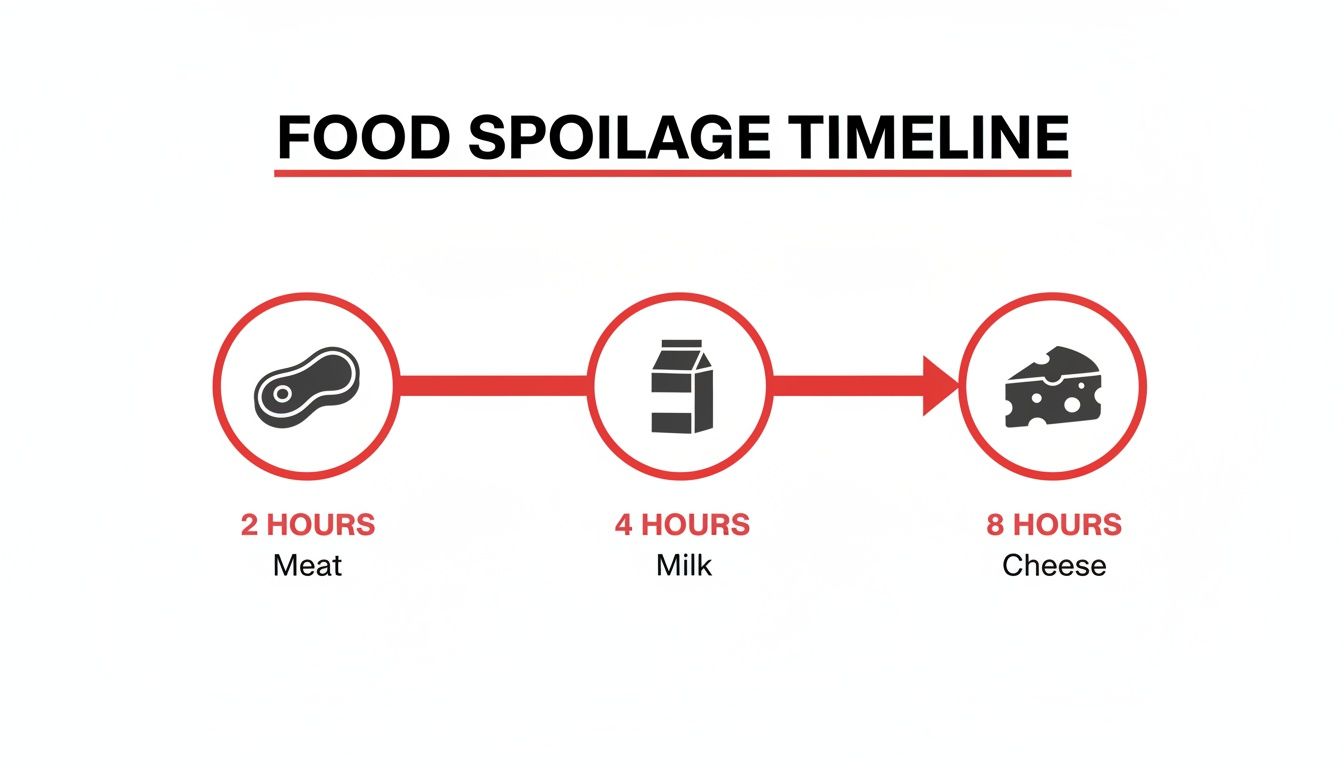
As you can see, decisions about high-risk foods like meat and milk must be made almost immediately. There is no time to waste.
The Invisible Health Threat
The biggest concern isn't just the money lost on groceries; it's the real risk of getting sick. Bacteria thrive between 4°C and 60°C, and a broken fridge will reach that range quickly. Eating food that has been sitting in this zone can lead to miserable symptoms like nausea, vomiting, and diarrhea.
When your appliance stops working, you're not just dealing with a broken machine—you're managing a potential health crisis in your kitchen. Prioritizing safety by discarding questionable food is non-negotiable.
If you've noticed your fridge isn't working correctly, the first step is to figure out why. You can learn more about how to fix a refrigerator that is not cooling to see if it's a simple issue you can resolve yourself. This initial check will help you determine whether it's time to call a professional.
Creating Your Food Safety Action Plan
When your fridge breaks down, you need to act fast. It's not just about saving your groceries; it's about keeping your family safe. This requires a clear plan, not guesswork. Following proven food safety rules is the only way to minimize waste and avoid health risks.
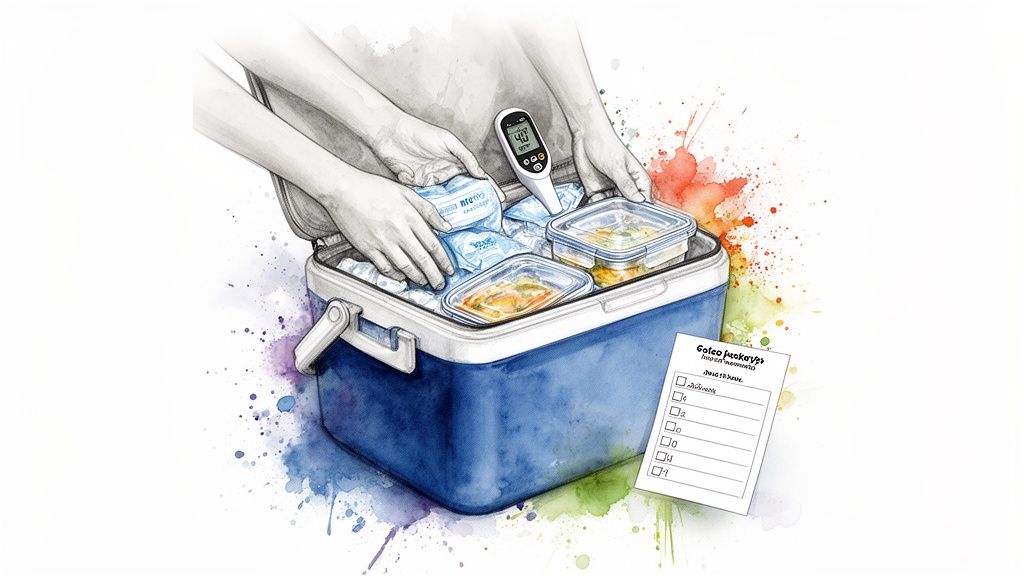
Your most important tool is a reliable food thermometer. It’s the only way to know for sure if your food has entered the "temperature danger zone"—that critical range between 4°C and 60°C where bacteria multiply rapidly.
The Two-Hour Rule Is Your Guideline
Here is the golden rule you must follow: the two-hour rule. Any perishable food that has sat in the temperature danger zone for more than two hours must be thrown out. This is non-negotiable for high-risk foods because harmful bacteria can take over long before you can see, smell, or taste that something is wrong.
For Albertans, this rule is even more critical. Going without a fridge in communities like Red Deer can quickly compromise food safety, putting families, seniors, and young children at risk. According to Health Canada, a significant number of food poisoning cases come from bacteria growth in improperly stored food—a problem made much worse by a broken appliance.
Your Triage Checklist: What To Keep vs. Toss
Think of yourself as an ER doctor for your groceries. You need to quickly sort everything into three categories: keep, questionable, and toss.
Immediately Discard These Items:
- Raw or cooked meat, poultry, and seafood: These are prime targets for bacteria and spoil incredibly fast.
- Milk, cream, yogurt, and soft cheeses: Dairy products are a breeding ground for germs when not kept cold.
- Cooked leftovers, pasta, and rice: These foods can develop dangerous toxins at room temperature.
- Opened mayonnaise and creamy dressings: Once the seal is broken, they require constant refrigeration.
- Cut fruits and vegetables: Without their protective skin, they are vulnerable to bacteria.
Items You Can Likely Save:
- Hard cheeses (like cheddar or parmesan): Their low moisture content makes them more durable.
- Butter and margarine: These can usually handle room temperature for a short period.
- Whole fruits and vegetables: Items like apples, oranges, and carrots are generally fine.
- Condiments like ketchup, mustard, and pickles: High acidity and preservatives give them a much longer shelf life.
When your fridge is out of commission, having a solid grasp of HACCP food safety principles is a game-changer. These guidelines offer a systematic way to identify and control potential foodborne hazards.
Smart Temporary Storage Solutions
Once you’ve sorted your food, the items you’re keeping need a safe, cold place. Coolers are your best friend here, but you have to use them correctly.
- Pack It Right: Start with a layer of ice or frozen gel packs at the bottom. Add your food, then top it off with another layer of ice. Keep raw meats wrapped tightly and at the very bottom to prevent their juices from dripping onto other items.
- Monitor the Temperature: Place a thermometer inside the cooler. You need to maintain an internal temperature at or below 4°C.
- Limit Openings: Every time you open the cooler, you let cold air out. Keep it closed as much as possible.
Alberta Pro-Tip: During our chilly winters, an insulated garage or a shady balcony can serve as a natural refrigerator. However, you must use a thermometer to ensure the temperature stays consistently below 4°C and above freezing to avoid ruining your food.
Dealing with a broken fridge is a massive headache. If you're in this situation, getting it fixed fast is the top priority. Our team specializes in emergency fridge repair in Edmonton and the surrounding areas, so we can help get your kitchen—and your life—back to normal as quickly as possible.
The Hidden Costs of a Refrigerator Failure
When your refrigerator breaks down, the first thing on your mind is the mountain of food you might have to throw away. But that’s just the tip of the iceberg. The true financial impact of a broken fridge extends far beyond a single grocery bill, adding up in ways that can catch you completely off guard.
Once you see all the costs, you'll realize that an emergency repair isn't just another expense—it's a smart decision to protect your wallet and your peace of mind. A single service call can prevent a cascade of larger, more stressful problems.
The Obvious Cost: Spoiled Groceries
The most immediate blow to your budget is losing all your perishable food. For a typical family in Calgary or Edmonton, a fully stocked fridge can easily hold $150 to $250 worth of groceries. Having to discard all of that is a significant and unplanned expense.
Here in Alberta, a non-working refrigerator can lead to rapid food loss. Research from the University of Alberta found that unrefrigerated meats have a 22% spoilage rate within just 24 hours at room temperature. That means a large portion of your grocery budget could be wasted in a single day.
Beyond the Grocery Bill: Unexpected Expenses
While spoiled food is the most visible cost, other hidden expenses can quickly inflate the financial damage. These are the costs that creep up while you’re scrambling to deal with the immediate problem.
- The Takeout Trap: With no way to store food or cook properly, you’ll inevitably turn to restaurants and takeout. Those meals add up fast. A family of four can easily spend $60-$100 per day on prepared food, which becomes a significant drain after just a couple of days.
- Inefficient Cooling Methods: Trying to save your food by constantly buying bags of ice for coolers creates another ongoing expense. It's a temporary fix that costs you money with every trip to the store.
- Time and Productivity Loss: Consider the hours spent sorting food, cleaning up, shopping for replacements, and planning meals. That’s time you can’t get back—and for many, that translates directly into lost work hours or sacrificing valuable personal time.
A broken refrigerator isn’t a one-time problem. It’s a disruption that costs you money every single day it remains broken. The longer you wait, the more expensive it gets.
The Risk of Long-Term Damage
One of the most overlooked—and potentially costly—consequences is property damage. A malfunctioning fridge, especially one with a leaky ice maker or a faulty defrost system, can cause serious water damage.
Imagine a slow, unnoticed leak behind the unit. Moisture can seep into your subfloor, warp hardwood, and create the perfect environment for mould. Fixing that kind of damage can cost thousands of dollars, dwarfing the cost of the original appliance repair. Plus, with the rising cost of new appliances, protecting the one you have is more important than ever. If you're curious about this trend, you can read more on why appliances are getting more expensive.
Calling a professional isn't just about getting the cold air running again; it's about protecting your home from much bigger, costlier headaches down the road.
Deciding Between Repairing and Replacing
When your refrigerator fails, you face a major decision with a direct impact on your wallet: should you repair it or replace it? It's a tough call, especially when you're stressed about spoiled food and a non-functional kitchen. The best answer depends on a few key factors, and understanding them will help you make a smart, cost-effective choice.
A helpful guideline used in the appliance industry is the 50% Rule. It’s simple: if a repair costs less than 50% of the price of a new, similar refrigerator, then fixing it is usually the better financial move. This rule helps you avoid investing too much money into an old unit that might break down again soon.
However, the 50% Rule isn’t the only consideration. The age and overall condition of your fridge play a huge role in this decision.
Key Factors to Help You Decide
Making the right choice means looking beyond the immediate repair bill. You have to weigh the age, efficiency, and condition of your current fridge against the long-term benefits of a new one. Each factor gives you a clearer picture of whether you’re just patching a problem or making a sound long-term investment.
-
Age of the Refrigerator: Most modern refrigerators are designed to last around 10 to 15 years. If your unit is relatively young and this is its first major issue, a repair is often the best option. But if it’s approaching or has surpassed the decade mark, it’s wise to think twice. You might want to learn more about whether repairing a 10-year-old refrigerator is worth it, as it could be nearing the end of its reliable lifespan.
-
Energy Efficiency: Older refrigerators can consume a lot of electricity. A new ENERGY STAR certified model uses significantly less power, which can save you a surprising amount on your utility bills each month. Over time, these savings can help offset the cost of a new appliance.
-
Type of Failure: The problem itself is a major clue. A simple fix like a torn door seal or a faulty thermostat is usually inexpensive to handle. However, a catastrophic failure, like a dead compressor, is one of the most expensive repairs. That’s often a sign that it’s time to start looking for a new refrigerator.
Comparing Your Options Side-by-Side
Sometimes, seeing everything laid out clearly is the best way to make a decision. This table can help you determine what makes the most sense for your budget and your family's needs.
Repairing vs Replacing Your Refrigerator
A comparison to help you decide the most cost-effective and practical option for your broken refrigerator.
| Factor | Choose Repair If… | Choose Replacement If… |
|---|---|---|
| Cost | The repair cost is less than 50% of the price of a new, comparable model. | The repair is expensive, approaching or exceeding half the cost of a new unit. |
| Age | Your refrigerator is less than 8-10 years old and has been reliable. | Your refrigerator is over a decade old and starting to show its age. |
| Energy Efficiency | Your current model is already fairly energy-efficient. | Your old model is inefficient, and a new ENERGY STAR unit would save you money. |
| Type of Repair | It's a minor issue like a broken seal, faulty thermostat, or ice maker problem. | It's a major system failure, especially with the compressor or sealed system. |
| Future Reliability | This is the first significant problem you've had with the appliance. | The refrigerator has needed multiple repairs recently, indicating more will follow. |
Ultimately, choosing to repair often gets your kitchen back to normal faster and for less money upfront. It is the most direct solution to the immediate problem.
But if you do decide your current fridge is a lost cause, it’s smart to do your homework before buying a new one.
Researching different stainless steel commercial refrigerator options can give you a good sense of the new features, sizes, and efficiency ratings available. Knowing what’s out there ensures your next purchase is a solid, long-term investment for your home.
Why Professional Repair Is the Safest Choice
When your refrigerator breaks, your first instinct might be to search for a DIY fix on YouTube. While it seems like an easy way to save money, attempting to repair a modern appliance yourself can backfire significantly. It's a risky gamble—pitting a small potential saving against the real dangers of electrical shock, causing more damage, or voiding your warranty.
Choosing a professional service is about safety and ensuring the job is done right. Certified technicians are trained to handle complex electrical systems and high-pressure refrigerants without putting you or your home at risk. They use proper diagnostic tools to pinpoint the root cause of the problem, something a short video tutorial can't provide.
The Dangers of DIY Appliance Repair
Trying to fix your own fridge can turn a minor issue into a major disaster. Modern refrigerators are complex, and one wrong move can have serious consequences.
- Electrical Hazards: Refrigerators operate on high-voltage circuits. Without proper training, you risk severe electrical shock from mishandling wires or capacitors—even if the unit is unplugged.
- Voiding Your Warranty: Most manufacturers will void your warranty if an unauthorized person attempts a repair. If your attempt fails or worsens the problem, you'll be responsible for the full cost of the next repair or a total replacement.
- Causing More Damage: It’s easy to misdiagnose the issue. You might replace a perfectly good part, which won’t solve the problem and could cause a domino effect that damages other components. What started as a simple fix can quickly escalate into a complete system failure.
The Value of a Certified Technician
Hiring a professional is an investment in peace of mind. It’s the difference between a guess and a guaranteed solution.
For busy families, that difference is everything. Imagine you're in Calgary, juggling work and school pickups, and the fridge suddenly dies. With Alberta households averaging 2.5 people, a broken fridge isn't just an inconvenience—it’s a ticking clock on food safety.
Services like Repair My Appliance are designed for these moments. We offer same-day service in Edmonton, Calgary, and Red Deer, and our vans are fully stocked to complete most jobs on the first visit.
A professional repair isn’t just about fixing what’s broken today. It’s about ensuring your appliance runs safely and efficiently for years to come, backed by a warranty that protects your investment.
When you call an expert technician, you get an accurate diagnosis, access to genuine manufacturer parts, and the security of a warranty on both parts and labour. It ensures the repair is handled correctly the first time, getting your home and your life back on track quickly and safely. To learn more, check out our guide on the top 5 reasons why hiring an appliance repair company is your best bet.
Ultimately, calling a professional is the fastest and most reliable way to restore function to your kitchen.
Time to Get Your Refrigerator Fixed
You’ve navigated the immediate crisis of a broken-down fridge. From saving what food you could to deciding whether to repair or replace it, you’ve done the hard part. Now, it’s time to get your kitchen—and your life—back to normal.
Living without a working refrigerator is more than just an inconvenience; it’s a constant source of stress. Every meal becomes a logistical challenge, and every passing hour means more of your grocery money ends up in the trash. Don’t let the problem drag on.
Your Local, Expert Solution Is Here
Repair My Appliance is your reliable, Alberta-based solution. Our team understands the urgency of a broken fridge and is committed to getting your kitchen back up and running with minimal disruption. When you call us, you’re choosing a service built on expertise you can trust.
We keep our process straightforward and customer-focused:
- Licensed and Insured Technicians: Our professionals are fully certified, ensuring every repair is done safely and correctly.
- Upfront, Honest Pricing: You’ll receive a clear, easy-to-understand quote before we begin any work. No surprises on the final bill.
- Waived Service Call Fee: When you proceed with the repair, we waive the initial call-out fee. It's that simple.
- Comprehensive Warranty: We stand behind our work with a solid warranty on both parts and labour, giving you complete peace of mind.
Waiting only makes the situation worse, costing you more in wasted food and takeout meals. A professional repair is the fastest way back to a safe, functional kitchen, stopping the cycle of stress and waste for good.
The solution to your refrigerator problem is just a phone call away. Let our expert team take it from here so you can get back to your routine.
Need appliance repair? Visit RepairMyAppliance.ca or call 587-416-5888 for fast, professional service.
Your Questions About Fridge Failures, Answered
When your refrigerator breaks down, it’s normal to have many questions. Beyond the immediate chaos of saving your food, you’re probably wondering about insurance, what warning signs you might have missed, and how to prevent this from happening again. Here are clear, direct answers to the most common questions we hear from homeowners.
Getting these details straight not only helps you handle the current situation but also equips you to make smarter choices in the future.
How Long Will Food Stay Safe in a Refrigerator Without Power?
You have a short window of time. According to Health Canada, a refrigerator will keep food safely chilled for about four hours, but only if the door remains closed. A full freezer performs much better, holding its temperature for around 48 hours, or 24 hours if it's half-full.
The golden rule is simple: keep the door closed. Every time you open it, you let precious cold air escape, and the food spoilage clock speeds up.
Once you’re past the four-hour mark, it's time to use a food thermometer. Any perishable food that has been above 4°C (40°F) for more than two hours should be thrown out. It’s simply not worth the risk of foodborne illness.
Can I Claim Spoiled Food on My Home Insurance in Alberta?
Yes, there's a good chance you can. Most standard home insurance policies in Alberta include coverage for food spoilage resulting from a power outage or a sudden appliance breakdown.
However, the details depend on your specific policy. Coverage amounts typically range from $500 to $2,000, but keep in mind that your standard deductible will likely apply.
Pro Tip: Before you throw anything away, document everything. Take clear photos of all the spoiled food and gather any recent grocery receipts you can find. Then, contact your insurance provider right away to start the claims process and confirm your coverage details.
What Are the Warning Signs My Refrigerator Is About to Fail?
Refrigerators rarely fail without giving some warning. If you know what to look and listen for, you can often catch the problem and schedule a repair before you're dealing with a full-blown emergency.
Keep an eye out for these red flags:
- Excessive Condensation: If you see a lot of "sweat" inside or outside the fridge, it could mean your door seals are failing and not keeping the cold air in.
- A Hot Motor: It's normal for the motor area at the back to feel warm, but if it’s unusually hot to the touch, your compressor may be working too hard.
- Strange Noises: A gentle hum is normal. However, loud buzzing, rattling, or clanking sounds indicate a mechanical issue that needs attention.
- Food Freezing: If you’re finding frozen milk or lettuce in the main compartment, you may have a faulty thermostat or an issue with the temperature control system.
- Spiking Energy Bills: A sudden, unexplained increase in your electricity bill is a classic sign that your fridge is running constantly just to stay cool.
Spotting these symptoms early can save you from the hassle and expense of dealing with a completely failed refrigerator.
Is It Worth Repairing an Older Refrigerator?
In many cases, yes. A good rule of thumb is the "50% Rule." If the repair cost is less than half the price of a comparable new model, fixing it is usually the more economical choice. This is especially true for high-end or built-in models where a replacement would be very expensive.
However, age and repair history are also important factors. If your fridge is over 10 years old, has required multiple past repairs, and isn't very energy-efficient, using that repair money toward a new ENERGY STAR model is likely a wiser investment. A new appliance could deliver significant long-term savings on your utility bills. Our technicians can provide an honest, expert assessment to help you make the best decision for your home and budget.