

When an appliance gives up on you, the last thing you want is a drawn-out, stressful decision. Should you call for a repair, or is it time to start shopping for a replacement? For homeowners in Edmonton, Calgary, and Red Deer, getting this right can save a lot of headaches and money down the road.
The core of the "repair or replace" debate usually comes down to a simple calculation: if a repair costs less than half the price of a new appliance, fixing it is almost always the smarter financial move. This guide will walk you through everything you need to know to make the best decision for your home and budget, as the future of appliances leans toward sustainability and cost-effectiveness through repair, not disposal.
Your Quick Guide to the Repair vs Replace Dilemma
When your fridge stops cooling or your washer starts leaking, it's easy to feel overwhelmed. The good news is you don't need to be an expert to make a smart choice. Having a simple framework is key.
More and more Albertans are choosing repair. As replacement costs climb, the local appliance repair industry is seeing steady growth. The North American home appliance services market recently hit USD $298,325 million, with a projected growth of 4.7%, driven largely by demand for repairs on modern, complex appliances. With new appliance prices jumping 15-20%, it's no wonder busy families and landlords are opting for a quick fix over an expensive replacement.
The 50 Percent Rule: A Practical Starting Point
The most reliable rule of thumb is the 50% Rule. It’s a straightforward financial guideline: if the cost of a professional repair is less than half the price of a comparable new appliance, repairing is the logical choice.
For example, if a new washing machine costs $1,200, any repair under $600 is a sound investment. You're extending the life of your current unit without the high upfront cost of a brand-new one. This simple math helps you avoid overspending on an older machine while also preventing the unnecessary expense of replacing an appliance with a minor, fixable issue.
This visual decision tree breaks down the first few steps, making it clear when repair is the most logical path.
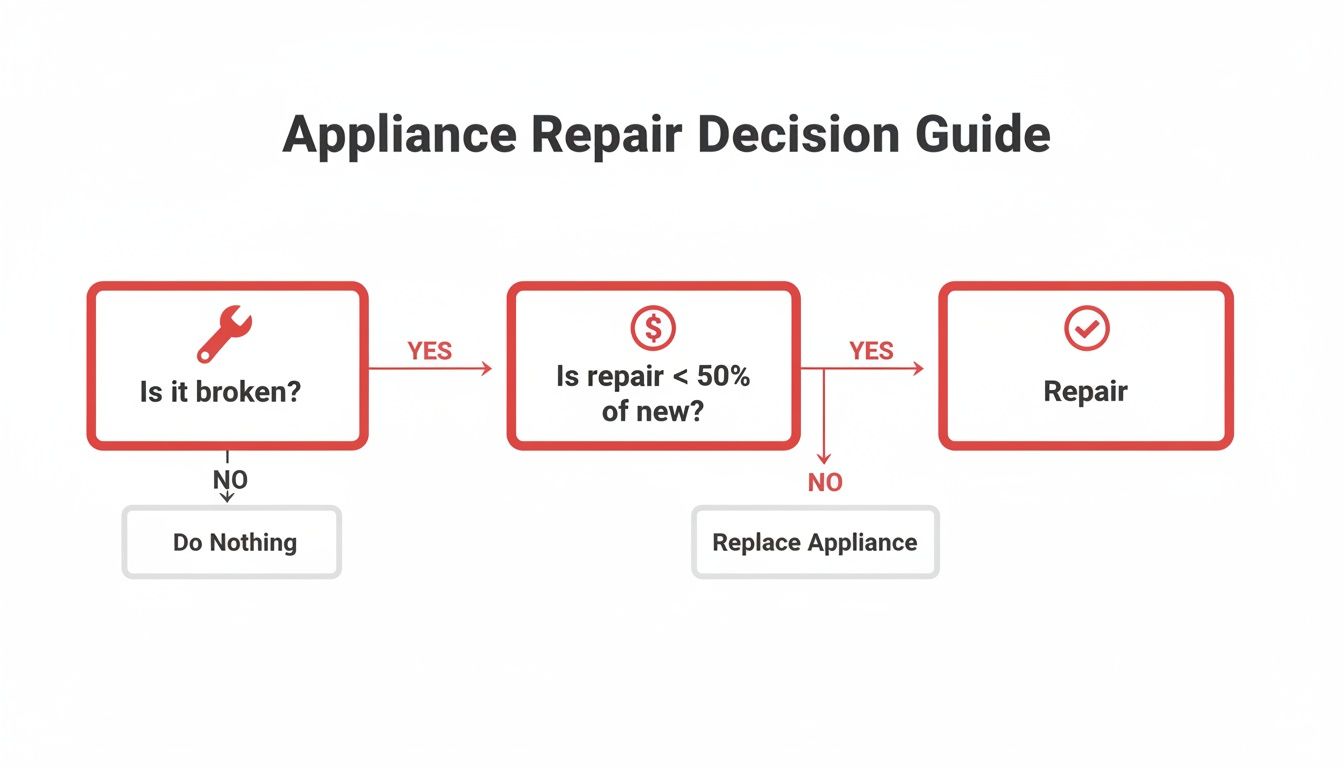
As the chart shows, once you've confirmed your appliance is broken, the main question is whether the repair cost is less than 50% of a new one.
Of course, other factors like age and energy efficiency play a role, but this financial checkpoint is your best first step. It's also helpful to understand a bit about the problem before calling for service. For instance, resources like these commercial ice maker troubleshooting tips show how identifying the issue is the first move toward a solution.
A Financial Breakdown of Repair and Replacement Costs
When an appliance stops working, the decision to repair or replace often boils down to the numbers. The cost of a repair is right in front of you, but a truly smart financial choice means looking at the bigger picture—the total cost of ownership. This isn't just about the upfront bill; it's about long-term running costs and potential savings down the road.
We're moving away from a disposable culture and towards maximizing the value of what we own. A hefty replacement cost isn't always the most economical move.
Comparing Upfront Costs: A Real-World Scenario
Let's walk through a common situation for an Alberta homeowner. Your eight-year-old refrigerator in Calgary suddenly isn't cooling. You're now at a crossroads.
- The Repair Option: You call a professional who diagnoses a faulty thermostat—a pretty standard issue. The total cost for the part and labour comes to $300.
- The Replacement Option: A new, comparable refrigerator will set you back $2,000.
In this scenario, the repair immediately saves you $1,700. That significant upfront saving is often the most compelling reason to choose a repair, especially if the appliance is in good shape otherwise and hasn't been giving you constant trouble.
Key Insight: A strategic repair can give you several more years of reliable service for just a fraction of the replacement cost, freeing up your budget for other things.
Calculating the Total Cost of Ownership
While immediate savings are great, a full financial picture has to include long-term expenses. This is where energy efficiency comes into play. Sure, a new appliance might be more energy-efficient, but will the savings actually offset that steep purchase price?
Let’s do the math. You need to weigh the $300 repair cost against any potential energy savings.
- Older Appliance (Post-Repair): Your repaired fridge might use an extra $15 per month in electricity compared to a new high-efficiency model.
- New Appliance (Post-Purchase): The new model saves you about $180 per year on your utility bill.
Here’s the catch: it would take almost 9.5 years for those energy savings to cover the $1,700 difference in cost. With the average fridge lasting 10-15 years, you might not even break even before the new appliance starts needing its own repairs. To really understand the long-term running costs, it helps to look at typical home appliances electricity consumption.
The Value of Transparent Pricing
One of the biggest worries for homeowners is uncertainty. No one wants a surprise on their final repair bill. That's exactly why reputable service providers offer transparent, upfront pricing.
When you get a clear quote before any work starts, the guesswork is gone. For a property manager in Edmonton or a homeowner in Red Deer, that predictability is invaluable. Knowing the exact cost lets you budget with confidence and reinforces that a professional repair is a controlled, predictable expense—not a financial gamble. It's also worth understanding the market forces at play and why appliances are getting more expensive, which makes a cost-effective repair an even smarter choice.
When Is an Appliance Considered Too Old to Fix
When an appliance gives out, the first question on everyone's mind is usually, "Is it too old to be worth fixing?" It’s a great starting point, but age is just one piece of the puzzle. Knowing the typical lifespan of your machine gives you critical context for making a smart decision.
Think of it this way: a seven-year-old dishwasher that suddenly stops working is a completely different story than a seventeen-year-old one with the same issue. One is likely experiencing a premature hiccup worth fixing, while the other is probably nearing the end of its useful life.
Understanding these timelines helps you avoid sinking good money into an appliance that’s already on its last legs.
Average Lifespan and Repair Viability
While things like maintenance and how often you use an appliance play a big role, most major appliances have a predictable service life. Knowing where your unit falls on this spectrum helps you apply the 50% Rule more effectively. The table below offers a general guide to what you can expect.
| Appliance Type | Average Lifespan (Years) | Repair Recommendation (Within First 75% of Lifespan) | Replacement Consideration (Past 75% of Lifespan) |
|---|---|---|---|
| Refrigerators | 10–15 | Usually a good investment for repairs. | High-cost repairs may not be worthwhile. |
| Washing Machines | 10–13 | Most repairs are practical and cost-effective. | Start weighing the cost of a new, efficient model. |
| Dryers (Electric & Gas) | 10–13 | Repairs are typically a smart financial choice. | Consider replacement if repair costs are significant. |
| Dishwashers | 9–13 | Fixing is often the best option. | Replacement becomes a strong contender. |
| Ovens & Ranges | 13–15 | Very durable; repairs are almost always viable. | A major failure might signal it's time to upgrade. |
| Microwaves | 7–10 | Repair makes sense for minor to moderate issues. | Replacement is often more economical. |
Keep in mind that in the unique Alberta climate, factors like hard water can sometimes shorten the lifespan of appliances like dishwashers and washing machines if they aren't properly maintained.
Expert Tip: If your appliance is less than 75% through its expected lifespan, a repair is almost always the more sensible option, provided the cost is reasonable. Past that point, replacement becomes a much stronger consideration.
Contextualizing Age with Performance and Cost
Age alone doesn't tell the whole story. You also need to look at the appliance’s track record. A ten-year-old oven that’s never had a single issue is a much better candidate for repair than a five-year-old fridge that’s already needed multiple service calls.
Recent trends in Alberta actually show more people choosing to repair rather than replace, especially as economic pressures mount. Across North America, the appliance services market grew to $298 billion, and refrigerators are one of the most commonly repaired items. Here in Alberta, where the average household disposable income is around $65,000 annually, repair decisions have spiked. A recent survey found that 65% of Calgarians chose to fix their washing machines—at an average cost of $250—instead of buying a new $1,200 model.
This data proves that even for appliances midway through their life, repair is a financially sound choice for many Alberta families. If you're wondering specifically about your fridge, our guide on how long a refrigerator should last offers more detailed insights. Ultimately, the clearest path forward comes from looking at the age, repair cost, and performance history all together.
Navigating Smart Appliance Repairs and Your Right to Repair
The future of home appliances is already here, and it's connected. Smart refrigerators that build grocery lists and ovens you can preheat from your phone are now common fixtures in Alberta homes. While this tech adds a ton of convenience, it also brings a new layer of complexity to the repair or replace debate.
When a smart appliance acts up, the problem isn't always a simple mechanical fix like a broken belt or a burnt-out heating element. More often than not, the issue is buried in its sophisticated electronics, sensors, or software.
This shift means repairs now demand specialized diagnostic tools and a real understanding of circuit boards and connectivity. For the average homeowner, a DIY fix on a smart appliance isn't just tricky—it's risky. You could easily cause more damage to the delicate electronic parts.
The Challenge of Smart Appliance Repairability
The intricate design of smart appliances creates a unique hurdle. Manufacturers sometimes use proprietary software or parts, making it tough for independent technicians to get their hands on what they need for a repair. This can trick homeowners into thinking their only choice is an expensive replacement or a service call straight to the manufacturer.
But that landscape is starting to change, thanks to a growing consumer movement.
Key Insight: Just because modern appliances are more complex doesn't mean they're unrepairable. It just means the repair process calls for a higher level of technical skill and the right equipment for the job.
The Right to Repair Movement and What It Means for You
The "Right to Repair" movement is a big deal for homeowners. This global push is all about creating laws that force manufacturers to make repair parts, diagnostic tools, and service info available to both consumers and independent repair shops.
For Albertans, this movement is vital. It empowers professional local technicians by giving them the resources they need to service even the most advanced smart appliances. This levels the playing field, encourages healthy competition, and helps keep repair costs from spiralling out of control.
The core ideas behind the Right to Repair movement are pretty simple:
- Access to Parts: Making sure original replacement parts are actually available to buy.
- Access to Information: Unlocking service manuals, diagrams, and diagnostic software for everyone.
- Freedom to Choose: Letting you decide who fixes your stuff, whether it’s an independent pro or the original manufacturer.
This push for transparency directly fights the "disposable appliance" mindset. It reinforces the idea that a well-done repair is a smart, sustainable, and often much more affordable option.
Why Professional Technicians Are Essential for Smart Repairs
Fixing a smart appliance is a whole different ball game than fixing its older, non-connected cousin. A professional technician trained in modern appliance technology brings indispensable skills to your home. They understand the entire system—from the mechanical guts to the software that makes it all run.
A certified technician can:
- Run Advanced Diagnostics: Use specialized software to pinpoint the exact source of an electronic glitch, which saves time and avoids guesswork.
- Safely Handle Electronics: Work with sensitive circuit boards and sensors without accidentally frying them.
- Access Technical Resources: Use their industry know-how to find the right parts and service information that aren't available to the public.
As appliances keep getting smarter, the role of a skilled technician becomes even more critical. They are the key to making sure your high-tech investments can be properly maintained for years. To learn more about this, you can explore the future of smart home tech and see how it's changing our homes. In the end, the future of appliance service isn't just about swapping parts; it's about understanding the complex systems that keep our households running smoothly.
The Environmental Impact of Your Repair or Replace Decision
That choice between repairing and replacing a broken appliance goes way beyond your wallet. It's a decision with a real, measurable environmental impact, and opting to repair isn't just a smart financial move—it's a responsible one for homeowners and businesses across Alberta.

Every time a large appliance gets thrown out, it adds to the growing problem of electronic waste, or e-waste. These machines are full of valuable materials, but they also contain hazardous substances that can do serious harm if they aren't disposed of properly.
Reducing Landfill Burden in Alberta
When you replace an appliance, the old one usually heads straight for a landfill. This is a big deal locally, especially as the future of appliances in Alberta is shifting toward repair to cut down on waste. With Albertans generating 850 kg of waste per person annually, choosing repair is a direct way to support the province's 2030 zero-waste ambitions.
Just by fixing your machine, you can slash its lifecycle emissions by as much as 50%. You can explore insights on consumer trends to learn more about the growing push for appliance repair. By extending its life, you’re making a real contribution to waste reduction goals in communities from Edmonton to Calgary.
Key Environmental Takeaway: Repairing an appliance is one of the most effective ways a household can shrink its landfill contribution and conserve natural resources.
The Hidden Costs of Manufacturing and Transport
The environmental cost of a new appliance starts long before it ever shows up at your door. The whole manufacturing process is incredibly resource-intensive.
Just think about what it takes:
- Raw Materials: Mining for metals like steel, copper, and aluminum uses a ton of energy and can damage entire ecosystems.
- Manufacturing Energy: Factories consume huge amounts of electricity and water to build a single new fridge or washer.
- Transportation Footprint: Shipping a heavy appliance from the factory to a warehouse and finally to your home generates significant carbon emissions.
When you repair, you get to bypass this entire cycle of consumption. You’re preserving the "embodied energy" and materials already inside your home, making it a powerful act of conservation.
Aligning with Sustainable Practices
Choosing repair also makes a difference when it comes to the chemicals used in our appliances. For example, refrigerants in fridges and freezers have evolved to be much more eco-friendly. Understanding these changes, like why modern refrigerators use different refrigerants, shows how the industry is moving toward sustainability.
A professional repair ensures these systems are handled correctly, preventing harmful substances from escaping into the atmosphere.
Ultimately, every repair helps build a more sustainable future. It reduces the demand for new production, lowers our collective carbon footprint, and keeps bulky, resource-heavy items out of our landfills. This choice frames repair not just as a fix for a broken machine, but as a commitment to a healthier planet.
Why Professional Repair Is the Safest and Most Reliable Option
When an appliance starts acting up, especially a gas stove or a high-voltage refrigerator, it’s tempting to try a quick DIY fix. But these aren't simple machines. Dealing with their complex systems requires real expertise, making a professional repair the only truly safe and reliable path forward.
Choosing a certified technician over an uncertified handyman or going it alone is about more than just getting the job done—it's about protecting your home and family.
The Hidden Dangers of DIY Repairs
Modern appliances are intricate combinations of electrical wiring, gas lines, and sensitive electronics. One wrong move during a repair can lead to serious, costly consequences.
- Electrical Hazards: A simple wiring mistake can cause an electric shock, short out the appliance, or even spark a fire. Professionals are trained to handle high-voltage components without putting anyone at risk.
- Gas Leaks: With gas dryers or ovens, improper handling of gas lines and connections can lead to dangerous leaks. This creates a risk of carbon monoxide poisoning or even an explosion.
- Water Damage: A botched dishwasher or washing machine repair might seem fine at first, but it can lead to slow leaks or a sudden flood, causing thousands of dollars in damage to your floors, ceilings, and walls.
These potential dangers highlight why it's so important to rely on someone with the right training and credentials. A licensed and insured technician eliminates these risks, giving you peace of mind that the job is done correctly and safely.
Key Takeaway: The few dollars you might save on a DIY repair aren't worth the potential cost of property damage or, worse, personal injury. Professional service is an investment in your home's safety.
The Value of a Professional Service Call
Hiring a reputable appliance repair company brings benefits that go far beyond just a successful fix. It’s an efficient, dependable solution designed to get your household back on track with as little disruption as possible.
One of the biggest advantages is sheer preparation. Our technicians arrive in fully stocked service vehicles, armed with the most common parts and advanced diagnostic tools. This means most repairs can be completed on the very first visit, saving you the time and frustration of waiting for parts to be ordered. This level of readiness is a core reason why hiring an appliance repair company is your best bet.
Guaranteed Workmanship and Lasting Results
Another critical factor is accountability. When you hire a professional service, you get a warranty on both the parts we use and the labour we perform. This guarantee is our promise to you that we stand behind our work.
If the same problem pops up again during the warranty period, our technician will come back to make it right at no extra cost. That's a level of protection you simply don't get from a DIY job or an informal handyman. It ensures your investment is protected and that the repair provides a lasting solution, not just a temporary patch. Ultimately, professional repair isn't just a transaction; it's a partnership in keeping your home safe and running smoothly.
Your Next Step with Alberta's Appliance Experts

Now that you're armed with the facts, making a clear-headed decision is much simpler. For most homeowners in Edmonton, Calgary, and Red Deer, the smartest move isn't a costly and wasteful replacement—it's a strategic, professional repair.
In the vast majority of cases, a professional repair is the most efficient, budget-friendly, and sustainable solution for common appliance problems. Choosing a dedicated, local expert is the fastest way to get your home back to normal without the unnecessary expense and hassle.
Need appliance repair? Visit RepairMyAppliance.ca or call 587-416-5888 for fast, professional service.
Your Top Appliance Repair Questions Answered
When an appliance breaks down, the big question is always the same: repair or replace? Homeowners across Alberta ask us for advice all the time, so we’ve put together clear answers to help you make the right call.
Is It Cheaper to Fix or Replace a Refrigerator?
Most of the time, repairing your fridge is far cheaper, especially if it's under ten years old and dealing with a minor problem. If a repair quote is less than half the cost of a comparable new model, fixing it is the smartest financial move.
That said, if a major part like the compressor has failed—often the priciest component to fix—you’ll want to carefully weigh that cost against a new fridge. But for a seven-year-old fridge with a simple fixable issue, a repair is almost always the way to go.
What Is the 50 Percent Rule in Appliance Repair?
The 50% Rule is a great rule of thumb our technicians use to guide customers. It’s simple: if a professional repair costs less than 50% of what you’d pay for a similar brand-new appliance, the repair is a solid investment.
For instance, if a new washing machine is $1,200, any repair quoted under $600 makes perfect financial sense. This guideline helps you avoid sinking too much money into an older machine while also preventing the needless expense of replacing an appliance that just needs a straightforward fix.
Expert Tip: Always consider the appliance's age and how well it’s been maintained when you use the 50% Rule. For a well-cared-for machine in the middle of its lifespan, a repair is a clear winner.
Is It Worth Repairing a 15-Year-Old Appliance?
Honestly, it’s usually not a good idea to put significant money into major repairs for appliances that are 15 years old or older. Most big appliances like refrigerators and ovens are designed for a lifespan of about 13-15 years.
Once they reach that age, they’re much less energy-efficient, and you’ll often find that one repair is just the first of many. Your money is better spent on a new, more reliable, and energy-efficient model that will start saving you on your utility bills right away.