
Let’s get straight to it. The magic numbers for your fridge are between 3°C and 4°C (37°F and 40°F). For your freezer, you want it sitting at a frosty -18°C (0°F).
Getting these temperatures right isn't just a suggestion—it's the single most important thing you can do to keep your food safe, cut down on waste, and keep your hydro bills in check. This guide will walk you through why it matters, how to set it perfectly, and what to do when things go wrong.
Why Your Refrigerator Temperature Matters So Much
Setting your fridge temperature correctly is your first line of defense against foodborne illness and wasted groceries. Think of it as creating a "safe zone" for your food. This specific temperature range is scientifically proven to dramatically slow down the growth of nasty bacteria like Salmonella and E. coli, which love to multiply in warmer conditions.
This isn't just a household tip; it's a cornerstone of public health. Food safety regulations are built around this principle to prevent bacteria from getting a foothold. For families here in Alberta, keeping your fridge below 4°C is a simple but powerful habit to protect your household's health.
Ever heard of the "Food Danger Zone"? It's the temperature range between 4°C and 60°C (40°F and 140°F). In this zone, bacteria can double in as little as 20 minutes, turning perfectly good food into a health risk before you know it.
The Two Key Benefits of a Correctly Set Fridge
Beyond keeping your family safe, dialing in the right temperature has two immediate benefits you'll notice in your day-to-day life:
- Prevents Food Spoilage: When your fridge is too warm, milk sours faster, vegetables wilt, and leftovers become questionable in a hurry. A properly chilled fridge preserves the freshness, flavor, and nutrients in your food. That means you throw less of your hard-earned money in the green bin.
- Improves Energy Efficiency: On the flip side, a fridge set too cold is a classic energy hog. The compressor works overtime, running constantly to maintain an unnecessarily low temperature, which drives up your electricity bill. Finding that "just right" spot ensures your appliance runs efficiently, using only the energy it truly needs.
Now, before we get too deep into troubleshooting your fridge, it's worth remembering that the ideal freezer temperature is just as important for long-term food storage.
To make it easy, here's a quick reference guide with the key numbers you need to know.
Quick Guide to Ideal Appliance Temperatures
This table sums up the target temperatures for your fridge and freezer, and why they're so important.
| Appliance | Ideal Temperature (°C) | Ideal Temperature (°F) | Primary Reason |
|---|---|---|---|
| Refrigerator | 3°C to 4°C | 37°F to 40°F | Slows bacteria growth |
| Freezer | -18°C | 0°F | Long-term preservation |
Stick to these ranges, and you'll be well on your way to safer food, less waste, and better energy efficiency.
How to Accurately Check and Set Your Fridge Temperature
Trusting that factory dial with settings from 1 to 5 is a bit like guessing the weather. You might get it right sometimes, but more often than not, you're left with either spoiled milk or frozen lettuce. If you really want to know what’s going on inside your fridge, you need to ditch the guesswork and take a proper measurement. Thankfully, it's a simple process that gives you total control.
The only tool for the job is a good old appliance thermometer. They're cheap, easy to find, and specifically designed to give you an accurate reading in cold environments. A food thermometer can work in a pinch, but an appliance-specific one is built for this exact task.
Step-by-Step: Using an Appliance Thermometer Correctly
Getting an accurate read isn't just about tossing a thermometer inside and hoping for the best. Where you put it makes all the difference in understanding the true average temperature inside your fridge.
Here’s how to do it properly:
- Place the Thermometer: Stick the thermometer in a glass of water. Water holds its temperature much more steadily than air, which changes every time you open the door. This gives you a much truer reading of how cold your food actually is.
- Find the Sweet Spot: Put the glass right in the center of the middle shelf. This spot gives you the most accurate average temperature for the whole fridge. Stay away from the door shelves (they're always the warmest part) and the very back wall (which can be extra cold).
- Wait It Out: Close the door and leave it completely undisturbed for at least five to eight hours. For the most reliable result, give it a full 24 hours. This allows the fridge to run through several cooling cycles and lets the water stabilize at the true internal temperature.
Once the time is up, open the door and check the reading right away. If it’s sitting between 3°C and 4°C (37°F and 40°F), you're golden. If not, it’s time for a small adjustment.
Making Adjustments to Your Fridge Controls
Whether you've got a shiny digital display or a classic dial, adjusting the temperature requires a bit of patience. Unlike an oven, a fridge doesn’t cool down in minutes.
Warning: Make one small adjustment at a time. Cranking the dial from 2 to 5 can overwork the compressor or freeze your produce. Nudge the dial or digital setting by just one increment, then wait another full day before you check the temperature again.
Understanding Different Types of Controls
- Classic Dials (1-5 or 1-9): On most fridges, a higher number means colder temperatures. So, if your fridge is a bit too warm, turn that dial from a '3' up to a '4'. Just remember, '5' is typically the coldest setting, not the warmest.
- Digital Displays: These are much more straightforward. Just use the up or down arrows to set the temperature to your ideal target, which is usually 3°C (37°F).
This deliberate cycle of measuring, adjusting, and waiting is the only way to be completely sure your fridge is set perfectly. By taking the time to do it right, you’re no longer guessing—you’re ensuring your food stays safe and your appliance runs efficiently for the long haul.
Warning Signs Your Refrigerator Temperature Is Off
Your fridge can’t exactly speak up, but it has plenty of ways of telling you something’s wrong with the temperature. Learning to spot these clues is the first step to fixing a problem before it leads to hundreds of dollars in spoiled groceries or a major repair bill. Think of it as learning your fridge's language—connecting an everyday annoyance to a specific temperature issue.
Catching these signs early means you can act fast. Sometimes, all it takes is a quick dial adjustment to get things back to normal. Other times, it might be a heads-up for a bigger problem that needs a professional eye.
Signs Your Fridge Is Too Warm
A fridge that isn't cold enough is more than just an inconvenience; it's a food safety risk. When your fridge starts creeping up into the "danger zone" above 4°C (40°F), you'll start noticing a few tell-tale signs.
- Food Spoils Way Too Quickly: This is the most obvious red flag. If your milk is souring days before the expiration date or that fresh lettuce is wilting almost overnight, your fridge is almost certainly too warm.
- Constant Condensation: Seeing excessive moisture or "sweat" on the inside walls and on your food containers means the appliance is struggling to keep things cool. This can also point to a bad door seal that's letting warm air in. If you're seeing puddles, you can learn more about what causes a water leaking in the fridge.
- The Motor Never Stops Running: Is your fridge motor always humming along? It's working overtime trying to cool down an environment that’s just too warm, burning up electricity and wearing itself out in the process.
This handy decision tree shows the simple steps to take when you're checking on your fridge's performance.
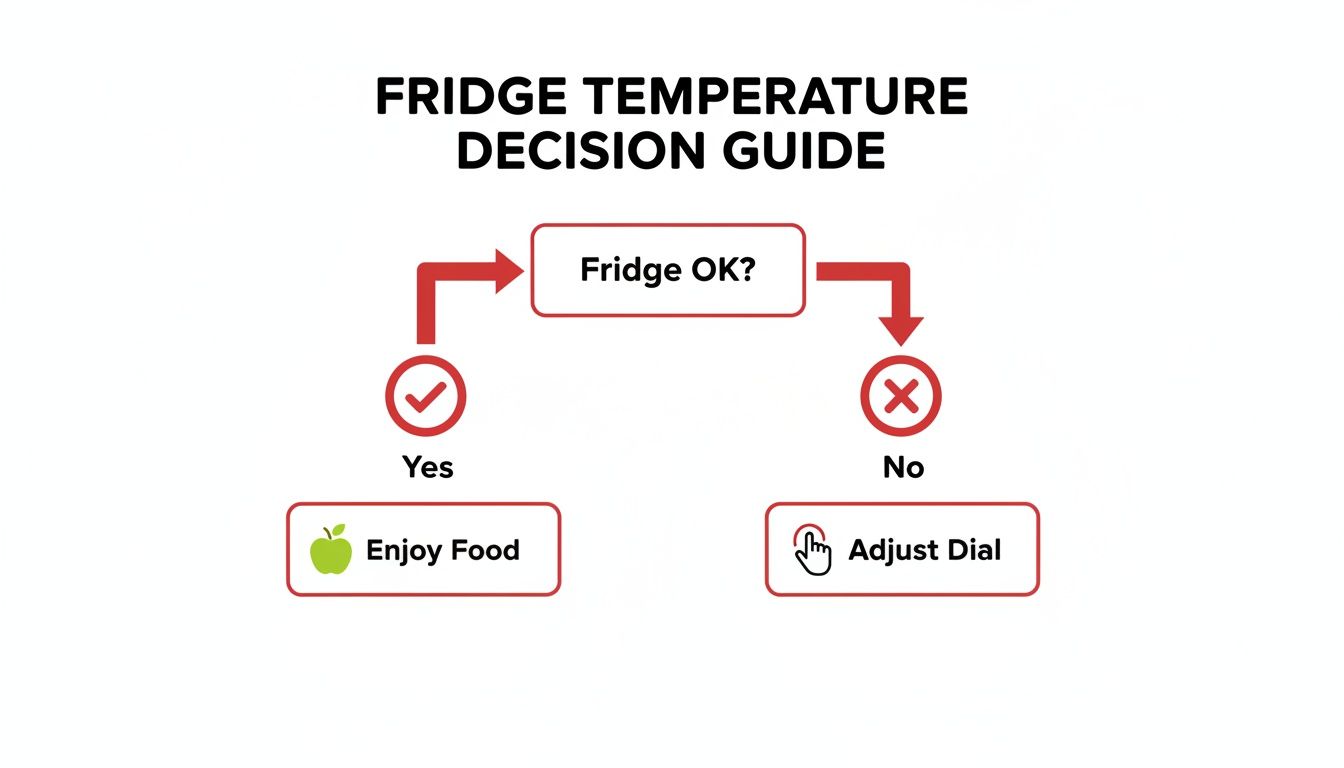
As the flowchart shows, if the temperature isn't right, your first move should always be adjusting the controls. Don't assume the worst until you've tried the simple fix!
Signs Your Fridge Is Too Cold
While it might not be a major food safety risk, a fridge that's too cold is an energy hog that ruins perfectly good fresh food. An overly chilly fridge can be just as much of a headache as a warm one.
- Frozen Groceries: If you pull out icy lettuce, cracked eggs, or a block of frozen yogurt, your temperature is definitely set too low. Your fresh food should be chilled, never frozen.
- Frost and Ice Buildup: Spotting ice crystals forming on the back wall of the fridge compartment is a dead giveaway that it's running too cold. A little frost is fine in the freezer, but it has no business being in the main fridge section.
- Unusual Noises: Is your fridge making loud noise all of a sudden? Strange new sounds can be a symptom of many issues, including ones that throw off your fridge's ability to regulate its temperature properly.
To help you connect the dots, we've put together a quick reference guide.
Troubleshooting Common Fridge Temperature Problems
| Symptom | Potential Cause | What to Check First |
|---|---|---|
| Milk sours before the date | Fridge is too warm | Check the temperature dial; ensure it's set between 1-4°C (34-40°F) |
| Icy lettuce or cracked eggs | Fridge is too cold | Turn the temperature dial to a warmer setting (a lower number on most dials) |
| Water droplets on interior walls | Too warm or a bad door seal | Verify the temperature and check the rubber door gasket for cracks or gaps |
| Frost on the back wall | Too cold or blocked vents | Check the temperature setting and make sure items aren't blocking air vents |
| Motor is always running | Too warm or dirty condenser coils | Adjust the temperature; if that doesn't help, the coils may need cleaning |
| Loud or new noises | Overworking compressor or fan issue | Check for obstructions around fans and listen to see if the noise is constant |
This table should help you identify the likely culprit behind your fridge troubles. If a simple adjustment doesn't solve the issue, it might be time to call in the experts.
Uncovering the Root Causes of Temperature Fluctuations
So, you’ve adjusted the temperature dial and patiently waited 24 hours, but your fridge still isn't holding that sweet spot between 3°C and 4°C (37°F and 40°F). What now? More often than not, inconsistent cooling has less to do with the settings and more to do with an underlying problem throwing a wrench in the works.
These issues can be anything from a simple maintenance task you've overlooked to a component that's on its last legs. Getting to the bottom of it is key. You'll not only solve the immediate temperature headache but also prevent needless strain on your refrigerator's compressor, saving you from sky-high energy bills and a much bigger repair down the road.
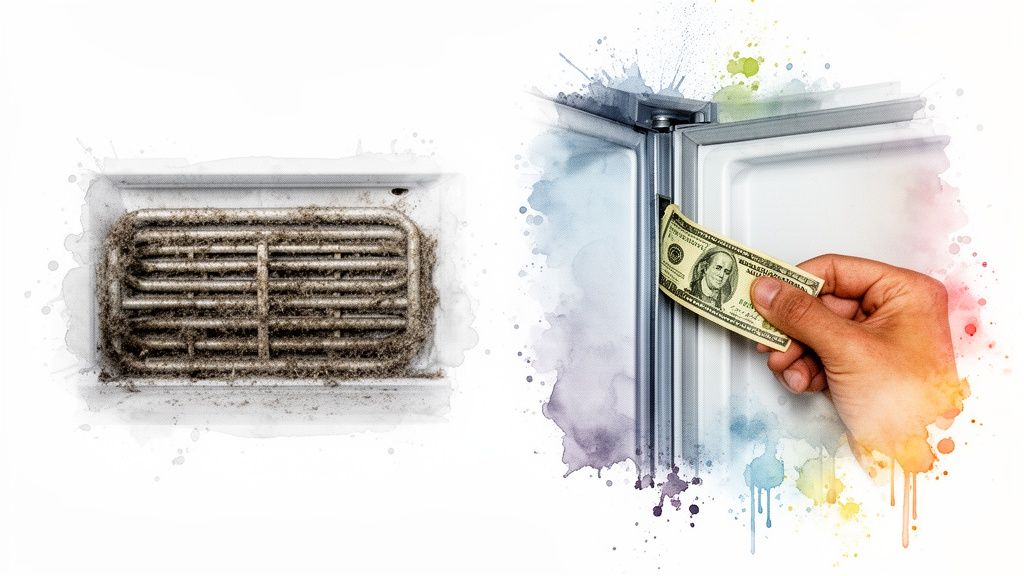
Dirty Condenser Coils
Think of your fridge's condenser coils as its radiator. Their job is to get rid of all the heat pulled from inside the unit. These coils, usually hiding at the back or underneath, are magnets for dust, pet hair, and all sorts of grime over time.
When they get caked in filth, they can't release heat properly. This makes the compressor work overtime just to keep things cool, causing temperatures to yo-yo and your energy bill to climb. A quick clean every six to twelve months is one of the best things you can do for your fridge's health.
A Faulty Door Seal or Gasket
That rubber gasket lining your refrigerator door is the only thing standing between the cold air inside and the warm air of your kitchen. If that seal is cracked, warped, or just plain dirty, it’s like leaving a window open in winter. Warm, moist air constantly seeps in, forcing your fridge to run non-stop to fight it off.
The Dollar Bill Test: Here’s a super simple way to check your seal. Trap a dollar bill in the door and close it. Now, try to pull the bill out. If it slides out with zero resistance, your seal is weak and likely needs a good cleaning or a full replacement. Make sure to test a few spots all around the door.
Blocked Air Vents
Your refrigerator needs good airflow to move cold air around evenly. You'll see vents inside both the fridge and freezer compartments designed for this circulation. If you've accidentally blocked them with grocery bags, big food containers, or just packed the fridge too tightly, that cold air gets trapped.
This creates warm spots in some areas and can even cause food to freeze in others, especially right next to the vent. A good rule to follow is to always leave a little breathing room between your food and the back and side walls. If this sounds like your problem, our guide on a refrigerator not cooling has more in-depth solutions.
Improper Food Loading Habits
Believe it or not, how you stock your fridge matters. Shoving a large pot of warm chili or a bunch of room-temperature groceries inside all at once forces the appliance to work incredibly hard to bring the temperature back down. It's always best to let hot foods cool on the counter for a bit first.
On the flip side, a nearly empty fridge also struggles to stay consistently cold. There aren't enough chilled items inside to help absorb the warm air that rushes in every time you open the door. A little balance goes a long way.
Knowing When to Call an Appliance Repair Professional
While many temperature issues can be sorted out with a simple dial adjustment or a good cleaning, some problems are best left to the experts. Knowing the difference between a quick DIY fix and a situation that needs a professional technician can save you time, money, and a whole lot of frustration.
Let's be honest, trying to repair complex components without the right tools and training can quickly turn a small problem into a major, expensive headache.
Sometimes, the signs are clear as day. If your fridge motor is running non-stop even after you've thoroughly cleaned the condenser coils, or if it simply refuses to get cold no matter what you try, it's time to call for help. These symptoms often point to deeper issues within the cooling system that are well beyond a simple fix.
Scenarios That Require a Technician
Certain situations almost always signal a need for professional diagnostics. Don't hesitate to make the call if you notice any of the following problems:
- Loud or Unusual Noises: Banging, grinding, or buzzing sounds can indicate a problem with the compressor or one of the fans. Ignoring these noises can lead to complete component failure. For more details, you can learn about what it means when your fridge compressor is hot.
- Rapid and Extreme Temperature Swings: If your fridge goes from freezing everything one day to being too warm the next, it could be a sign of a faulty thermostat or a malfunctioning control board.
- The Fridge Won't Turn On at All: After you've double-checked that it's plugged in and the circuit breaker hasn't tripped, a completely dead fridge points to a serious electrical or mechanical issue.
The Value of Professional Diagnostics
The consequences of improper cooling are no joke. In California, data showed that incorrect cooling was responsible for a startling 15% of the state's foodborne outbreaks before stricter temperature rules were put in place. And it’s a common issue. Service logs show that a thermostat drifting out of its optimal range is a problem for 25% of units over ten years old.
Attempting to fix these complex parts yourself is risky. Professional technicians use specialized tools to ensure precise calibration—a level of accuracy that’s essential for protecting both your food and your appliance's lifespan.
A professional repair isn't just about fixing the immediate problem. It's about accurately diagnosing the root cause to prevent it from happening again, ensuring your appliance runs safely and efficiently for years to come.
Ultimately, when you're facing a complex issue, calling a professional is the safest and most cost-effective choice. Their expertise ensures the job is done correctly, giving you peace of mind that your food is safe and your appliance is in good hands.
Simple Habits for a Healthier, Longer-Lasting Refrigerator
Keeping your refrigerator at the right temperature is a lot easier when you build a few simple habits into your daily routine. These small actions take seconds but go a long way in reducing the strain on your appliance, helping it run efficiently and last longer. Think of it as preventative care — a little effort today can save you from a costly repair down the road.
Great maintenance isn't just about cleaning coils once a year. It really starts with how you use your fridge every single day. These expert-backed tips are incredibly easy to adopt and make a huge difference in your fridge's performance and energy bills.
Best Practices for Everyday Use
- Cool Hot Foods First: Never put a steaming pot of leftovers directly into the fridge. This forces the compressor to kick into overdrive to bring the internal temperature back down, which is a massive energy drain. Just let your food cool to room temperature on the counter before storing it.
- Organize for Airflow: A fridge packed to the brim can't circulate cold air properly, leading to dreaded warm spots where food can spoil faster. Try to leave a bit of space between items and along the walls. This simple step ensures everything inside gets evenly chilled.
- Check Your Door Seals: Once a month, give the rubber gaskets around the door a quick wipe-down with a cloth and some warm, soapy water. This gets rid of any grime or sticky residue that could be preventing a tight seal. A solid seal is critical for keeping the cold air in and the warm air out.
- Keep It Stocked (But Not Stuffed): Believe it or not, a moderately full fridge is more efficient than an empty one. All those chilled items act like ice packs, helping maintain the cold temperature every time you open the door. The sweet spot is a happy medium—not empty, but not overflowing.
Adopting broader strategies for your home's upkeep, like the ones outlined for essential maintenance on rental property, can make a real difference in the lifespan of all your appliances. You can also dive deeper by checking out our guide on how long should a refrigerator last.
Your Top Fridge Temperature Questions, Answered
Got a question about your fridge’s temperature? You’re not alone. We hear these all the time from homeowners, so here are some quick, straightforward answers to get your appliance back on track.
Is 5 Degrees Celsius Too Warm for a Fridge?
Yes, absolutely. 5°C (41°F) is too warm and puts your food right in the danger zone. The official "food danger zone" starts at 4°C (40°F), and at this temperature, nasty bacteria like E. coli and Salmonella can multiply like crazy. This not only leads to spoiled groceries but also increases the risk of foodborne illness.
To keep everything fresh, safe, and tasting its best, you should always aim for a temperature between 3°C and 4°C (37°F and 40°F). Think of this as the sweet spot—it’s cold enough to slow down bacterial growth without accidentally freezing your lettuce.
What Number Should My Fridge Be on a 1-to-5 Dial?
For those classic dials numbered 1 to 5, where '1' is the warmest and '5' is the coldest, a good place to start is right in the middle at '3'. But it's really important to remember that these dials aren't precision instruments; they’re more of an estimate of cooling power.
The actual temperature inside your fridge can swing based on how packed it is, the temperature in your kitchen, and how often the door gets opened. The only way to know for sure is to use an appliance thermometer. Place it in the centre, wait a day, and then adjust the dial up or down from that middle setting.
How Long Does It Take for a Refrigerator to Cool After Adjustment?
Patience is key here. After you change the setting, it can take a full 24 hours for the refrigerator to settle into its new temperature. The appliance needs time to cycle on and off to get the cool air distributed evenly and hold steady.
Because of this, you should always wait at least a full day before checking your thermometer again. It also helps to keep the door shut as much as possible during this time, since letting warm air in will only slow things down.
Why Is My Fridge Freezing Food on the Warmest Setting?
This is a really frustrating problem, and if your food is turning to ice even on the warmest setting (like '1'), it's almost always a sign of a mechanical failure, not a user error. Something inside is failing to regulate the cooling process properly.
The usual suspects are:
- A faulty thermostat that can no longer sense the correct temperature.
- A malfunctioning temperature control board, which is basically the fridge’s brain.
- A damper stuck wide open, letting a constant blast of frigid air in from the freezer.
When this happens, your best bet is to call a professional technician. They can safely diagnose what's gone wrong and get it fixed.
Need appliance repair? Visit RepairMyAppliance.ca or call 587-416-5888 for fast, professional service.