
When it comes to your freezer, one number matters more than any other: -18°C (0°F). Think of this as the magic temperature that hits the pause button on your food, keeping everything from prime Alberta beef to summer berries perfectly preserved and safe to eat. But why is this specific number so important, and how do you ensure your freezer is hitting the mark?
This guide breaks down everything you need to know about what a freezer temperature should be, how to check it, and what to do if it’s not cold enough.
The Magic Number: Why -18°C (0°F) is the Standard Freezer Temperature
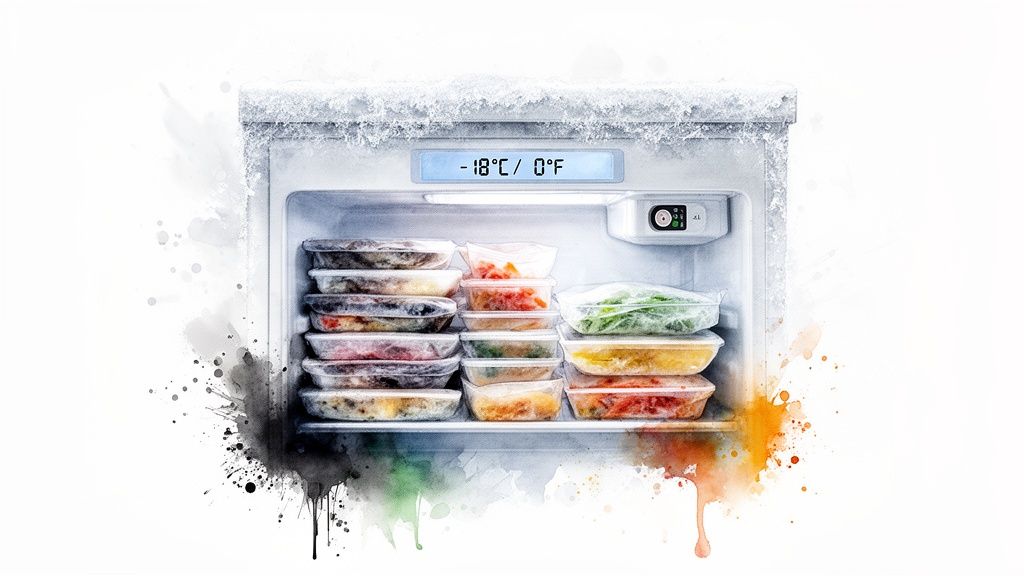
So, what is a freezer temperature, really? It's more than just a setting on a dial; it’s a critical part of keeping your household's food safe. That -18°C (0°F) standard wasn't just picked out of thin air—it’s grounded in solid science to create the best possible environment for long-term food preservation.
At this specific temperature, the growth of harmful microorganisms like bacteria, yeasts, and moulds comes to a complete halt. These are the culprits behind spoiled food, so stopping them in their tracks is how you drastically extend the life of your groceries. This deep cold also locks in your food's nutritional value, texture, and flavour, preventing the breakdown that happens at warmer temperatures. It's like putting your food into a state of suspended animation until you're ready to enjoy it.
Why -18°C Is So Important
Maintaining this precise temperature is a cornerstone of food safety. This is especially true here in Alberta, where our hot summers and cold winters can put home appliances to the test. Alberta Health Services points to -18°C as the key to keeping food out of the bacterial "danger zone" (between 4°C and 60°C), where nasty pathogens can double in as little as 20 minutes.
For homeowners in Edmonton and Calgary, it’s a good idea to check your freezer's temperature periodically, especially after power fluctuations. Improper freezer temperatures are unfortunately linked to a number of foodborne illness cases in the province each year, often from poorly stored meats and dairy.
-18°C (0°F) is also your best defense against freezer burn. That dreaded icy, dried-out texture isn't from the cold itself—it's from temperature swings that pull moisture out of your food, leaving it dry and tasteless. A steady, low temperature prevents this dehydration.
Maintaining the right temperature is a big deal, but it's not the only piece of the puzzle. The right food film packaging materials are also essential for creating a moisture barrier to protect your food's quality. It’s all connected, and if you're curious about how crucial these appliances are, you might find our article on what happens when you don't have a refrigerator an interesting read.
To really drive the point home, here’s a quick breakdown of why that -18°C (0°F) setting is so important.
Why -18°C (0°F) Is The Magic Number For Your Freezer
| Benefit | Impact on Your Food and Home |
|---|---|
| Food Safety | Halts the growth of bacteria, yeasts, and moulds, preventing foodborne illnesses. |
| Nutrient Preservation | Locks in vitamins, minerals, and other essential nutrients for longer. |
| Maintains Quality | Preserves the original flavour, texture, and colour of your food. |
| Prevents Freezer Burn | A consistent cold temperature stops the moisture loss that leads to dry, icy food. |
| Reduces Food Waste | Significantly extends the shelf life of groceries, saving you money. |
| Energy Efficiency | Helps your freezer run optimally without working overtime to combat temperature fluctuations. |
Sticking to this temperature doesn't just keep your food safe—it saves you money by preventing waste and helps your appliance run more efficiently. It’s a small detail that makes a huge difference in your kitchen.
How Temperature Affects Your Food and Energy Bill
The number on your freezer’s dial does a lot more than just keep things cold—it has a direct impact on the quality of your food and the size of your monthly utility bill. Once you understand this connection, that simple setting becomes a powerful tool for saving money and enjoying better-tasting meals.
An incorrect freezer temperature can quietly sabotage both your budget and your groceries.
Think about that premium Alberta steak you’ve been saving. When your freezer temperature swings up and down or stays too warm, it creates the perfect conditions for a common enemy: freezer burn. This isn't a disease; it's just dehydration. Those temperature fluctuations cause ice crystals on your food's surface to turn directly from a solid to a gas, pulling moisture right out of the food itself. The result? Dry, tough, and flavourless meat, which robs you of the quality you paid for.
The Financial Cost of a Colder Freezer
On the flip side, cranking the temperature down might feel like an extra layer of protection, but it’s an expensive habit. To maintain that excessively cold environment, your freezer’s compressor has to work much, much harder, and that translates directly into higher energy bills.
For every single degree you lower the temperature below the recommended -18°C (0°F), you can increase your freezer's energy consumption by as much as 6-10%. Bumping it down to -22°C instead of -18°C might not sound like much, but over a year, that adds a noticeable amount to your energy costs without offering any real food safety benefits.
A correctly set freezer is a model of efficiency. It strikes the perfect balance between preserving food perfectly and operating at the lowest possible energy cost, keeping your meals delicious and your bills manageable.
Striking the Perfect Balance for Food and Finances
The ideal freezer temperature of -18°C is the sweet spot where food safety, quality, and energy efficiency all meet. It’s cold enough to completely stop harmful bacterial growth, yet efficient enough that you aren't wasting electricity. Hitting this balance is the key to getting the most out of your appliance.
- Protect Your Investment: Keeping your freezer at the right setting ensures the food you buy stays fresh and nutritious, preventing waste from spoilage or freezer burn.
- Control Energy Spending: You avoid the unnecessary financial strain of an overworked appliance, which contributes to a more energy-efficient home.
- Extend Appliance Lifespan: A freezer that isn’t constantly running at full tilt experiences less wear and tear on its components, potentially extending its service life.
Maintaining this setting is a simple but effective way to manage your household. Of course, the technology behind modern freezers plays a big part in their efficiency. If you're curious about how different coolants affect performance, you can learn more in our article about why refrigerators now use R-600a instead of R-134a. By understanding what freezer temperature really means and its real-world effects, you can make smarter choices that benefit both your kitchen and your wallet.
How to Accurately Check Your Freezer Temperature
You might glance at your freezer’s built-in dial or digital display and assume everything is fine, but that number isn’t always the full story. To be absolutely sure your food is safe, you need an independent appliance thermometer. It’s a simple, inexpensive tool that gives you the real scoop on what’s happening inside.
Think of it this way: your freezer’s control is like the thermostat on your wall—it tells the cooling system when to kick on and off. The appliance thermometer is the actual temperature reading in the room. It tells you what’s really going on.
The Right Way to Test Your Freezer
Getting an accurate reading is easy, but where you place the thermometer makes all the difference. Don’t just toss it in and hope for the best. You want to measure the temperature of the food itself, not the air, since air temperature swings every time you open the door.
For a foolproof measurement, just follow these simple steps:
- Find the Centre: Place the appliance thermometer right in the middle of the freezer. Snuggle it between a few frozen items, like bags of peas or some containers. This spot gives you the most stable and true temperature, far from the warmer air that rushes in near the door.
- Give It Time: Shut the door and let it be. You need to leave the thermometer undisturbed for at least 8 to 12 hours—overnight is even better. This gives it plenty of time to settle and match the freezer's true long-term temperature.
- Read It Quickly: When it's time to check, be quick about it. Open the door, take a peek at the reading, and shut it fast. Even a minute of exposure to room-temperature air can throw off the measurement.
- Make Adjustments: If the thermometer reads above -18°C (0°F), nudge your freezer’s control dial or digital setting a little colder. If it’s way colder than necessary, you can turn it up a bit to save some energy. Just remember to wait another 8-12 hours after any change before checking again.
This diagram perfectly illustrates why that sweet spot matters for both your food and your hydro bill.
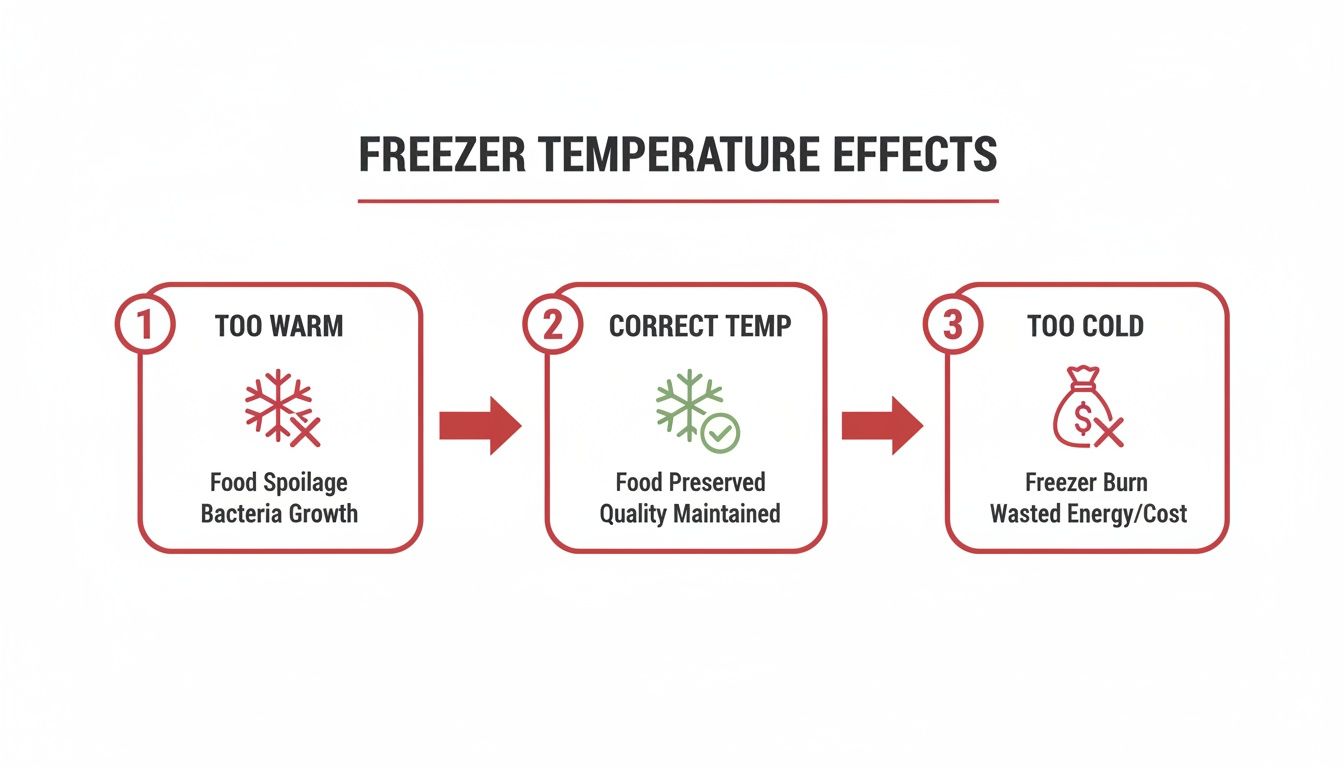
As you can see, the right temperature is a perfect balance. Go too warm, and you risk spoilage. Too cold, and you're just paying for freezer burn.
Adjusting Different Freezer Controls
Knowing how to adjust your freezer is just as crucial as measuring its temperature. Not all freezers are the same.
- Dial Controls: Usually found inside the unit, these dials often have a simple range like "colder" to "coldest" or just a numbered scale. When you turn it, make small, gradual adjustments—a tiny turn can make a big difference.
- Digital Displays: These are great because they give you precise control. Use the arrow buttons to move the temperature one degree at a time. This is the easiest way to lock in that perfect -18°C (0°F).
If you’ve made adjustments but your freezer just won’t hold a steady temperature, it could point to a larger problem. Sometimes, the issue isn't with the freezer at all but with the refrigerator's main cooling system. You can learn more about this in our guide on how to fix a refrigerator that is not cooling.
Taking a few minutes to master your freezer’s temperature is a small step that pays off big, protecting your food, cutting energy costs, and keeping your appliance running right.
Common Reasons Your Freezer Is Too Warm
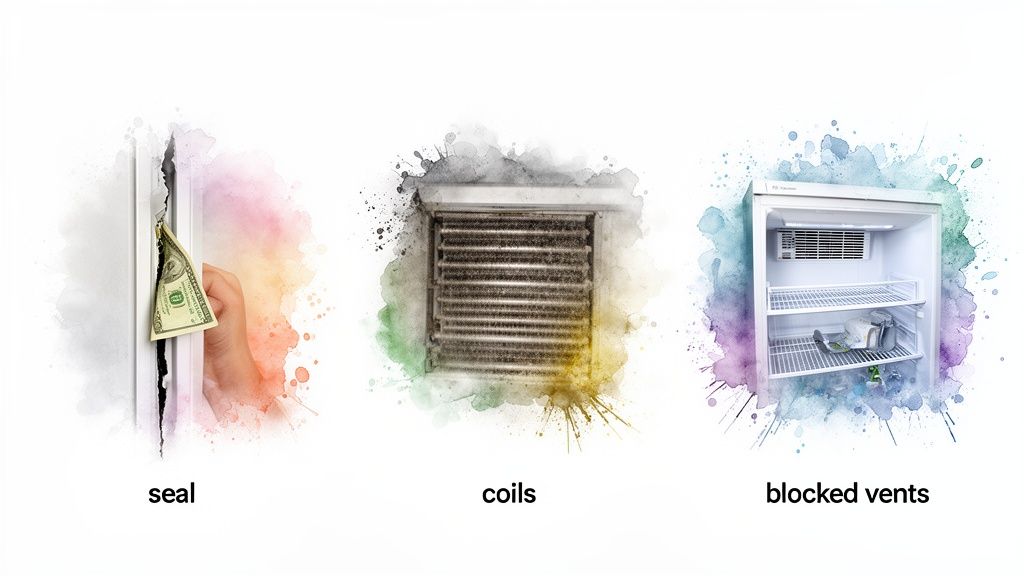
If your freezer is struggling to stay at that all-important -18°C (0°F) mark, it’s more than just a nuisance. It puts your food's safety—and your grocery budget—at risk. Knowing the ideal freezer temperature is the first step, but figuring out why it's failing is the key to a fast fix.
The good news is that the culprit is often a simple issue you can find and fix yourself. Before you start to worry, let’s walk through the most common things that stop a freezer from keeping its cool.
The Leaky Door Seal
One of the most common offenders is a bad door seal, also called a gasket. This rubber strip is supposed to create an airtight lock, trapping cold air inside. But if it gets cracked, dirty, or brittle, warm kitchen air can sneak in, forcing your freezer to run constantly just to keep up.
A quick way to check it is with the "dollar bill test." Close the freezer door on a bill. If you can pull it out easily with no resistance, your seal is probably worn out and needs a good cleaning or even a replacement. Poor seals are a top cause of temperature problems; you can learn more about freezer door seal issues and how to tackle them in our guide.
Dirty Condenser Coils
Think of the condenser coils as your freezer’s radiator—they get rid of the heat that’s been pulled from inside the unit. These coils, usually found at the back or on the bottom, get covered in dust, pet hair, and other gunk over time.
When the coils are caked with dirt, they can't release heat properly. Your freezer's compressor has to work harder and longer, which means less efficient cooling and a warmer freezer. A quick cleanup with a vacuum or brush every six months can make a huge difference.
Blocked Air Vents or Overloading
Your freezer needs cold air to circulate freely to keep everything frozen solid. There are air vents inside that let this air move around. If you block those vents with frozen pizza boxes or bags of peas, you're cutting off the airflow and creating warm spots.
The same thing happens when you overstuff the freezer. A full freezer is more efficient than an empty one, but cramming it to the gills prevents air from circulating. Make sure to leave a little breathing room around the vents and between your items so the cold air can do its job. It’s a simple habit that helps maintain a stable and safe freezer temperature.
A lot of freezer temperature problems can be diagnosed with a little detective work. Use this table as a quick guide to figure out what might be going on.
Troubleshooting Your Freezer Temperature Issues
| Symptom | Potential Cause | Simple DIY Fix |
|---|---|---|
| Frost buildup near the door | Leaky Door Seal | Clean the seal with warm, soapy water. If it's cracked, it needs to be replaced. |
| Freezer runs constantly but isn't cold | Dirty Condenser Coils | Unplug the unit and carefully vacuum or brush the coils at the back or bottom. |
| Some items are frozen, others are soft | Blocked Air Vents | Rearrange items to ensure vents inside the freezer are clear and not blocked by food packages. |
| Freezer feels warm and is very full | Overloading | Remove a few items to create space for air to circulate properly between them. |
Remember, these simple checks can often solve the problem without needing a service call. But if you’ve tried these steps and your freezer still isn’t holding its temperature, it might be time to call in a pro.
When You Need a Professional Freezer Repair
While you can tackle some temperature issues yourself, there are definite times when you need to hang up the tools and call an expert. Knowing when to step back can save you from causing more damage and facing a much bigger repair bill down the line.
If you've tried the basic troubleshooting steps and your freezer still can't hold its temperature, it's time to listen closely. Any persistent or weird noises are a major red flag.
A constant loud hum, buzz, or clicking sound often points to a compressor on its last legs or a failing fan motor. These are the heart and lungs of your freezer's cooling system, and they aren’t simple DIY fixes.
Another tell-tale sign of trouble is a motor that runs nonstop. Your freezer’s compressor is supposed to cycle on and off to maintain the right temperature. If it’s running continuously without taking a break, it's overworking and likely heading for a breakdown.
Signs of Serious Mechanical Failure
Ignoring these symptoms can quickly lead to a complete system failure. It's time to call a professional technician if you notice any of the following problems:
- Strange Noises: Loud buzzing, grinding, or clicking that just won’t quit is a cry for help from your freezer’s internal parts.
- Constant Running: A motor that never seems to rest often signals a deeper issue, like a refrigerant leak or a faulty thermostat.
- No Cooling at All: If the freezer is plugged in and running but refuses to get cold, the problem is well beyond a simple fix like a bad door seal.
These symptoms often point to serious issues like a failing compressor, a broken evaporator fan, or a refrigerant leak. These are not jobs for the weekend warrior; they demand specialized diagnostic tools and the certified expertise to handle them safely. In Alberta, food safety standards require freezers to maintain -18°C (0°F). Technicians in Red Deer report that a staggering 55% of their repair calls are for iced-over coils that cause temperatures to rise—an issue that needs a professional to diagnose and fix correctly the first time. You can learn more about these critical temperature guidelines from FoodSafe.
While we're talking about home freezers, understanding the scope of professional refrigeration repairs in commercial settings really highlights why expert help is so critical for any cooling system. When your appliance starts showing these signs, calling a pro is always the smartest move.
Your Expert Appliance Repair Solution in Alberta
Keeping your freezer at the right temperature is key to safe food, low energy bills, and avoiding the headache of wasted groceries. While a few simple tweaks can sometimes get things back on track, certain problems are best left to the professionals. When a DIY fix doesn't cut it, calling a trusted local expert is the smartest—and safest—move.
For homeowners across Edmonton, Calgary, and Red Deer, Repair My Appliance is the team you can count on for fast, professional service. Our licensed and insured technicians are ready to tackle any problem you throw at them, whether it's a worn-out compressor or a tricky electrical fault. We offer same-day service and clear, upfront pricing, so your appliance gets fixed without any surprises.
Don’t let a broken freezer disrupt your life or put your family’s food at risk. We have the tools and hands-on experience to find the real problem and deliver a repair that lasts. If you're dealing with stubborn freezer issues, our freezer repair services will get things running smoothly again and restore your peace of mind.
Need appliance repair? Visit RepairMyAppliance.ca or call 587-416-5888 for fast, professional service.
Frequently Asked Questions About Freezer Temperatures
When it comes to your freezer, a few common questions always seem to pop up. Getting the right answers can help you keep your food safe, lower your energy bills, and figure out if your appliance needs a check-up. Let’s tackle some of the most frequent queries homeowners have.
Can a Freezer Be Too Cold?
Absolutely. While it might feel like colder is always safer, cranking your freezer way down below the recommended -18°C (0°F) doesn’t add any food safety benefits. What it does do is force the compressor to run constantly, which can hike up your energy use by 6-10% for every extra degree.
That extreme cold also leads to nasty freezer burn, which ruins the texture and flavour of your food. Sticking to the sweet spot of -18°C (0°F) is the perfect balance for keeping food safe without wasting energy.
How Long Can a Freezer Stay Off Before Food Spoils?
If the power goes out, don't panic! A well-maintained freezer can hold its temperature for a surprisingly long time. A full freezer can keep everything safely frozen for about 48 hours, while one that’s half-full will last around 24 hours.
The golden rule is to keep the door closed. Every time you peek inside, you’re letting warm air in and speeding up the thaw. If you know a long outage is coming, try grouping frozen items together—a bigger frozen mass stays cold longer.
What Should I Do if I Find Ice Buildup in My Freezer?
A little bit of frost is perfectly normal, but if you’re seeing thick sheets of ice, you’ve got a problem. That ice acts like an insulator, making your freezer work much harder to stay cold and eating up precious storage space.
Most of the time, heavy ice buildup is caused by a leaky door seal letting in moist air, or just from leaving the door open too long. The best fix is a good old-fashioned manual defrost. If you have a frost-free model and still see a lot of ice, it could point to a faulty defrost system that needs a professional’s touch.
How Often Should I Clean My Freezer?
Giving your freezer a good clean and defrost at least once a year is a great habit to get into. You should also tackle it anytime the ice builds up to more than a quarter-inch thick.
A clean freezer doesn't just run more efficiently; it also stops odours from transferring between foods. It’s also the perfect time to take inventory, toss out anything that’s expired, and get everything organized again.
Need appliance repair? Visit RepairMyAppliance.ca or call 587-416-5888 for fast, professional service.